Costa Smeralda versus the Gulf of Orosei
Costa Smeralda or the Gulf of Orosei — which is better for a first trip to Sardinia?
The Gulf of Orosei has the more dramatic, genuinely beautiful coastline and costs less, but its best beaches are boat- or hike-only. The Costa Smeralda is easier to reach, has more infrastructure, and suits travellers who want polish and convenience over wild scenery and want to pay for it.
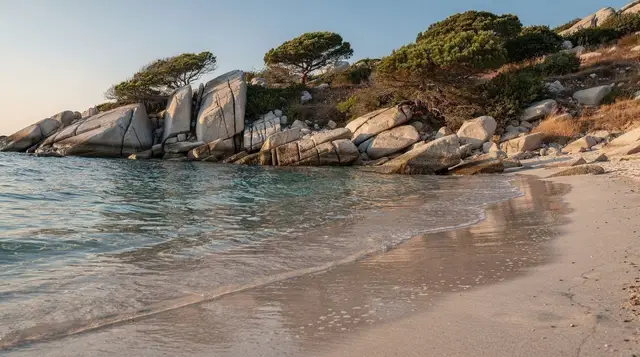
Sardinia’s two most photographed coastlines couldn’t be more different in what they actually deliver. The Costa Smeralda, in the north-east around Olbia and Porto Cervo, is a manicured stretch of granite coves, marinas and villa estates built up since the 1960s. The Gulf of Orosei, running along the east coast between Cala Gonone and Baunei, is a 40km wall of limestone cliffs with no coastal road at all — you reach most of its beaches by boat or on foot. Picking between them, or splitting your time, comes down to what you actually want from a beach day.
| Costa Smeralda | Gulf of Orosei | |
|---|---|---|
| Access | Coastal road, easy driving, some beaches walk-in | Boat or multi-hour hike only for the best coves |
| Scenery | Pink granite, manicured, villa-lined | Limestone cliffs up to 500m, dramatic and wild |
| Prices | High — beach clubs, restaurants, parking all cost | Moderate — the coast itself is free, boats cost |
| Crowds | Heavy in July-August, especially Porto Cervo | Heavy at anchor points, quieter on the cliffs above |
| Best for | Convenience, nightlife, easy family days | Scenery, hiking, snorkelling, a sense of remoteness |
What the Costa Smeralda actually gives you
The Costa Smeralda’s coastline is genuinely attractive — the granite here is pink-tinged and eroded into smooth, sculptural shapes, and beaches like Spiaggia del Principe have turquoise water that photographs as well as anywhere in the Mediterranean. What you’re really paying for, though, is convenience: paved roads to nearly every beach, marinas with restaurants and shops, and a density of boat operators that makes booking a same-day tour easy even in August. Our Costa Smeralda beaches guide covers the specific coves worth the drive.
That convenience has a price attached to almost everything. A sunbed and umbrella at a beach club near Porto Cervo runs €40-80 for the day in peak season, parking near the better beaches is €10-20, and restaurant prices are 30-50% higher than equivalent places in Olbia or further south. The trade-off is real: you’ll spend more, but you’ll spend less time working for the view.
What the Gulf of Orosei actually gives you
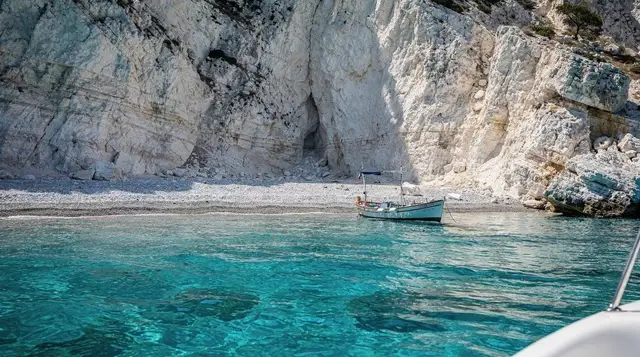
The Gulf of Orosei’s cliffs are on another scale entirely — the coast between Cala Gonone and the Golgo plateau rises in sheer limestone faces that most visitors have never seen a coastline do, and the water beneath them is a clean, deep turquoise that owes nothing to filters.
Cala Goloritzé, Cala Mariolu and Cala Luna are the three names that come up constantly, and they earn the reputation — but none of them has road access. You reach them by boat from Cala Gonone or Arbatax, or on foot, with Goloritzé requiring a genuinely demanding two-hour hike each way from the Golgo plateau (see our hike to Cala Goloritzé guide for the route).
The Gulf of Orosei day tour by boat from Arbatax covers several of the coast’s best coves in a single day without the hike, stopping for swimming at each. Our Gulf of Orosei boat trips guide compares the Cala Gonone and Arbatax departure points if you’re deciding which to book from.
Price comparison for a typical day
| Cost item | Costa Smeralda | Gulf of Orosei |
|---|---|---|
| Beach access | Free at most, some private clubs €40-80pp | Free — the coast itself has no entry fee |
| Getting to the beach | Free (drive) to €10-20 parking | €35-70pp boat tour, or free if hiking |
| Lunch | €25-45pp at a beachfront restaurant | Bring your own, or included on some boat tours |
| Sunbeds | €15-30 per set where beaches have clubs | Rare — most coves have none |
A family of four spending a beach day on the Costa Smeralda with sunbeds and a restaurant lunch can easily reach €250-350. The same family taking a Gulf of Orosei boat tour with a packed lunch spends closer to €150-200, and the beaches themselves — Cala Mariolu’s white pebbles against blue water, Cala Luna’s cave-backed sand — are arguably the more memorable ones.
Crowds: where and when it actually gets busy
Both coasts get genuinely crowded in July and August, but the crowding looks different. On the Costa Smeralda, it’s traffic and parking — the road to Spiaggia del Principe backs up by mid-morning, and beach club sunbeds sell out by 10am on weekends. On the Gulf of Orosei, crowding concentrates at the anchor points: Cala Goloritzé and Cala Mariolu can have 15-20 boats moored offshore by midday in peak season, and the beach itself fills up fast once everyone’s dinghy reaches shore. Both problems solve the same way — go early. A boat tour departing Arbatax or Cala Gonone before 9am reaches the coves before the bulk of the day’s boats arrive.
Which suits your trip style
If you’re staying in the north-east — Olbia, San Teodoro or Palau — the Costa Smeralda is a short drive and makes sense for at least one day, especially if travelling with young children who won’t manage a boat trip well or a long hike. Our north Sardinia 7-day itinerary builds in a Costa Smeralda day alongside the Maddalena archipelago.
If you’re based on the east coast — Cala Gonone, Dorgali or Arbatax — the Gulf of Orosei is the obvious priority, and worth dedicating two days to if your schedule allows: one boat day covering multiple coves, one hiking day to Cala Goloritzé or into the Supramonte interior. The east coast 7-day itinerary is built around exactly this split.
Combining both in one trip
Doing both properly in a single trip needs at least five or six days split between the two coasts, since driving between them takes 2-2.5 hours on mostly single-carriageway roads through the interior — this is the trade-off covered in our Sardinia road trip driving times piece. Most first-time visitors on a one- or two-week trip end up choosing one as a focus and treating the other as a single day trip rather than splitting evenly, and that’s a reasonable compromise given how much time driving between them actually eats into your beach days.
Snorkelling and water clarity compared
Both coasts have excellent visibility by Mediterranean standards, but for different reasons. The Costa Smeralda’s granite seabed and relatively sheltered coves keep the water calm and clear close to shore, which suits snorkellers who want an easy, shallow entry rather than open water. The Gulf of Orosei’s limestone drops away more steeply, and the water is generally deeper and cooler close to the cliffs, which rewards snorkelling around the rock faces themselves — sea fans, small groupers and the occasional moray hide in the crevices near Cala Mariolu and along the Bue Marino cave stretch.
Neither coast is a serious diving destination compared with Villasimius or Alghero in the south and north-west, but both are genuinely rewarding for a snorkel with a mask and fins brought from home or hired on the boat.
Weather and sea conditions
The Gulf of Orosei’s cliffs offer little shelter from the wind, and the Mistral or Scirocco can make the sea too rough for boats to reach the more exposed coves — operators cancel or reroute trips on windy days, most commonly in spring and early autumn shoulder season. The Costa Smeralda’s more indented coastline gives boats more sheltered water to fall back on, so cancellations are somewhat less frequent, though August afternoon thermal winds still kick up chop by early afternoon on both coasts. If your trip dates are fixed and non-negotiable, book Gulf of Orosei boat tours for the morning rather than the afternoon, and keep a backup day in your itinerary if visiting outside June-September.
Where to base yourself for each coast
For the Costa Smeralda, basing in or near Olbia keeps you close to the airport and gives easy access to the whole north-east coast without paying Costa Smeralda accommodation prices, which run noticeably higher in Porto Cervo and Porto Rotondo themselves. San Teodoro is a good alternative base with its own strong beaches and a shorter drive south towards the Gulf of Orosei if you want to combine both coasts from one hotel.
For the Gulf of Orosei, Cala Gonone is the most convenient base — small, walkable, with boat departures right from the harbour — while Dorgali a few kilometres inland is cheaper and gives access to both the coast and the Supramonte’s hiking and caving. Baunei and the Golgo plateau area suit travellers prioritising the Cala Goloritzé hike over boat access.
Getting to each coast
The Costa Smeralda is served directly by Olbia Costa Smeralda airport, 20-30 minutes from most of the coast’s beaches and marinas — this is the single biggest practical advantage it has over the Gulf of Orosei, which has no nearby airport at all.
Reaching Cala Gonone or Arbatax means flying into Olbia or Cagliari and then driving 1.5-2.5 hours, mostly on the SS125 coast road or across the interior via the SS389 — neither route is a motorway, and both involve winding sections through the Supramonte that take longer than the map distance suggests. Our renting a car in Sardinia guide covers the practicalities of picking up a hire car at either airport.
This access gap matters for trip planning more than most guides admit: a long weekend based purely around Olbia can comfortably include a full Costa Smeralda day without excessive driving, while the same long weekend would burn most of a day just reaching the Gulf of Orosei and back. If your time is genuinely limited, that alone is often the deciding factor rather than a preference for granite over limestone.
Food and dining on each coast
Dining on the Costa Smeralda leans heavily towards seafood restaurants and beach club kitchens aimed at a well-heeled, largely international clientele — expect polished presentation, wine lists with serious Vermentino and Cannonau selections, and prices to match, easily €50-80 per person for a proper dinner in Porto Cervo in August. The Gulf of Orosei side, by contrast, is dominated by simpler trattorias in Cala Gonone, Dorgali and Baunei serving Barbagia-influenced food — porceddu, culurgiones, pane frattau — often for €25-35 per person, with the same quality of ingredients but none of the marina pricing. If food budget matters to your trip, this gap compounds the accommodation and beach-access cost difference covered above.
Boat tours: what to actually book on each coast
On the Gulf of Orosei, the boat tour to Cala Goloritzé and Cala Mariolu from Arbatax is the single most useful booking if you want both headline beaches without the hike, and the aperitif boat tour to Isola dell’Ogliastra from Arbatax works well as a shorter, lower-key alternative that still covers the dramatic cliff scenery closer to Arbatax itself.
On the Costa Smeralda, boat tours tend to focus on hopping between the coast’s coves and the nearby La Maddalena archipelago — our Costa Smeralda boat tours guide covers the specific operators and routes worth booking from Olbia and Porto Cervo.
Frequently asked questions about the Costa Smeralda and the Gulf of Orosei
Which coast has better beaches, honestly?
The Gulf of Orosei’s beaches are more dramatic and arguably more beautiful — the limestone cliffs and clarity of the water are hard to match anywhere else on the island. The Costa Smeralda’s granite coves are attractive but more about polish and convenience than raw scenery.
Can I visit both coasts in one week?
It’s tight but possible if you base centrally, for example around Dorgali or Olbia, and accept one full travel day between them. A more relaxed split needs 10-14 days.
Is the Gulf of Orosei worth it if I can’t hike?
Yes — the boat tours from Arbatax and Cala Gonone reach the same beaches as the Golgo plateau hike without requiring more than a short walk from the dinghy to the sand.
Why is the Costa Smeralda so expensive?
It was developed from the 1960s as a purpose-built luxury resort area by the Aga Khan’s consortium, and the pricing on beach clubs, marinas and restaurants has stayed at that positioning ever since, even as the rest of Sardinia stayed considerably cheaper.
Do I need a boat tour for the Gulf of Orosei, or can I hike everywhere?
You can hike to some coves, notably Cala Goloritzé and Cala Sisine, but Cala Mariolu and Cala Luna are far more practically reached by boat given the terrain and distances involved.
Is Cala Gonone or Arbatax the better departure point for Gulf of Orosei boat tours?
Cala Gonone is closer to the northern coves like Cala Luna and Bue Marino; Arbatax is better positioned for Cala Goloritzé and Cala Mariolu further south. Check our Gulf of Orosei boat trips guide for the specific route each departure covers.
Which coast is better for families with young children?
The Costa Smeralda, generally — easier access, restaurants and facilities nearby, and no boat or long hike required to reach a decent beach.
Are the beach access quotas relevant on either coast?
Yes on the Gulf of Orosei side — Cala Goloritzé and Cala Mariolu both have daily visitor caps and require booking ahead in peak season. See our beach access quotas guide for how to book. The Costa Smeralda has no equivalent quota system.
Is one coast better for photography?
The Gulf of Orosei, without much debate — the scale of the cliffs and the clarity of the water make for far more dramatic images than the Costa Smeralda’s smaller, more manicured coves.
Popular Sardinia experiences on GetYourGuide
Verified deep-linked GetYourGuide tours. Book through these links and we earn a small commission at no cost to you.
These are our own photographs of Sardinia, not the operator's pictures of this tour — open the tour page to see those.