| Where | East coast, part of the municipality of Dorgali, reached via a mountain tunnel |
| Known for | Boat access to the Gulf of Orosei’s beaches and caves |
| Time needed | 2-3 days to properly cover the gulf’s main sights by boat |
| Cost | Organised boat trips from around €25-80; dinghy rental (no licence needed) from about €100/day |
| Best time | June or September; midsummer mornings are busy at the harbour |
A town that exists because of the coast it can’t drive along
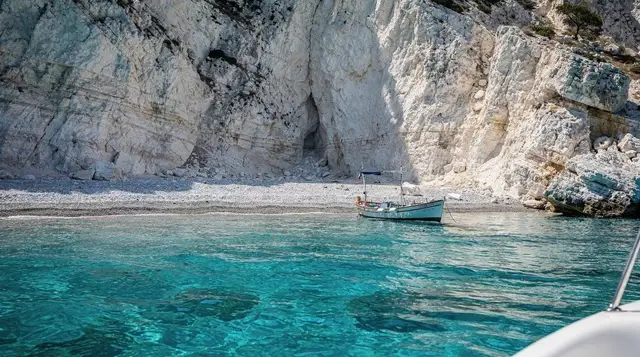
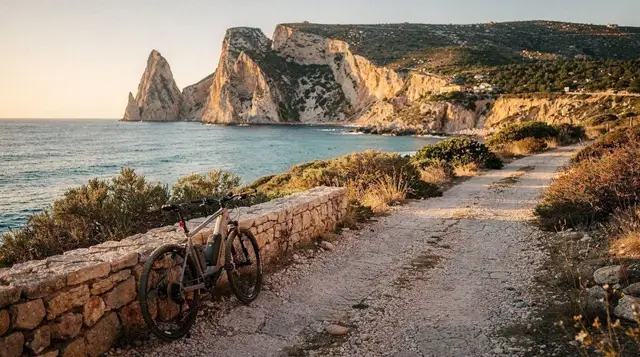
Cala Gonone only became properly accessible by road in the 1950s, when a tunnel was cut through the mountains connecting it to Dorgali, the hill town it belongs to administratively. Before that, it was reachable only by mule track or by sea — a fact that explains a lot about both the town’s relatively recent growth as a resort and, more importantly, why the Gulf of Orosei’s beaches to its south remain accessible only by boat or on foot to this day. There is still no coastal road linking Cala Gonone to Cala Luna, Cala Sisine, or any of the coves further south; the limestone cliffs of the Supramonte drop straight into the sea for roughly 40km, and boats (or serious hiking boots) are the only way in.
That geography is exactly what makes Cala Gonone valuable as a base. The small harbour is genuinely the departure point for the Gulf of Orosei experience — organised excursion boats, self-drive dinghy rentals, dive boats, and kayak trips all leave from here, more densely and more frequently than from any other town on this coast.
Cala Luna: the closest, and still genuinely good
Cala Luna, about 30-40 minutes south by boat, is the closest of the gulf’s headline beaches and consequently the busiest, but it earns the traffic: a long crescent of pale sand backed by caves cut into the cliff face and a small freshwater stream that runs down to the beach in wetter months. A Cala Luna boat trip is the most straightforward way to reach it, and most operators build in an hour or two of swimming time before returning. For a fuller sense of what to expect, our Cala Luna guide covers the beach in more depth, including the option of hiking in via the Selvaggio Blu-adjacent trail for a very different arrival experience.
Cala Sisine and further south
Cala Sisine, a longer boat ride south of Cala Luna, is quieter and backed by a dramatic dry riverbed (a former watercourse cutting inland toward the Supramonte’s interior) rather than caves, giving it a distinctly wilder feel. A Cala Luna and Cala Sisine boat tour combines both beaches in a single trip, a sensible way to compare the gulf’s more developed and more remote ends without committing a full day to just one. Reaching Cala Mariolu and Cala Goloritzé further south typically requires a longer excursion or a base closer to Baunei — see our Gulf of Orosei overview page for how the whole coastline fits together.
Bue Marino: the cave that gave the coast its name
Grotta del Bue Marino (“cave of the sea ox,” named for the Mediterranean monk seals that once bred here before hunting drove them out) is one of the largest marine cave systems in Europe, with several kilometres of passages, though only the first few hundred metres near the entrance are open to visitors on standard boat tours.
A Grotta Bue Marino and Cala Luna beach boat trip combines the cave visit with beach time, the standard format most operators run, and it’s genuinely worth doing even if cave visits aren’t usually your thing — the scale of the chambers and the way light filters in from the sea entrance make this a different experience from Sardinia’s inland caves. Our Bue Marino cave guide covers the visit format and what to expect underground in more detail.
Renting your own boat
If you’d rather set your own pace than follow a tour itinerary, Sardinian law allows renting small motorboats (typically up to 40hp, roughly 6 metres) without a boating licence, and Cala Gonone has several operators offering exactly this. A 6-metre dinghy rental gives you the freedom to choose your own stops along the coast and linger as long as you like at whichever cove you prefer, though it does require confidence reading basic navigation markers and respecting no-go zones around the more fragile coves.
A shorter guided dinghy trip in the Gulf of Orosei is the middle-ground option if you want the flexibility of a small boat without navigating entirely on your own. See our renting a boat without a licence guide for the rules that apply.
Diving in the gulf
The Gulf of Orosei’s underwater terrain — steep drop-offs, caves, and clear water — makes it one of the better diving areas on the island, and Cala Gonone has the most established diving infrastructure on this coast. A full-day diving trip in the Gulf of Orosei typically covers two dive sites with a surface interval for lunch, suited to certified divers rather than complete beginners. Our diving in Sardinia guide covers certification requirements and other dive regions across the island for comparison.
Where Cala Gonone fits with Dorgali
Cala Gonone is administratively part of Dorgali, the hill town about 20 minutes inland, and the two work well as a paired base: Cala Gonone for boats and the coast, Dorgali for wine, crafts, and access to the Gorropu canyon and Tiscali hike. See our Dorgali destination page for that side of the pairing, and our day trips from Cala Gonone guide for how to structure a multi-day stay across both.
Getting to Cala Gonone
There’s no direct coastal road, so the only way in by car is via the tunnel from Dorgali, itself reached from the SS125 Orientale Sarda. From Olbia (OLB) budget around 1.5-2 hours; from Cagliari (CAG) closer to 3 hours given the winding interior roads. A hire car is genuinely necessary to reach the town in the first place, though once you’re here, boats handle the rest of the exploring.
When to visit
| Season | Conditions | Boat access |
|---|---|---|
| June | Warm, sea clear | Good availability, moderate queues at the harbour |
| July-August | Hottest, busiest | Book boat trips a day ahead; harbour is crowded by mid-morning |
| September | Still warm | The best trade-off — full services, noticeably fewer people |
| October-April | Cool, most boat operators closed | Minimal — this is a summer-season activity almost entirely |
Frequently asked questions about Cala Gonone
Do I need to book boat trips to Cala Luna in advance?
In July and August, yes — book at least a day ahead, ideally more, since popular departure times sell out. Outside peak season, same-day booking is usually fine.
Can I drive to Cala Luna or Cala Sisine instead of taking a boat?
No — there is no coastal road connecting Cala Gonone to these beaches. Boat, or a demanding hike via mountain trails, are the only options.
Is renting a dinghy without a licence actually legal?
Yes, within specific limits on engine power and boat size set by Italian maritime law, and it’s a well-established option in Cala Gonone specifically. See our renting a boat guide for the exact rules.
How many days should I spend in Cala Gonone?
Two to three days lets you cover Cala Luna, one further beach like Cala Sisine or the Bue Marino cave, and still have time for Dorgali’s wine and hiking. A single day is workable but rushed if you want to see more than one cove.
Is Cala Gonone good for families?
Yes — the town itself has a proper beach, gentle enough for children, and most boat tours are family-friendly with swim stops rather than serious open-water passages.
What’s the difference between visiting Cala Gonone and Cala Mariolu or Cala Goloritzé?
Cala Mariolu and Cala Goloritzé sit further south in the gulf and are more commonly reached from Baunei or Arbatax on longer excursions. Cala Gonone-based trips more typically cover Cala Luna, Cala Sisine, and the Bue Marino cave, though some longer full-day tours do extend further south.