Before 1962 this stretch of Gallura coast was mostly scrub, granite and a handful of shepherds’ huts, considered too rocky and dry to be worth much. That changed when a consortium led by the Aga Khan bought up roughly 3,000 hectares of coastline and commissioned a master plan that banned billboards, capped building heights and dictated the muted pink-and-ochre colour palette you still see on every villa today. The result is the closest thing Sardinia has to a purpose-built luxury resort region, and depending on who you ask, either the island’s most beautiful coastline or its most successfully marketed one.
It helps to think of the Costa Smeralda as a zone rather than a single place — a run of coves, marinas and villages along roughly 20km of coast in the Arzachena municipality, not a town you can walk around in an afternoon. Porto Cervo is its social centre and has its own dedicated page on this site; this guide covers the wider coastline, the beaches, and the honest question of whether the reputation matches the reality.
| What | Where | How long | When to go |
|---|---|---|---|
| Spiaggia del Principe and Liscia Ruja | Central Costa Smeralda coast | Half to full day | June–September |
| Capriccioli beach | South of Porto Cervo | Half day | June–September |
| Boat trip around the coves | Departs Olbia, Palau or Porto Rotondo | 3–5 hours | May–September |
| Porto Cervo village and marina | Central Costa Smeralda | 2–4 hours | Year-round, liveliest June–August |
Geography, not a town: what the Costa Smeralda actually covers
The stretch runs roughly from Golfo Aranci in the south up past Porto Cervo and Porto Rotondo to Baja Sardinia in the north, with Arzachena as the administrative town a few kilometres inland. Locals and hoteliers use “Costa Smeralda” fairly loosely, sometimes to mean just the original consortium land around Porto Cervo, sometimes to cover the whole coastal sweep — for practical trip planning, assume it means anywhere between Golfo Aranci and Baja Sardinia and you won’t be far wrong.
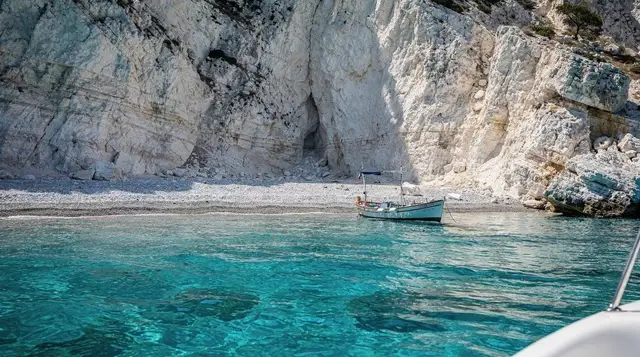
That geographic spread matters because prices and crowding vary a lot within it. The beaches closest to Porto Cervo — Liscia Ruja, Capriccioli, Spiaggia del Principe — are the most photographed and the most expensive to park near; head further north towards Baja Sardinia or south towards Golfo Aranci and you’ll find quieter coves with the same turquoise water and none of the marketing.
The beaches, and what they actually cost you
Spiaggia del Principe, named for the Aga Khan himself, is the coast’s signature beach — pink-tinged granite boulders framing a curved bay of pale sand, and genuinely one of the most beautiful stretches of coast in Sardinia. It’s also entirely free to swim at; what costs money is everything around it. Beach club sunbeds run €40 to €80 a day depending on the month, and parking in the small dirt lots nearby fills by 10am in August and costs €10 to €15 for the day where it’s managed at all.
Liscia Ruja and Capriccioli follow the same pattern: free public access, paid everything else, and a real risk of arriving at midday to find every parking spot taken. None of these beaches carries an official access quota like La Pelosa further north — you don’t need to book a slot — but arriving before 9.30am in July and August is the closest thing to a guarantee of finding both sand and a parking space. Our guide to the best beaches in Costa Smeralda and the dedicated Spiaggia del Principe guide go into more detail on access points and which coves handle crowds best.
Boat trips: the better way to see the coast
Given the parking situation, a boat is often the more relaxed way to see the Costa Smeralda’s coves, and it’s also how you reach the smaller bays that have no road access at all. a half-day guided boat tour of the Costa Smeralda departing Olbia is the most straightforward option, covering four or five coves with swimming stops and running noticeably cheaper than the equivalent trip booked through a Porto Cervo hotel concierge.
For something quieter, a hybrid eco boat tour along the coast with an aperitif stop departs from Palau and uses electric-assisted engines, which means you actually hear the water rather than a diesel engine the whole way round.
If you’d rather set your own pace, a private boat tour with snorkelling stops lets a small group choose which coves to linger at rather than following a fixed group itinerary — worth the extra cost if you’re travelling with family or a small group of friends. See Costa Smeralda boat tours for a fuller comparison of formats and what each one actually includes.
Where to stay and eat without paying Costa Smeralda prices
The villages just inland of the coast are where most of the actual value sits. San Pantaleo, a small hilltop village a fifteen-minute drive from Porto Cervo, has a genuinely good Thursday craft market and restaurant prices that undercut the marina front by a wide margin, without losing the same granite-and-pine backdrop that makes the coast photogenic in the first place. Arzachena itself is more of a working town than a resort, but that’s exactly why hotel rates there run well below the coastal average for the same 20 to 30-minute drive to any of the main beaches.
Wine is a genuine local strength worth building an evening around rather than just another beach club sunset — the Vermentino di Gallura DOCG vineyards sit a short drive inland from Arzachena, and several producers offer tastings that cost a fraction of a Porto Cervo cocktail. Our Vermentino di Gallura guide covers which cantine are worth the detour. If you’re planning the Costa Smeralda as part of a couples trip rather than a family one, our Sardinia for couples piece specifically flags the quieter corners of this coast that skip the Porto Cervo crowds without skipping the scenery.
Is it worth the reputation and the price?
This is genuinely a mixed picture, and it’s worth being honest about it rather than repeating the brochure line. The coastline itself — granite headlands, pine-backed coves, water that really is that shade of turquoise — earns its reputation on looks alone. What doesn’t always earn it is the layer built on top: parking fees that rise every summer, beach club prices that would be startling anywhere else in Sardinia, and a general sense that you’re paying for the postcode as much as the sand.
Compare that to the Gulf of Orosei further south-east, where similarly dramatic coves are reachable only by boat or a serious hike and cost nothing beyond the boat trip itself — our Costa Smeralda versus the Gulf of Orosei comparison lays out the trade-offs directly. If your budget is tight, north versus south Sardinia and our broader look at Sardinia’s tourist traps are both worth reading before you commit several days here rather than a single splurge day.
Frequently asked questions about the Costa Smeralda
Is the Costa Smeralda the same thing as Porto Cervo?
No. Porto Cervo is the best-known village within the Costa Smeralda and has its own dedicated guide; the Costa Smeralda itself is the wider 20km stretch of coast that also includes Porto Rotondo, Baja Sardinia and several beaches with no village attached at all.
Do I need to pay to access the beaches?
No, all the beaches themselves are free and public by Italian law. What costs money is parking, sunbed rental at beach clubs, and food and drink — the beach itself is never the expense.
Is it worth staying in the Costa Smeralda, or better as a day trip?
For most budgets, a day trip works better. Accommodation prices inside the zone run well above the Sardinia average, and bases like Olbia, Arzachena or San Teodoro put you 20 to 40 minutes from the same beaches at a fraction of the cost.
Which Costa Smeralda beach should I prioritise if I only have one day?
Spiaggia del Principe for the scenery, arriving before 9.30am to get parking; if you’d rather skip the car park entirely, a half-day boat tour covers three or four coves without the parking stress.
Is the Costa Smeralda busy outside July and August?
Noticeably less so. June and September have the same sea temperature and far fewer crowds, and several beach clubs drop their sunbed prices by 20 to 30% outside peak season.
What’s the closest airport to the Costa Smeralda?
Olbia Costa Smeralda airport (OLB), around 30 to 40 minutes’ drive depending on which part of the coast you’re heading to — see the Olbia airport guide for transfer options.
Is it cheaper to stay in a village just inland rather than on the coast itself?
Yes, noticeably. San Pantaleo and Arzachena both offer meaningfully lower accommodation and restaurant prices than the coastal resorts, for a drive to the beaches of only 15 to 30 minutes.
Can I visit the Costa Smeralda without a car?
It’s difficult. Public transport along this coast is limited and infrequent, so most visitors either self-drive, book a private transfer, or join an organised boat or minibus tour departing from Olbia or Palau.