7 days on Sardinia's east coast
The coast with no coast road
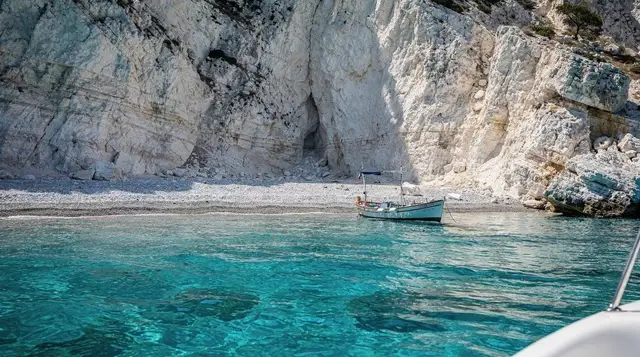
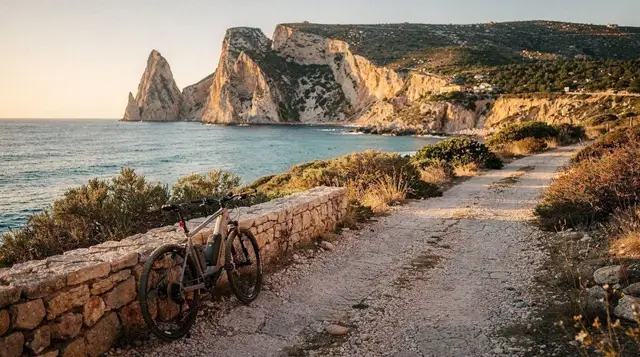
The Gulf of Orosei is the reason people put Sardinia’s east coast on a list at all — 40 kilometres of limestone cliffs, sea caves and beaches reachable only by boat or on foot, since no road runs along it. That single fact shapes this whole route: expect boat days rather than beach-hopping by car, and one properly demanding hike.
This itinerary bases you first in Cala Gonone, then moves south to Baunei and Santa Maria Navarrese for the trailheads further down the gulf. Unlike a beach-hopping trip on the south or north-west coast, almost every day here involves either a boat or a walk of at least a couple of hours, so pack accordingly — swimwear under hiking clothes, a dry bag for the boat days, and proper footwear rather than sandals for anything involving the Supramonte’s limestone terrain.
| Details | |
|---|---|
| Where | Cala Gonone → Dorgali/Oliena (day trip) → Baunei → Santa Maria Navarrese |
| Duration | 7 days, 6 nights |
| Best for | Hikers, snorkellers, anyone who wants the island’s wildest coast |
| Getting around | Hire car plus boats; some sections only reachable on foot |
| Best months | June, September (July-August book boats and huts well ahead) |
Day 1: Arrive and settle into Cala Gonone
Flying into Olbia, it’s about an hour and a half to Cala Gonone, passing through Orosei town on the way — worth a short stop for its cluster of whitewashed churches and quiet cobbled lanes if you’re not pressed for time, and a useful last chance to stock up on supplies before the road narrows toward the coast. Cala Gonone itself is a small resort with the best concentration of boat operators for the gulf; spend the first afternoon at its own beach before the boat days start. If you’re coming from the south instead, see day trips from Cala Gonone for how the area connects to the rest of the island.
Cala Gonone’s own town beach is a reasonable first swim, but it’s worth an early evening walk to the small harbour instead, where the boats that will take you out over the following days are moored and where most of the town’s better restaurants cluster. A full dinner for two here runs €50-70, on the higher side for the island but still well below Costa Smeralda pricing further north. Book boat excursions for the following two days this evening if you haven’t already — walk-up availability drops fast once late June arrives.
Day 2: The Gulf of Orosei by boat
Book the full-day boat trip through the Gulf of Orosei with swim stops, which typically reaches Cala Luna, Cala Sisine and a couple of the smaller, harder-to-reach coves further south, depending on the operator and sea conditions. Our Gulf of Orosei boat trips guide compares the main routes and how far south each one goes.
Most departures leave the harbour by 9am and return by mid-afternoon, so pack lunch or confirm whether the operator includes one, and bring more water than feels necessary — there’s little shade once the boat is anchored at each swim stop. For a shorter version focused on the closest beach, the Cala Luna guide covers getting there by boat, on foot, or both in the same day — the walking route from Cala Fuili takes around 90 minutes each way along a rocky coastal path and is a good option for anyone who’d rather skip a boat booking for this one beach.
Day 3: Bue Marino cave and Dorgali
The boat tour to the Bue Marino cave and Cala Luna reaches one of the Mediterranean’s largest sea cave systems, once home to the last Sardinian monk seals — our Bue Marino cave guide has the walking-tour alternative if you’d rather explore on foot from the car park above.
In the afternoon, drive up to Dorgali itself for a wine tasting; the town sits at the base of the Supramonte and produces some of the island’s better Cannonau, covered in our Cannonau wine guide. A tasting at one of the small family-run cantine around Dorgali typically costs €15-25 per person including four or five wines and a plate of local cheese and salumi, and booking a slot the same afternoon is usually possible outside the very peak of August.
Day 4: Gola su Gorropu canyon
One of Europe’s deepest canyons sits inland from Dorgali, and the Gorropu canyon trek with off-road transfer and lunch covers the approach and the walk into the gorge itself, where limestone walls rise several hundred metres on either side. Full route detail, including the option to walk in independently, is in our Gola su Gorropu hike guide. This is a genuinely demanding half-day on uneven terrain — proper boots, not sandals — with the canyon floor’s boulder field requiring some scrambling in places rather than a straightforward footpath throughout.
Day 5: Tiscali, the cave village
Deep inside the Supramonte massif, Tiscali is a Nuragic-era village built inside a collapsed cave doline, reached only on foot from either Dorgali or Oliena. The Tiscali mountain and Nuragic village hike covers the full route with a guide, which is worth having given how easy the unmarked paths are to lose.
Our Tiscali nuragic village hike guide and broader Supramonte hiking guide both cover trail difficulty and timing in more detail. Allow a full day for this one rather than trying to combine it with anything else — the round trip typically takes 4-6 hours depending on the approach chosen, and the final scramble up into the doline itself is steep enough that rushing it isn’t worth the risk.
Day 6: South to Baunei and Cala Goloritzé
Drive south along the SS125, one of the more scenic inland roads on the island, to Baunei, the base for reaching the gulf’s southern half. From the Golgo plateau above town, the guided trek to Cala Goloritzé descends roughly 900 metres over 2-3 hours to one of Sardinia’s most photographed beaches, framed by a distinctive limestone spire.
Book the beach access permit before you go — it’s a quota-controlled site — and check current numbers in our Cala Goloritzé guide and the hike to Cala Goloritzé. Golgo itself, the plateau where the trail begins, is worth a slow start rather than rushing straight onto the path — it’s an unusual, semi-wild landscape of grazing land and a genuinely deep natural sinkhole, Su Sterru, right beside the small church that marks the trailhead.
Day 7: Cala Mariolu, Arbatax, or a rest day
For a second, quieter cove, Cala Mariolu is reachable on a separate hike from the Golgo plateau, or more easily by the boat tour to Cala Goloritzé and Cala Mariolu from Arbatax, which covers both beaches in one day without the descent on foot. Arbatax itself, with its red porphyry rocks, makes a reasonable final base if you’re flying out via Tortolì or continuing towards the ferry at Olbia.
Anyone with an extra day should consider the taster sections of the Selvaggio Blu trek, Italy’s toughest long-distance coastal trail, which runs the length of this gulf for multi-day hikers — attempting even a short section requires an experienced local guide given the exposed, occasionally via-ferrata-style terrain. If flying out of Olbia, allow roughly two hours from Arbatax for the drive back, more if you’ve added the boat tour to the day’s plans.
What this route costs
Boat days are the main expense on this itinerary, and they add up quickly across a week built around three or four of them — budgeting for this in advance avoids an unpleasant surprise partway through the trip.
| Typical cost | |
|---|---|
| Double room, mid-range | €90-150/night |
| Full-day Gulf of Orosei boat trip (per person) | €60-95 |
| Guided Gorropu or Tiscali trek (per person) | €45-75 |
| Cala Goloritzé access permit (per person) | €5-6 |
| Dinner for two | €45-65 |
Cala Gonone and Baunei both sit at the pricier end of the island’s accommodation market in July and August given limited room supply relative to demand, so booking well ahead matters more here than in Cagliari or the south. Our Sardinia on a budget guide has wider cost-saving tactics, and travelling in June or September rather than peak summer cuts accommodation costs on this specific route noticeably.
Practicalities for this route
Distances here are short on the map but slow in practice — the SS125 winds through the Supramonte and rarely allows more than 50-60 km/h. Mobile signal drops out in stretches of the interior, so download offline maps before setting out on any hike; see eSIM and mobile data in Sardinia for coverage notes. Fuel stations thin out south of Dorgali, so top up before heading toward Baunei rather than assuming you’ll find one along the SS125. Our best time to visit Sardinia guide flags that this coast, more than most, gets genuinely quiet and many boat operators stop running entirely from November to April.
Frequently asked questions about a week on the east coast
Do I need to be a strong hiker for this itinerary?
For Gorropu and Cala Goloritzé, reasonable fitness helps but neither requires technical skill — both are well-marked, guided routes. Tiscali is harder to navigate but not physically extreme.
Can I see the Gulf of Orosei without hiking at all?
Yes — the boat days on days two, three and seven cover most of the gulf’s highlights without any walking beyond the beach itself.
Is Cala Gonone or Baunei the better base for this route?
Cala Gonone for the first half, since it has the most boat operators; Santa Maria Navarrese or Baunei for the second half, since they’re closer to the southern trailheads.
How far in advance should I book the Cala Goloritzé permit?
At least a few days ahead in June and September, a week or more in July and August, when daily numbers are capped and demand is highest.
Is this route doable in winter?
Not really as described — most boat operators stop between November and April, and some hiking routes close for maintenance; see Sardinia in winter for what’s realistic that time of year.
What should I do if the sea is too rough for the boat trip?
Rebook for a different day if your schedule allows, or switch to the Cala Goloritzé and Cala Mariolu hikes, which run independently of sea conditions.
Is this route better paired with Cagliari or with the north?
Either works geographically, but pairing with the north via the interior — as in our two-week road trip — makes for a more natural extended loop than backtracking south to Cagliari.
How does this itinerary compare to the dedicated hiking week on this site?
This route balances boat days with hiking; 7 days hiking in Sardinia drops the boat days almost entirely in favour of more demanding consecutive trekking days across the same region.
tours.7 days
Verified deep-linked GetYourGuide tours. Book through these links and we earn a small commission at no cost to you.
These are our own photographs of Sardinia, not the operator's pictures of this tour — open the tour page to see those.