7 days of Sardinia's archaeology
Nearly 7,000 nuraghi, and a lot more besides
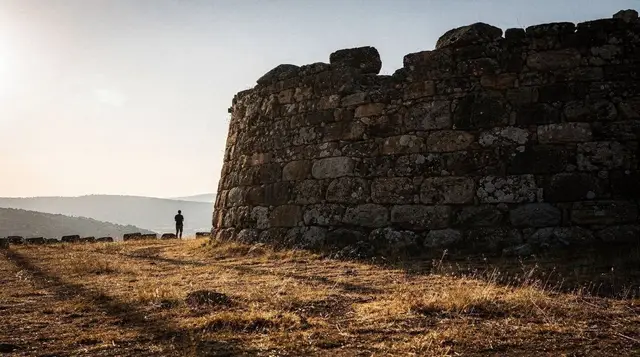
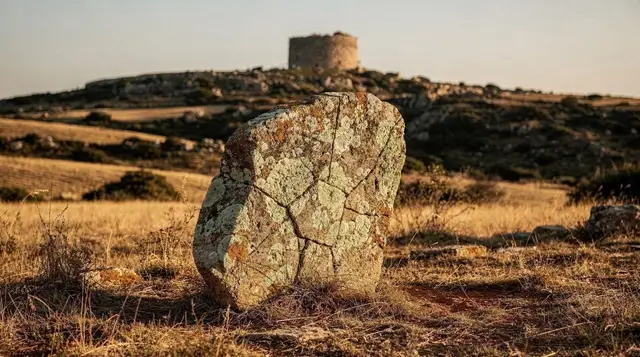
Sardinia has roughly 7,000 Bronze Age nuraghi scattered across the island, alongside pre-Nuragic domus de janas rock-cut tombs, Punic-Roman port cities, and a museum holding one of the most significant archaeological finds of the 20th century. This route strings together the best of all of it in a week — starting in Cagliari, out to Barumini and the Sinis Peninsula, then north to Arzachena and Alghero — without turning into an exhausting ruin-a-day slog, since most sites here pair naturally with a beach or a town.
| Details | |
|---|---|
| Where | Cagliari → Nora → Barumini → Sinis Peninsula/Cabras → Arzachena → Alghero |
| Duration | 7 days, 6 nights |
| Best for | History-minded travellers, repeat visitors, anyone who wants more than just Barumini |
| Getting around | Hire car throughout |
| Best months | Any — most sites are outdoor but shaded or coastal, and spring/autumn avoid midday heat on stone ruins |
Day 1: Cagliari — Tuvixeddu necropolis and the old town
Land at Cagliari-Elmas and spend the afternoon at Tuvixeddu necropolis, the largest Punic necropolis in the Mediterranean, cut into a limestone hill on the edge of the city — the Tuvixeddu necropolis and archaeological park tour covers the site with a guide. Round off the day in the Castello quarter, itself layered with Roman, Pisan and Spanish-era fortification, covered in things to do in Cagliari.
Day 2: Nora, a Punic-Roman port on the sea
Drive roughly 40 minutes to Pula and Nora for one of the island’s best-preserved Punic-Roman sites — mosaics, a theatre, and bathhouse floors sitting metres from the water, with parts of the ancient city now submerged offshore. The Nora archaeological site tour covers the ruins with included tickets and a guide; our Nora archaeological site guide has opening hours and independent-visit notes if you’d rather explore at your own pace.
Day 3: Barumini’s Su Nuraxi, the UNESCO complex
Drive an hour north to Barumini for Su Nuraxi, Sardinia’s only UNESCO World Heritage site and the best introduction anywhere on the island to Nuragic-era stone fortress architecture. The UNESCO guided tour of Su Nuraxi is compulsory by law given the complexity of the site’s layout. Our Su Nuraxi Barumini guide covers what’s included, and the wild horses of the Giara nearby makes a good non-archaeological pairing if you want to break up the day.
Day 4: The Sinis Peninsula and Tharros
Continue to the Sinis Peninsula, around an hour and a half from Barumini via Oristano, for Tharros — a Phoenician-Punic-Roman port city whose surviving columns and street grid sit directly above the sea. Full detail is in our Tharros archaeological site guide. Late afternoon, Is Arutas, the peninsula’s quartz-pebble beach, is a five-minute drive away if you want to end the day with a swim rather than another ruin.
Day 5: Cabras and the Giants of Mont’e Prama
In nearby Cabras, the e-scooter tour of the Giants of Mont’e Prama covers the museum housing enormous Nuragic-era stone statues, discovered in a nearby field in 1974 and among the most significant archaeological finds in the island’s history — full background in the Giants of Mont’e Prama. Before leaving the area, our broader domus de janas of Sardinia guide is worth reading, since these pre-Nuragic rock-cut tombs — some dating back over 5,000 years — appear across this whole region in smaller, less-visited sites.
Day 6: North to Arzachena’s archaeological park
The drive north to Arzachena in Gallura is long — around three hours — so treat this as a travel day with the archaeological park itself as the afternoon’s reward. The Arzachena archaeological park guide covers the Coddu Ecchju tomb of the giants and the nearby nuraghi, and tombs of the giants in Sardinia explains this specific type of collective Nuragic burial monument, distinct from anything at Barumini or Tharros.
Day 7: Alghero’s Nuraghe Palmavera
Finish the week at Alghero, around two hours from Arzachena, for Nuraghe Palmavera, a well-preserved complex just outside town with an unusually large central hut once thought to be a meeting space. Combine the visit with an afternoon in Alghero’s Catalan-influenced old town, covered in the Alghero old town guide, before departing via Alghero-Fertilia airport, or read a Nuragic route across Sardinia for how this week’s sites connect into the island’s wider Nuragic geography.
What this route costs
Archaeological site entry fees and guided tours are relatively modest compared with boat excursions elsewhere on the island, which makes this one of the more affordable weeks on this site outside accommodation costs.
| Typical cost | |
|---|---|
| Double room, mid-range | €85-150/night, higher in Gallura |
| Independent site entry (per person) | €5-10 |
| Guided site tour (per person, tickets included) | €25-50 |
| Dinner for two | €40-70 |
Most sites on this route can be visited independently at the lower end of that range, though Su Nuraxi at Barumini requires a guide by law regardless. For two people, a realistic total for the whole week lands around €950-1,450: roughly €250-400 for a mid-range rental car, €650-1,100 for six nights of mid-range accommodation, and the rest split between entrance tickets, guided tours and meals. Shoulder-season travel (April, May, September, October) keeps accommodation costs toward the lower end of that range and, as a bonus, means smaller crowds at sites with limited-capacity guided walk-throughs like Su Nuraxi. Our Sardinia on a budget guide has wider cost-saving detail.
A note on domus de janas
Domus de janas — literally “house of the fairies” in Sardinian — are pre-Nuragic rock-cut tombs found across the island, some dating back more than 5,000 years, well before the nuraghi themselves. They’re less heavily promoted than Barumini but appear near several stops on this route in smaller, often free-to-visit sites; our domus de janas of Sardinia guide has locations worth a short detour if you have any flexibility in the schedule.
What to pack for an archaeology week
Proper walking shoes matter more on this route than on a beach-focused trip — Su Nuraxi’s stone passages, Tharros’ exposed headland, and Tuvixeddu’s cut-rock paths are all uneven underfoot, and trainers with worn soles aren’t ideal on ancient stonework. Sun protection is essential too: none of these sites offer meaningful shade, and a full day moving between two or three of them in summer without a hat and water is genuinely uncomfortable.
Carry cash in small denominations — several of the smaller sites and site-adjacent kiosks don’t take cards reliably, and ticket machines at quieter locations can be temperamental. A lightweight guidebook or offline notes on each site’s history are worth having too, since on-site information boards are sometimes in Italian only, particularly at the less-visited stops like Nuraghe Palmavera.
Night-by-night summary
| Night | Base | Why |
|---|---|---|
| 1 | Cagliari | Tuvixeddu necropolis and the old town |
| 2 | Cagliari or Pula | Nora archaeological site nearby |
| 3 | Barumini area or Oristano | Su Nuraxi, positioned for the Sinis Peninsula next |
| 4 | Oristano/Sinis Peninsula | Tharros and Is Arutas beach |
| 5 | Oristano/Cabras | The Giants of Mont’e Prama museum |
| 6 | Arzachena | Archaeological park, positioned for Alghero the next day |
| 7 | Departure | Nuraghe Palmavera, then Alghero-Fertilia airport |
Adjusting this route
If a week feels too long for an archaeology-only trip, the two days most safely combined are Tharros and the Giants of Mont’e Prama — both sit close together near Cabras and can be done as a single, fuller day rather than two separate ones, freeing up a day for Alghero’s beaches or an extra night in Cagliari.
Conversely, anyone with more than a week who wants to fold this route into a longer trip should look at our 14-day road trip, which covers most of the same archaeological stops alongside a full loop of the coast and a Barbagia hiking day. Travellers arriving without a strong archaeology interest but wanting one or two highlights are better served by adding Barumini and Nora onto a beach-focused week rather than following this route in full — see 10 days in Sardinia for a version that mixes both.
Frequently asked questions about an archaeology week in Sardinia
Is Barumini worth it if I only have time for one nuraghe?
Yes — it’s the UNESCO-listed complex and the most complete example of Nuragic architecture on the island, even if smaller sites elsewhere have their own appeal.
How much walking does this route involve?
Moderate amounts at each stop — flat or gently uneven ground at every site on this list, none requiring hiking fitness, though good footwear still helps on uneven ancient stonework.
Can this itinerary be combined with beach time?
Yes, easily — Nora, Tharros and Alghero all sit close to good beaches, and several days on this route naturally leave an afternoon free for swimming.
Is a guide required at every site on this route?
Only at Su Nuraxi in Barumini by law; Nora, Tharros and Nuraghe Palmavera can be visited independently, though a guide adds useful context at each.
What’s the best time of year for this itinerary?
Spring and autumn are ideal, since none of these sites offer much shade and summer heat makes a full day of ruin visits considerably harder going.
Are there significant archaeological sites this route doesn’t cover?
Yes — the island has thousands of smaller nuraghi and tomb sites; this route covers the most complete and accessible examples rather than every site, and nuraghi of Sardinia has a wider list for anyone extending the trip.
How much should I budget for entrance tickets across the whole week?
Roughly €35-70 per person across the seven sites on this route, most charging €5-10 each; Su Nuraxi’s guided visit and the coastal shore-excursion-style tours cost more since a guide is built into the price.
Is this itinerary suitable for families with children?
Yes for older children with some tolerance for walking and heat, less so for toddlers — the flat but sometimes uneven ground at each site is manageable, but there’s little shade and few dedicated child facilities beyond what individual sites happen to offer.
How does Sardinia’s archaeology compare to what’s found elsewhere in the Mediterranean?
Its Nuragic civilisation is unique to the island — nowhere else in the Mediterranean has anything quite like the nuraghi — while the Phoenician-Punic-Roman layer at Nora and Tharros fits into a wider pattern seen across the region, including in Sicily; see Sardinia vs Sicily if you’re comparing the two islands’ archaeological offerings directly.
Do I need to book the Barumini guided tour in advance?
In July and August, yes — Su Nuraxi’s guided visits run on a fixed schedule with limited group sizes, and the same applies loosely to the shore-excursion-style tours at Nora and Tuvixeddu in peak season. Outside summer, turning up and joining the next available slot is usually fine.
Nuraghi & archaeology tours on GetYourGuide
Verified deep-linked GetYourGuide tours. Book through these links and we earn a small commission at no cost to you.
These are our own photographs of Sardinia, not the operator's pictures of this tour — open the tour page to see those.