The Arzachena archaeological park, a half-day nuragic loop
What's included in Arzachena's archaeological park, and how long does it take?
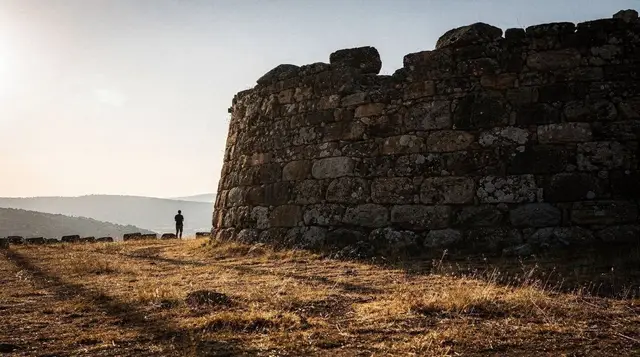
The cluster around Arzachena includes the Coddu Vecchiu and Li Lolghi tombs of the giants, Nuraghe Albucciu, Nuraghe La Prisgiona and the smaller Malchittu temple site, several on a combined ticket. Budget two to three hours to see the main sites properly, or a full half-day to cover all five without rushing.
The granite countryside around Arzachena, a few kilometres inland from the Costa Smeralda’s marina villages, holds one of the densest concentrations of nuragic monuments anywhere on the island. Within a short drive of the town centre sit two of Sardinia’s best tombs of the giants, two nuraghi of different scale and character, and a smaller ceremonial site — collectively referred to as Arzachena’s archaeological park, though in practice it’s a cluster of separately ticketed sites rather than a single fenced-off park.
This guide covers what’s actually at each site and how to plan a sensible half-day loop between them. For the tombs specifically, see our tombs of the giants guide; for the wider nuragic picture, nuraghi of Sardinia.
| Where | Countryside around Arzachena, Gallura, 15–20 minutes from Olbia airport |
| Main sites | Coddu Vecchiu, Li Lolghi, Nuraghe Albucciu, Nuraghe La Prisgiona, Malchittu |
| Ticketing | Combined tickets available for site pairs; no single all-sites pass |
| Time needed | 2–3 hours for the main sites, half a day for all five |
| Entry cost | €6–8 per site or pair, depending on combination |
| Best time | Morning, year-round; minimal shade at most sites |
Coddu Vecchiu: the standout tomb of the giants
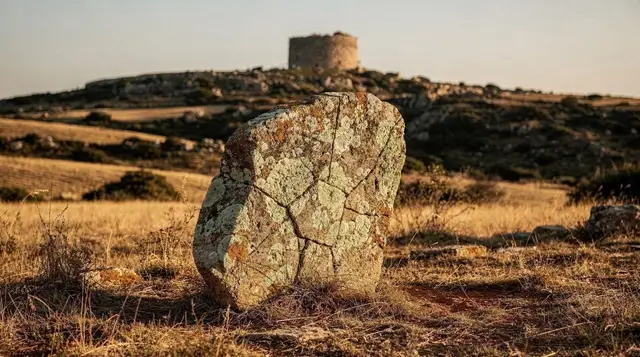
Coddu Vecchiu, around 4km northeast of Arzachena town centre, is widely regarded as the best-preserved tomb of the giants on the island — a central fissured stele over three metres tall flanked by curved wings of standing stones, fronting a long burial gallery that once held dozens of individuals across generations of use. It’s the single most impressive site in the cluster and, for many visitors with limited time, the one to prioritise if the whole loop doesn’t fit the day. Our tombs of the giants guide covers the construction and burial practice behind this style of monument in more depth.
Entry runs around €6 to €8, often bundled with the nearby Li Lolghi site on a combined ticket, and there’s minimal shade on the approach path, which crosses uneven pasture rather than a paved walkway — proper shoes and an early or late visit both matter more here than at most Sardinian sites, particularly between June and August.
Li Lolghi: a second major tomb, minutes away
A short drive from Coddu Vecchiu, Li Lolghi is a second, similarly striking tomb of the giants, generally sold on the same combined ticket and visited on the same loop. Its stele wall and gallery differ in scale and detail from Coddu Vecchiu’s, and seeing both back to back is a genuinely useful way to appreciate the variation within a single monument type — something that’s harder to grasp from photographs of just one example.
Nuraghe Albucciu: a nuraghe built into the granite itself
Nuraghe Albucciu sits almost within the town’s edge, tucked against a granite outcrop just off the main SS125, making it the most convenient nuraghe in the cluster to fit into a short stop. It’s a smaller, less monumental structure than Su Nuraxi at Barumini — no vast tower, no complex of surrounding huts — but that modesty makes it a good, quick introduction to nuragic architecture before tackling a bigger site elsewhere.
The site is partly built into the natural granite, an unusual feature archaeologists generally read as a deliberate defensive choice rather than a shortcut, since the surrounding boulders effectively extend the fortification without extra stonework. It’s a 20 to 30-minute visit including the small on-site information panels, with free, easy parking — a genuine contrast to the scramble for spaces that defines a Porto Cervo summer afternoon.
Nuraghe La Prisgiona: a larger complex with a well
Less famous than Albucciu but arguably more architecturally rewarding, Nuraghe La Prisgiona is a bilobate complex nuraghe with a surrounding village and, unusually, a well structure within the settlement itself — a feature that speaks to how self-sufficient these communities aimed to be, with water access built directly into the fortified footprint rather than relying on an external source. It sits close enough to Coddu Vecchiu and Li Lolghi to fold into the same half-day loop without much extra driving, and its more complete village layout gives a fuller sense of nuragic daily life than Albucciu’s more compact footprint offers on its own.
Malchittu: a ceremonial outlier
The smallest and least visited site in the cluster, Malchittu, is a single rectangular building rather than a tower or tomb, thought by most archaeologists to have served a ceremonial or religious function distinct from the residential and funerary purposes of the surrounding sites. It requires a short uphill walk from the nearest parking, which keeps visitor numbers low, and it’s a worthwhile addition for anyone with a genuine interest in the full range of nuragic-era architecture rather than just towers and tombs — though it’s the site most reasonably skipped if time is tight.
| Site | Type | Time needed | Priority |
|---|---|---|---|
| Coddu Vecchiu | Tomb of the giants | 45–60 min | Highest — the standout site |
| Li Lolghi | Tomb of the giants | 30–45 min | High — easy pairing with Coddu Vecchiu |
| Nuraghe Albucciu | Simple nuraghe | 20–30 min | Medium — quick, convenient stop |
| Nuraghe La Prisgiona | Complex nuraghe | 30–45 min | Medium — more complete village layout |
| Malchittu | Ceremonial structure | 20–30 min | Lower — for dedicated enthusiasts |
Why Gallura has so many nuragic sites in one place
The density of monuments around Arzachena isn’t a coincidence of modern tourism marketing — the granite plateau here was genuinely one of the more heavily settled parts of nuragic Sardinia, likely because the terrain offered good grazing land, reliable water sources, and abundant local granite for construction, all within a compact, defensible area. Archaeologists have catalogued dozens of further nuragic sites across the wider Arzachena and Gallura countryside beyond the five covered in this guide — smaller, less complete nuraghi and tombs that haven’t been developed for public visits — which gives a sense of just how thoroughly this landscape was occupied across the roughly six centuries of the nuragic period’s middle and later phases.
Compare this concentration with the more isolated major sites elsewhere on the island, like Su Nuraxi at Barumini or Nuraghe Arrubiu near Orroli, and Arzachena’s cluster stands out as a genuinely different kind of archaeological experience — not one dramatic site in isolation, but a whole settled landscape you can walk and drive through in a single morning.
What’s on display, and what stays in the ground
Unlike sites with an attached museum, such as the Giants of Mont’e Prama collection in Cabras, most of what’s found during excavations at the Arzachena cluster — pottery fragments, tools, occasional bronze objects — has historically been catalogued and moved to regional or national collections rather than displayed on site.
Small information panels at each location show photographs and diagrams of significant finds, but visitors expecting an on-site museum or visitor centre with artefacts under glass will be disappointed; this is fundamentally an outdoor, structural visit rather than a curated collection experience. For the artefacts themselves, the Museo Archeologico Nazionale in Cagliari holds the broader collection of bronzetti figurines and tools from nuragic sites across the island, Arzachena’s finds included.
Planning the loop: tickets, timing and how to visit
Unlike Su Nuraxi at Barumini, none of the Arzachena sites require a mandatory guided tour — each operates as a self-guided visit with information panels in Italian and English, ticketed individually or in pairs at the site entrances. There’s no single combined pass covering all five sites, and no organised minibus tour of the archaeological park as its own product; independent visiting with your own car, moving between sites in whatever order suits your day, is genuinely the normal way to see this cluster, and there’s no real disadvantage to doing it that way given how close together the sites sit.
A sensible order for a half-day loop starts with Coddu Vecchiu and Li Lolghi in the cooler morning hours, since both have minimal shade, then moves to Albucciu and La Prisgiona, and finishes with Malchittu if time and interest allow. Two to three hours covers the main sites at a reasonable pace; budget closer to four if you’re adding Malchittu and want to linger rather than rush between stops.
What to bring and how to dress for the visit
None of the five sites in this cluster involve the narrow, low interior passages of Su Nuraxi at Barumini, but the approach paths to Coddu Vecchiu, Li Lolghi and Malchittu all cross uneven, unpaved ground rather than laid walkways, so trainers or hiking shoes matter more here than sandals.
Sun protection is worth taking seriously between May and September — hats, sunscreen and water, since shade is minimal across the whole cluster and the granite terrain reflects heat noticeably by mid-morning in summer. A printed or downloaded map of the sites’ locations is worth having too, since mobile signal in this rural stretch of Gallura can be patchy between stops, even though it’s only a few kilometres from a well-connected resort coastline.
Pairing the ruins with the coast
Because Arzachena sits so close to the Costa Smeralda’s marina villages, a common and genuinely sensible pattern is a morning at the archaeological sites followed by an afternoon on the water. a boat trip to the La Maddalena archipelago departing from nearby Cannigione works well for this — Cannigione’s harbour is about 15 minutes from Arzachena, making the archipelago crossing a natural afternoon follow-up to a morning among the tombs and nuraghi.
For visitors based slightly further north, a maxi-RIB tour of La Maddalena and Caprera departing from Palau is a similarly practical pairing, with Palau around 20 minutes from Arzachena.
Getting there and getting around
Olbia Costa Smeralda airport is around 20 minutes from Arzachena by car, making the whole cluster genuinely accessible even on a short fly-in trip. A hire car is close to essential — the sites are spread across several kilometres of countryside with no useful bus link between them — and our renting a car in Sardinia guide covers what to expect on price and paperwork for 2026. See our Arzachena destination guide for wider information on using the town as a base for the whole Costa Smeralda area, including why it’s often a noticeably cheaper option than staying directly on the coast.
For a broader nuragic trip taking in sites beyond Gallura, our nuragic route across Sardinia guide shows how Arzachena fits alongside Su Nuraxi at Barumini and other major sites, and the seven-day archaeology itinerary uses this cluster as its northern leg.
Frequently asked questions about the Arzachena archaeological park
Is there a single ticket that covers all five sites?
No — tickets are sold individually or in pairs (typically Coddu Vecchiu with Li Lolghi) at each site’s entrance rather than as one combined park pass covering everything.
Do I need to book in advance?
Generally no, since none of the sites operate on the mandatory timed-entry system used at Su Nuraxi; tickets are bought on arrival. Summer weekends can still mean a short wait at the more popular sites.
How much walking is involved?
Moderate — the approach paths to Coddu Vecchiu and Li Lolghi cross uneven pasture rather than paved walkways, and Malchittu requires a short uphill walk. None of the sites involve the narrow, low interior passages found at Su Nuraxi.
Is a guided tour available for the whole cluster?
Not as a dedicated product — there’s no organised minibus tour built specifically around the Arzachena archaeological park. Most visitors see it independently by car, moving between sites at their own pace.
Can I fit the whole cluster into a morning if I’m also doing a boat trip in the afternoon?
Yes, if you focus on Coddu Vecchiu, Li Lolghi and one nuraghe — two to three hours covers those comfortably, leaving the afternoon free for a boat trip from nearby Cannigione or Palau.
Which single site should I prioritise if I only have an hour?
Coddu Vecchiu — it’s the best-preserved tomb of the giants on the island and the standout site in the cluster by a clear margin.
Are there more nuragic sites in the area beyond these five?
Yes — the wider Gallura countryside around Arzachena holds dozens of further, smaller nuragic sites that haven’t been developed for public visits, evidence of how densely this granite plateau was settled during the nuragic period. The five sites covered here are simply the ones set up with paths, tickets and information panels for visitors.
Is there an on-site museum with artefacts from the digs?
No — most excavated finds from the Arzachena cluster have been catalogued and moved to regional or national collections, particularly the Museo Archeologico Nazionale in Cagliari. Information panels at each site show photographs of significant finds rather than displaying the objects themselves.
Nuraghi & archaeology tours on GetYourGuide
Verified deep-linked GetYourGuide tours. Book through these links and we earn a small commission at no cost to you.
These are our own photographs of Sardinia, not the operator's pictures of this tour — open the tour page to see those.