A capital that works as a base, not just a stopover
Most visitors land at Cagliari-Elmas and drive straight north, treating the city as an airport with a name attached. That is a mistake. Cagliari is the only place in Sardinia where you get a proper walkable old town, a genuine city beach, and a full calendar of restaurants and bars open outside the summer season, all without needing a car for the first few days. It sits at the head of the Golfo degli Angeli, wrapped around a limestone hill crowned by the Castello quarter, with the Molentargius wetlands and Poetto beach stretching east along the coast.
The layout is simple once you have it: four historic quarters — Castello, Marina, Stampace and Villanova — climb the hill above the modern port and shopping streets, and everything of interest sits within a 20-minute walk of Piazza Yenne. For details on the Roman amphitheatre, the cathedral, the bastions and the museums, see our full guide to things to do in Cagliari; this page focuses on deciding whether to base yourself here and what the city itself is like to visit.
| Region | South Sardinia |
| Nearest airport | Cagliari-Elmas (CAG), 6km from the centre |
| Getting there | Bus line 700 from the airport (15 minutes, €1.30) or taxi (€15-20) |
| Getting around | Walkable centre; CTM buses to Poetto and the suburbs; a car only needed for day trips |
| Best time to visit | April-June and September-October for the city; June-September for Poetto |
| Days needed | 2-4 days in the city, or longer as a touring base |
Getting to Cagliari and getting around
Cagliari-Elmas (CAG) is Sardinia’s busiest airport and the only one with meaningful winter connections, which matters if you are visiting outside the May-to-October window when Olbia and Alghero both thin out. See our Cagliari-Elmas airport guide and getting to Sardinia by air for route detail. From the airport, bus 700 runs into Piazza Matteotti roughly every 20 minutes and takes about 15 minutes; a taxi to the centre is a fixed €15-20.
Inside the city you genuinely do not need a car. The Castello, Marina and Stampace quarters are all within walking distance of each other, and CTM city buses (plus the PRT light rail) cover Poetto beach and the Molentargius park cheaply. A rental car only earns its keep once you start pointing the trip outward — to Barumini, Nora, Chia or Villasimius — and even then, one-way rentals from the airport are simple. If you are weighing up whether to bother at all, our guide to renting a car in Sardinia and driving in Sardinia cover licence rules, insurance excess traps and the reality of the SS131 dual carriageway versus everything else, which averages closer to 60km/h.
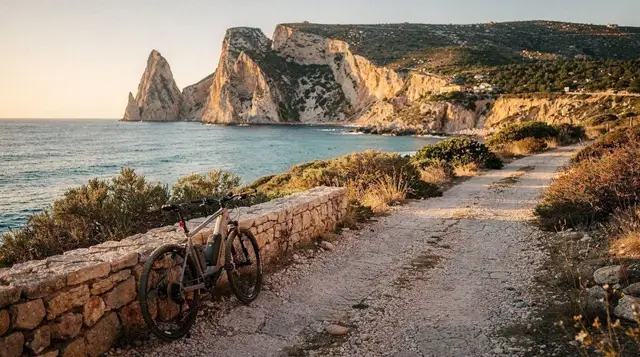
A good way to get oriented on day one, before you have worked out the layout yourself, is a guided walk. We rate the three-hour historical walking tour of Cagliari for exactly this: it links the Castello bastions, the cathedral and the Roman amphitheatre into one narrated route, which saves a day of doubling back once you know where things are. If you prefer to move under your own steam, the two-hour e-bike tour with a coffee stop covers more ground along the seafront and the Molentargius saltpans.
The historic quarters: Castello, Marina, Stampace, Villanova
Castello is the walled quarter on top of the hill, built by the Pisans in the 13th century and still entered through two surviving towers, Torre dell’Elefante and Torre di San Pancrazio. The Bastione di Saint Remy, a limestone terrace added by the Piedmontese in the 19th century, gives the best free view over the rooftops to the gulf — arrive at golden hour and it is uncrowded even in August. The Cattedrale di Santa Maria sits at the quarter’s centre, plain outside and unexpectedly ornate inside, with a Romanesque pulpit brought from Pisa in pieces in 1312.
Marina, the old fishermen’s district below Castello, is now the restaurant quarter: narrow lanes lined with trattorie, several genuinely good, alongside the inevitable tourist-menu places nearer the port.** Stampace** holds the Roman amphitheatre (2nd century AD, partly cut into the rock, free to view from outside the fence) and the Orto Botanico.** Villanova**, quieter and more residential, is worth a wander for the Basilica di San Saturnino, one of the oldest Christian buildings on the island, dating to the 5th century.
If archaeology is your main interest rather than architecture, the five-hour archaeological excursion bundles the amphitheatre, the Museo Archeologico Nazionale’s nuragic bronze figurines and the Necropoli di Tuvixeddu into one guided half-day, which is more efficient than trying to sequence them yourself on a hot afternoon.
Poetto beach and the Molentargius flamingos
Poetto is Cagliari’s genuine advantage over Alghero or Olbia as a city base: an 8km sweep of pale sand running from the Sella del Diavolo headland to Quartu Sant’Elena, reachable by bus in 20 minutes from the centre. It is a working city beach rather than a resort — sun loungers cost €10-15 a day at the licensed stabilimenti, but long stretches are free and unmanaged if you bring your own umbrella. Our Poetto beach guide and the broader best beaches in south Sardinia round-up cover which stretch suits swimmers, families or the evening aperitivo crowd separately.
Between Poetto and the city, the Molentargius-Saline regional park is one of Europe’s few urban wetlands with a resident population of greater flamingos, visible year-round and easiest to see at dawn or dusk from the cycle path along Via la Palma. Our flamingos at Molentargius guide has the best viewpoints and a note on the old saltworks history, which is more interesting than it sounds — Cagliari salt was traded across the Mediterranean for centuries.
Day trips from Cagliari
This is where Cagliari earns its place as a touring base rather than just a city stop. Everything below is doable there and back in a day, and several combine well if you have a car.
| Destination | Driving time | What it’s for |
|---|---|---|
| Barumini | 55 minutes | Su Nuraxi, Sardinia’s only UNESCO site |
| Pula and Nora | 35 minutes | Punic-Roman ruins on a beach headland |
| Chia | 50 minutes | Dune beaches, Tuerredda, Cala Cipolla |
| Villasimius | 50 minutes | Capo Carbonara marine reserve, boat trips |
| Costa Rei | 60 minutes | Long sandy beach, quieter than Chia in peak season |
The Su Nuraxi nuraghe complex at Barumini is genuinely worth the detour — it is the only Sardinian site with UNESCO status, a Bronze Age stone tower complex that was still being built onto in the Iron Age. Our Su Nuraxi Barumini guide covers ticket booking (entry is guided-only, timed slots, book ahead in July-August) and what else to see in the Marmilla nearby. The guided day trip to Su Nuraxi from Cagliari removes the parking and ticket-queue hassle if you would rather not drive.
Nora, at Pula, is the better choice if you want ruins with a beach attached — the Roman theatre and mosaic floors sit right on a headland with swimmable coves either side, and our Nora archaeological site guide has opening hours and the best combined ticket. For beach-first day trips, Chia and Villasimius pull in different directions: Chia has the dramatic dune backdrop and Tuerredda’s turquoise water (see our Chia beaches guide), while Villasimius has the better boat-trip infrastructure into the Capo Carbonara marine protected area (see Villasimius beaches guide).
If beaches are the whole point of the day, the 4x4 tour to Villasimius’s hidden beaches and the 4x4 tour through the Chia hills to the coast both get you to coves a hire car cannot reach easily.
Two further day trips run longer but are genuinely feasible from Cagliari with an early start: Alghero on the north-west coast and Bosa on the river Temo, both roughly two hours’ drive one way, or a guided day tour if you would rather not do 4-plus hours behind the wheel. For those, see our day trips from Cagliari guide for the full list including timings.
Where to eat in Cagliari
Marina quarter is the obvious hunting ground, but the better places are a short walk beyond the main tourist strip on Via Sardegna and Via Roma. Look for malloreddus alla campidanese (saffron pasta with sausage ragù), fregola con arselle (toasted semolina pasta with clams, a Cagliari speciality), and bottarga shaved over spaghetti — the roe comes from Cabras, on the west coast, and Cagliari kitchens use it liberally. For a full run-down of dishes and regional variation, see what to eat in Sardinia and Sardinian food and wine.
A glass of Cannonau or Vermentino with dinner is the default here rather than an upsell — both are cheap and good by the glass in ordinary trattorie, not just wine bars. Our Cannonau wine guide explains why the grape variety, related to Grenache, produces such deep, high-alcohol reds from Sardinia’s granite and schist soils.
Festivals and nightlife
If your visit lands on 1 May, Sant’Efisio is worth planning around: a procession of several thousand people in traditional Sardinian costume, ox-carts and horsemen, honouring a 17th-century plague vow, running from Cagliari to Nora and back over four days. Book accommodation months ahead if so — see our Sant’Efisio festival guide. Outside festival dates, Cagliari’s evening life concentrates around Marina’s bars and, in summer, the beach clubs along Poetto; our Cagliari nightlife guide has specifics, and the wider Sardinia festivals calendar covers what else might coincide with your dates.
Frequently asked questions about basing yourself in Cagliari
How many days should I spend in Cagliari itself?
Two full days covers the historic centre, Poetto and Molentargius comfortably. If you are using Cagliari as a base for day trips to Barumini, Nora, Chia and Villasimius, budget four to five days total before moving on.
Is Cagliari safe at night?
Yes, by ordinary European city standards. Castello and Marina are well-lit and busy with restaurant traffic into the evening; the usual precautions around bag-watching in crowded areas apply, more so during Sant’Efisio and in August.
Can I visit Cagliari without a car and still see the south coast?
Partially. CTM buses reach Poetto, Quartu Sant’Elena and some Sarrabus towns, but Chia, Villasimius and Barumini are impractical without a car or a booked tour, since ARST rural buses run infrequently and not on useful schedules for day trips. See visiting Sardinia without a car for what is realistically reachable by public transport.
Is Cagliari expensive compared to the rest of Sardinia?
No — it is generally cheaper than the Costa Smeralda and comparable to or slightly cheaper than Alghero for food and accommodation, since it is a working regional capital rather than a resort economy. Our is Sardinia expensive guide has a fuller cost breakdown.
What is the best month to visit Cagliari specifically?
May and late September are the sweet spot: warm enough to swim at Poetto, cool enough to walk Castello’s hill at midday without wilting, and before or after the peak-August price spike. See best time to visit Sardinia for the island-wide breakdown.
Should I stay in Cagliari or Chia if I only have a few days in the south?
Stay in Cagliari if you want a mix of culture, beach and nightlife with day-trip flexibility; stay in Chia if beach time is the entire point and you are happy to drive 45-50 minutes each way for a proper dinner out. Many visitors do two nights each.
Is the Cagliari amphitheatre worth visiting if I’ve already seen Nora or Barumini?
It is smaller and less visually complete than Nora’s theatre, since much of its stone was quarried away for later buildings, but it is free to view from outside and worth ten minutes if you are already in Stampace. It is not worth a special trip on its own.
Does Cagliari get overcrowded in August?
The old town does get busy but nowhere near Costa Smeralda or Alghero levels — Cagliari’s tourism is spread across business, transit and leisure travellers year-round, so August feels more like an active city than an overwhelmed one. Poetto is the exception: it gets genuinely packed on August weekends.