Nuraghe Palmavera, the easiest nuraghe to reach from the coast
Is Nuraghe Palmavera worth visiting if I'm staying in Alghero?
Yes. It's a genuine complex nuraghe with a village of around 50 huts, a short drive from Alghero's old town toward Porto Conte, and it's the most convenient way to add nuragic history to a coastal-based Alghero trip without giving up a whole day of driving inland.
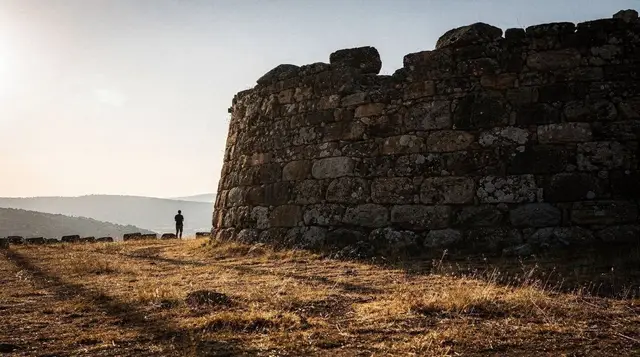
A ten-minute drive from Alghero’s old town, on the road toward Porto Conte, Nuraghe Palmavera is proof that nuragic archaeology doesn’t have to mean a long detour inland. It’s a genuine complex nuraghe — a central tower with a second bastion, surrounded by a village of around 50 excavated stone huts — and its most distinctive feature is a large circular hut with a stone bench running around the entire interior wall, thought to have served as a communal meeting space rather than an ordinary home.
Because it sits so close to a proper resort town, it’s the nuraghe most visitors on a beach-focused Alghero trip actually get to, and a genuinely good introduction to nuragic archaeology if the bigger inland sites don’t fit the itinerary. For the wider picture of nuraghi across the island, see our nuraghi of Sardinia guide.
| Where | 10 minutes from Alghero old town, on the road toward Porto Conte |
| Type | Complex nuraghe, bilobate (two towers), with surrounding village |
| Built | c. 1500–1200 BC, with later reuse into the Iron Age |
| Distinct feature | Capanna delle Riunioni — circular meeting hut with a stone bench |
| Entry cost | Around €6–8, self-guided with information panels |
| Best time | Morning, year-round; site is exposed with little shade |
A nuraghe built for the site’s own geography
Nuraghe Palmavera is a bilobate complex — a main tower joined to a second, slightly smaller tower — built from local limestone across roughly 1500 to 1200 BC, with clear evidence of continued use and modification through the Iron Age as Phoenician traders began establishing coastal posts elsewhere on the island.
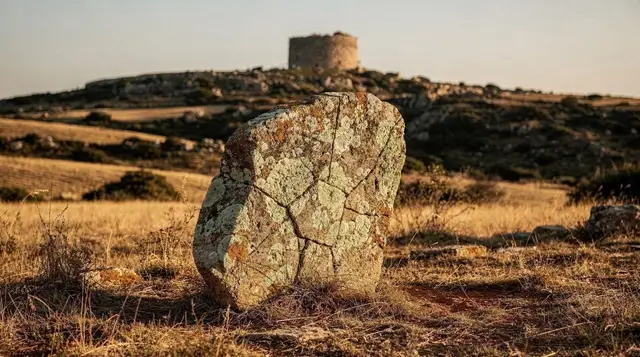
The main tower’s tholos vault, though partially collapsed compared to better-preserved examples like Su Nuraxi, is still legible enough to show the corbelled drystone technique common to every nuraghe on the island, and the site’s position — on a low rise with clear sightlines toward the Porto Conte bay — suggests defensive planning was at least part of the original intent, even if, as with most nuraghi, the full range of purposes remains debated.
Around the towers, excavators uncovered a village of roughly 50 circular hut foundations, occupied across several centuries and showing evidence of domestic activity — grinding stones, pottery fragments, hearths — alongside the more ceremonial function of the site’s best-known structure.
The Capanna delle Riunioni: a room built for a group, not a family
Palmavera’s most distinctive feature is the Capanna delle Riunioni, or “hut of the meetings” — a large circular structure, bigger than the ordinary domestic huts around it, with a continuous stone bench built into the interior wall, clearly designed to seat a group rather than house one family.
Archaeologists generally read this as evidence of some form of communal decision-making or ceremonial gathering space distinct from everyday domestic life, a rare and specific piece of physical evidence for social organisation in a culture that otherwise left almost nothing in writing. It’s one of the clearest examples of this kind of structure at any nuragic site on the island, and worth spending a few extra minutes at rather than moving straight past it toward the main tower.
Visiting Palmavera: what to expect
Unlike Su Nuraxi, Palmavera doesn’t require a mandatory small-group guided tour to enter — it’s a self-guided site with information panels in Italian and English, which makes it a faster, more flexible stop if you’re squeezing it into a coastal-focused day. That said, a guided visit adds real value here, since the Capanna delle Riunioni’s significance and the layout of the wider village are easier to appreciate with context than to piece together from panels alone.
a guided city centre tour combined with a visit to the Palmavera nuraghe pairs Alghero’s Catalan-influenced old town with the nuragic site in a single half-day outing, useful if you only have one morning for history before heading to the beach. For a visit focused more tightly on the nuraghe and the surrounding natural park, a visit to the Nuraghe Palmavera and Porto Conte Park extends the trip into the protected coastal park beyond the site itself. A more relaxed version, the Palmavera nuraghe tour with aperitif, closes out the visit with a drink — a genuinely pleasant way to end a history-focused morning before the afternoon heat sets in.
Porto Conte Regional Park: the nuraghe’s natural setting
Palmavera sits within the wider Porto Conte Regional Park, a protected stretch of coast and countryside running out toward Capo Caccia’s limestone cliffs, and combining the nuraghe with some time in the park is a natural way to extend a half-day into a fuller one. an e-bike tour inside the Natural Park of Porto Conte covers more ground than walking allows, useful for reaching viewpoints and beaches further into the park without a long hike.
For a different pace entirely, a guided horse ride at Lake Baratz and Porto Ferro takes in Sardinia’s only natural lake, a short drive from Palmavera itself and a genuinely underrated stop most Alghero-based visitors skip entirely in favour of the coast.
| What | Where | Time needed | Combine with |
|---|---|---|---|
| Nuraghe Palmavera | 10 min from Alghero old town | 30–45 minutes | Alghero city centre tour |
| Porto Conte Regional Park | Surrounding the nuraghe | 1–3 hours | E-bike or horse riding |
| Lake Baratz | Short drive from Palmavera | 1–2 hours | Horseback riding |
| Capo Caccia | Further into the park | Half day | Boat trips, diving |
Excavation history: how Palmavera was uncovered
Palmavera was excavated across several campaigns through the 20th century, with the most significant work carried out from the 1970s onward, revealing the full extent of the village around the main towers rather than just the fortress structure itself. Earlier antiquarian interest in the site goes back further still — like much of Sardinia’s nuragic archaeology, Palmavera was known and partially explored long before modern stratigraphic methods gave archaeologists the tools to properly separate its different phases of use.
What emerged from the more careful later excavations was a settlement that had clearly been reused and adapted across centuries, with hut floors and hearths showing signs of ongoing domestic occupation well past the tower’s original Bronze Age construction — a pattern common to most large nuragic villages, where the fortress itself is often only the earliest and most visible layer of a much longer settlement history.
What life in the village looked like
The roughly 50 hut foundations excavated around Palmavera’s towers give a genuine, if partial, picture of daily nuragic life beyond the more dramatic fortress architecture. Grinding stones for processing grain, storage vessels for holding food through the winter months, and hearths positioned near hut entrances all point to a settled agricultural community rather than a purely military outpost, and several huts show specialised features — slightly larger footprints, different internal arrangements — that suggest some division of function between ordinary domestic space and huts used for storage, craft work or communal purposes beyond the Capanna delle Riunioni itself.
It’s this combination of monumental defensive architecture and mundane domestic evidence, sitting side by side within the same excavated footprint, that makes Palmavera a genuinely useful site for understanding nuragic society as more than just tower-builders — something the more famous but narrower silhouette of a lone nuraghe elsewhere on the island doesn’t always convey as clearly.
Best light and photography
Palmavera faces open countryside rather than the sea, so the dramatic golden-hour coastal shots associated with nearby Capo Caccia don’t really apply here — instead, the site photographs best in the soft, low light of early morning, when the limestone takes on a warmer tone and the site is at its quietest before any tour groups arrive. Midday light tends to flatten the low walls and hut foundations, making the layout harder to read in photos even though it’s still perfectly visible in person. If a clear, uncrowded shot of the main tower and the Capanna delle Riunioni’s stone bench matters to you, aim to arrive close to opening time rather than mid-morning.
Getting to Palmavera and parking
Palmavera is a straightforward 10 to 15-minute drive from central Alghero along the SP55 toward Porto Conte and Capo Caccia, with clear signage and a dedicated car park at the site entrance — a genuine contrast with the parking scramble in Alghero’s old town itself during peak summer. There’s no useful public bus service running directly to the site, so a hire car, taxi, or one of the guided tours above are the practical options. See our renting a car in Sardinia guide if you haven’t arranged one, and our Alghero old town guide for what else to see in the city itself before or after the trip out to the nuraghe.
Comparing Palmavera with Sardinia’s other coastal-adjacent nuraghi
Palmavera isn’t the only nuraghe built within easy reach of a resort town — Nuraghe Albucciu near Arzachena offers a similar convenience for visitors based on the Costa Smeralda, tucked against a granite outcrop just off the main road into town. The two sites make an interesting comparison for anyone splitting a Sardinia trip between the northwest and Gallura: Palmavera’s excavated village and distinctive meeting hut give it more to see in a single stop, while Albucciu’s unusual granite-integrated construction offers a genuinely different architectural approach within a smaller footprint.
Neither replaces the scale of Su Nuraxi at Barumini, but both make the point that nuragic archaeology doesn’t have to mean sacrificing a beach day to reach it — a genuinely useful thing to know if your itinerary is built primarily around the coast rather than inland touring.
Where Palmavera fits on a longer trip
For a broader nuragic itinerary, Palmavera is best understood as the easy, coastal-adjacent counterpart to inland sites like Santu Antine near Torralba or Su Nuraxi at Barumini — genuinely worthwhile on its own, but not a substitute for the scale of the island’s biggest complex nuraghi if archaeology is a major focus of the trip.
It also pairs naturally with the domus de janas necropolis at Anghelu Ruju, just a few minutes further along the same road toward Fertilia, giving a genuinely useful contrast between rock-cut prehistoric tombs and later Bronze Age tower architecture in a single half-day loop. For a longer stay in the northwest, our Alghero and Capo Caccia boat trips guide covers the coastal side of the same area, and the seven-day north Sardinia itinerary shows how Palmavera fits alongside the rest of a northwest-focused trip.
Frequently asked questions about Nuraghe Palmavera
How long does a visit to Palmavera take?
Most visitors need 30 to 45 minutes to see the towers and village properly, longer with a guide who explains the Capanna delle Riunioni’s significance and the wider village layout.
Do I need to book a guided tour, or can I visit independently?
You can visit independently — the site has information panels in Italian and English and doesn’t require a mandatory guide, unlike Su Nuraxi at Barumini. A guided option adds context but isn’t required.
Is Palmavera suitable for children?
Yes, generally — it’s a more open, exterior-focused site than Su Nuraxi’s narrow interior passages, with fewer physical demands, though there’s little shade so bring water and hats in summer.
How does Palmavera compare to Nuraghe Albucciu near Arzachena?
Both are complex nuraghi convenient to a coastal base, but Palmavera has the more extensively excavated surrounding village and the distinctive meeting hut; Albucciu is smaller and partly built into natural granite outcrops. See our Arzachena archaeological park guide for the Gallura equivalent.
Is there anything to eat or drink near the site?
Not directly on site, though several of the guided tour options include an aperitif stop nearby, and Alghero’s old town, a short drive away, has a full range of restaurants and cafés.
Can I combine Palmavera with a beach day?
Yes, easily — Porto Conte park and several beaches sit within a short drive, making it straightforward to do the nuraghe in the morning and the coast in the afternoon.
Who excavated Palmavera, and when?
The site saw several excavation campaigns through the 20th century, with the most extensive work uncovering the surrounding village from the 1970s onward — later than the pioneering excavations at Su Nuraxi in the 1950s, which is part of why Palmavera is less internationally famous despite its genuine archaeological value.
Is Palmavera busy in summer?
It sees a steady flow of visitors given its proximity to Alghero, particularly late morning when guided tours tend to arrive, but nothing like the crowding at Alghero’s old town itself in August. An early visit still gives the most comfortable experience.
Does Palmavera have a gift shop or café?
There’s a small kiosk near the ticket office at busier times of year, but nothing beyond basic drinks and souvenirs — plan to eat properly back in Alghero’s old town, a short drive away, rather than expecting food options on site.
Nuraghi & archaeology tours on GetYourGuide
Verified deep-linked GetYourGuide tours. Book through these links and we earn a small commission at no cost to you.
These are our own photographs of Sardinia, not the operator's pictures of this tour — open the tour page to see those.