7 days hiking in Sardinia
Limestone, not sand, for a week
Most Sardinia itineraries are built around beaches; this one is built around the Supramonte and Ogliastra’s limestone massif instead — canyons, cave villages and descents to beaches that most visitors only ever see from a boat.
Expect genuinely demanding days, uneven terrain, patchy mobile signal, and some of the best walking in the Mediterranean — this is a deliberately more physical week than any other itinerary covered on this site, and it rewards travellers who’ve already done a more relaxed first trip to the island and want to go deeper into one specific region. The route bases you first around Oliena and Dorgali, then moves south to Baunei for the Golgo plateau’s trailheads.
| Details | |
|---|---|
| Where | Oliena/Dorgali → Baunei/Golgo plateau → Gennargentu (optional) |
| Duration | 7 days, 6 nights |
| Best for | Fit, experienced hikers comfortable on unmarked or lightly marked terrain |
| Getting around | Hire car between bases; local guides recommended for Tiscali and the Golgo descents |
| Best months | May, June, late September — avoid the July-August heat on exposed limestone |
Day 1: Arrive and base in Oliena
Fly into Olbia and drive around an hour and a half to Oliena, a town at the foot of the Supramonte known for its Cannonau wine and its role as the gateway to Tiscali. The town itself is small and low-key, without much in the way of nightlife or resort infrastructure, which suits the week’s overall focus on the landscape rather than the towns. Spend the afternoon settling in and checking gear — this week rewards proper boots more than almost anywhere else covered on this site. Our Supramonte hiking guide is worth reading in full before day two.
Day 2: Tiscali, the cave village
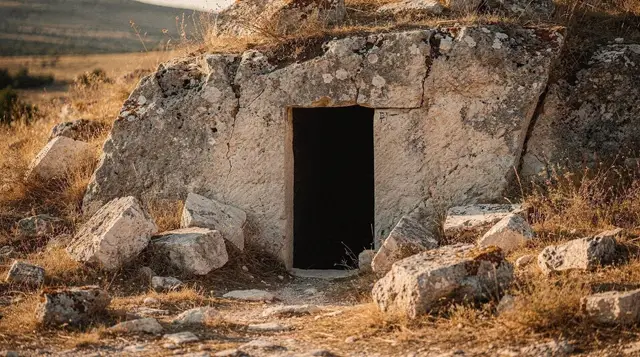
The Tiscali mountain and Nuragic village hike reaches a Bronze Age settlement built inside a collapsed cave doline, hidden deep in the Supramonte and reachable only on foot from Oliena or Dorgali. Paths here are unmarked in places, and a guide is genuinely worth having rather than a nice-to-have — our Tiscali nuragic village hike guide has more on route difficulty and the two main approach trails. Allow 4-6 hours round trip depending on which approach you take, and treat this as the day’s only activity — the final scramble up into the doline is steep enough that rushing it at the end of a long day isn’t worth the risk.
Day 3: Gola su Gorropu
Move base to Dorgali and spend the day on the Gorropu canyon trek with off-road transfer and lunch, descending into one of Europe’s deepest canyons, where limestone walls rise several hundred metres either side of a boulder-strewn riverbed — the scale of it is genuinely hard to appreciate from photographs alone, and most visitors underestimate quite how deep it feels standing at the bottom looking up.
Our Gola su Gorropu hike guide covers the independent-walking option for anyone who’d rather skip the guided transfer, plus current permit requirements for the canyon floor. The approach involves a genuinely steep, loose-surfaced descent before the canyon floor itself levels out into the boulder field, so trekking poles are worth packing if you use them regularly.
Day 4: Rest, wine and a short walk
Build in a genuine rest day after two demanding hikes — Dorgali produces some of the island’s better Cannonau, and a tasting is a legitimate way to spend an afternoon; our Cannonau wine guide has context on the grape and the region’s producers. A short, flatter walk around Cala Gonone’s coastline keeps legs moving without another full ascent, and a swim off the town beach is a genuinely good way to loosen up tired legs after two demanding days.
Day 5: South to Baunei and Cala Goloritzé
Drive south along the SS125 to Baunei, the base for the Golgo plateau’s descents into the Gulf of Orosei. The guided trek to Cala Goloritzé drops roughly 900 metres over 2-3 hours to one of Sardinia’s most photographed beaches, framed by a distinctive limestone spire — book the beach’s quota-controlled access permit before setting out, covered in our Cala Goloritzé guide and the hike to Cala Goloritzé.
Start early — ideally before 8am in summer — since the descent’s limestone terrain offers almost no shade and the return climb in midday heat is where most people underestimate the day’s real difficulty.
Day 6: Cala Mariolu, or the Selvaggio Blu taster
For a second descent, Cala Mariolu is reachable on a separate route from the Golgo plateau, tougher and less crowded than Goloritzé — the descent involves more scrambling over loose limestone scree, and the reward is a beach of smooth white pebbles rather than sand, in water that’s noticeably clearer again than the day before.
Fitter hikers with a guide might instead sample a short taster section of the Selvaggio Blu trek, Italy’s toughest long-distance coastal trail, which includes via ferrata-style sections and runs the length of this gulf for multi-day trekkers — this is a serious undertaking and not something to attempt without proper preparation and local guiding, since even a short taster section typically involves exposed scrambling above the sea that inexperienced hikers should not attempt unroped.
For anyone who’d rather see both coves without the descent, the boat tour to Cala Goloritzé and Cala Mariolu from Arbatax covers both from the water instead.
Day 7: The Gennargentu, or Capo Testa on the way north
With an extra day, Punta La Marmora, the island’s highest peak in the Gennargentu range, is a genuinely different landscape from the coastal limestone — granite peaks and, in a good winter, snow into early spring, plus a real chance of spotting mouflon, the wild mountain sheep that gave the range much of its protected status.
Alternatively, if this week connects onward to a Gallura leg, the coastal walk at Capo Testa near Santa Teresa Gallura offers an easier, wind-sculpted-granite finish to the week — a deliberately gentler contrast after six days of limestone terrain, and a reasonable way to ease the legs before flying home or continuing onward.
What this route costs
Guided treks form the core expense of this week, and most are priced per person regardless of group size, which makes booking as a pair or small group noticeably better value than going solo.
| Typical cost | |
|---|---|
| Double room, mid-range | €80-130/night |
| Guided full-day trek (per person) | €50-90 |
| Cala Goloritzé access permit (per person) | €5-6 |
| Dinner for two | €40-65 |
Local mountain guides across Oliena, Dorgali and Baunei charge broadly similar rates, so shopping around rarely saves much — book based on group size and departure time instead, and confirm well ahead of arrival, since the best-regarded local guides in each town often have limited daily capacity in peak season. Our Sardinia on a budget guide has wider cost-saving tactics if the week needs to stretch further, though guiding fees on this specific route are one area where cutting corners isn’t advisable given the terrain.
Gear and preparation
Proper hiking boots, not trail runners, are genuinely worth it on the Supramonte and Ogliastra’s rocky terrain — much of it is limestone karst that punishes ankles in soft footwear, and a sprained ankle deep in the Supramonte’s interior is a considerably bigger problem than the same injury on a coastal path with better mobile coverage and easier vehicle access.
Carry more water than feels necessary — at least two litres per person for any full day on the Golgo plateau — since there’s little shade on the descents, and refill points are scarce once you’re past the trailhead. Download offline maps before setting out, since eSIM and mobile data in Sardinia confirms coverage drops out across much of this interior.
Our general hiking in Sardinia guide has a wider spread of trails across the island if this specific week’s difficulty feels too demanding, with easier options spread across every region rather than concentrated in this one.
Adjusting this route to your fitness level
Not every day here needs to be at maximum intensity — pairing one demanding day with one lighter day, rather than stacking Tiscali, Gorropu and the Golgo descents back to back, makes the week considerably more sustainable for most hikers. If day 4’s rest day doesn’t feel like enough recovery, consider swapping day 6’s Selvaggio Blu taster or Cala Mariolu descent for a second, shorter walk instead — the Bue Marino cave near Cala Gonone offers a genuinely rewarding half-day that’s far less physically demanding than anything else on this itinerary, reached either by boat or on foot from the town.
Frequently asked questions about a hiking week in Sardinia
Do I need a guide for every hike on this route?
Not strictly for Gorropu with the guided transfer or the standard Cala Goloritzé descent, but Tiscali and any Selvaggio Blu taster genuinely benefit from local knowledge given how easy the unmarked paths are to lose.
How fit do I need to be for this itinerary?
Reasonably fit and comfortable with several hours of uneven, sometimes steep terrain on consecutive days — this is a harder week than any other itinerary on this site.
Is there a less demanding version of this route?
Yes — see 7 days on Sardinia’s east coast, which covers the same region with boat access substituting for some of the harder descents.
What’s the best time of year to hike the Supramonte and Ogliastra?
May, June or late September — July and August bring serious heat on exposed limestone with little shade, particularly on the Golgo plateau descents.
Can beginners attempt the Cala Goloritzé hike?
With reasonable fitness, yes — the trail itself isn’t technical, but the round trip is long enough that it shouldn’t be a first-ever hike.
Is mobile signal reliable enough to rely on GPS apps here?
No — coverage drops out across much of the Supramonte’s interior; download offline maps before setting out on any of these routes.
How does this week compare to the less demanding east-coast itinerary on this site?
This route drops most of the boat days from 7 days on Sardinia’s east coast in favour of harder, more consecutive hiking days across the same broad region — same landscape, considerably more physical effort.
Should beginners attempt any part of the Selvaggio Blu?
Only a short taster section with an experienced local guide, and only with realistic expectations — it’s widely considered Italy’s toughest coastal trail, with via ferrata-style sections that aren’t suitable for inexperienced hikers.
Hiking & trekking tours on GetYourGuide
Verified deep-linked GetYourGuide tours. Book through these links and we earn a small commission at no cost to you.
These are our own photographs of Sardinia, not the operator's pictures of this tour — open the tour page to see those.