Rock climbing in Sardinia, from Ulassai's limestone to Tavolara
Where is the best rock climbing in Sardinia?
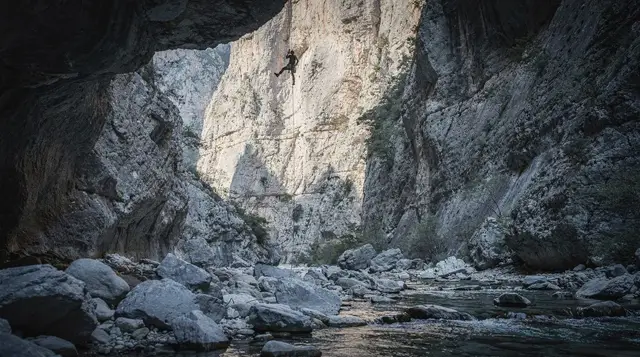
Ulassai, in the Ogliastra interior, is the island's best-known sport-climbing venue, with hundreds of bolted limestone routes across grades. Tavolara island near Olbia and the cliffs above Cala Gonone offer bigger, more committing multi-pitch climbing for experienced parties.
Sardinia’s limestone and granite between them cover most of what a climbing trip needs — bolted sport crags for people who want to clip and go, long multi-pitch lines for those chasing exposure, and enough variety of rock type that a two-week trip rarely means climbing the same texture twice. Ulassai, tucked into the Ogliastra interior, is the name most climbers already know; the island near Olbia called Tavolara is the one most visitors have never heard of and probably should have.
| Where | Ulassai (Ogliastra interior), Tavolara island (near Olbia), sea cliffs above Cala Gonone |
| Rock type | Compact limestone at Ulassai and Cala Gonone, granite on Tavolara |
| Grades | 4a to 8b+ at Ulassai across hundreds of routes; Tavolara and Cala Gonone trend harder and more committing |
| Guiding cost | €70-150 per person for a half or full day with a certified guide |
| Season | Spring and autumn for Ulassai (shaded, hot in summer); year-round on north-facing Tavolara faces |
Ulassai: the island’s sport-climbing hub
Ulassai’s limestone amphitheatre earned its reputation the same way most European sport-climbing areas did — a small number of local developers bolting hundreds of lines over several decades, spread across sectors with different aspects so there’s usually shade somewhere whatever the time of day.
Grades run from easy 4s suitable for a first outdoor climb through to sustained 8s on the steeper, more technical walls, which means a mixed-ability group can genuinely climb together here rather than splitting into separate outings. The village itself, best known otherwise for Maria Lai’s textile-art installations strung between the houses, has a handful of climbers’ guesthouses and a small but real local scene rather than a purpose-built tourist operation.
There’s no direct bookable GYG product for Ulassai specifically — most climbers here either bring their own partner and gear, or arrange a local guide independently through the village’s climbing shops. If you’d rather have your interior adventure day guided and organised, the jeep routes running out of nearby Arbatax into the Barbagia hills cover similar terrain with a driver-guide and lunch included, useful if climbing partners fall through but you still want a day in this landscape:
Barbagia jeep tour with shepherd lunch from ArbataxTavolara: granite, exposure and a genuine expedition feel
Tavolara rises almost sheer out of the sea off the coast near Olbia, and its limestone-topped granite bulk has attracted serious alpinists for decades — the north face has multi-pitch routes with real commitment, approach by boat only, and no rescue infrastructure beyond what you arrange yourself. This isn’t a venue for a casual first outdoor climb; it suits parties who already climb multi-pitch trad or sport routes elsewhere and want the novelty of an island ascent with the Mediterranean directly below. Guided climbing and scrambling days on Tavolara, run by local mountain guides who know the approach boats and the rock, are the sensible way in for anyone without an established local partner:
Guided trekking and climbing day on Tavolara islandIf full technical climbing is more commitment than you want but you’d still like Tavolara’s exposure and views, a via ferrata route on the same island delivers a comparable sense of scale with fixed protection rather than a rope you manage yourself — covered in full in the via ferrata guide:
Guided via ferrata on Tavolara islandCapo Testa: granite and bouldering in the far north
At the island’s northern tip, the wind-sculpted granite boulders around Capo Testa, near Santa Teresa Gallura, offer a completely different texture of climbing to Ulassai’s limestone — rough, grippy granite shaped into smooth, rounded forms by centuries of maestrale wind. This is more of a bouldering and low-grade sport-climbing area than a destination in its own right, popular with climbers already in the area for the coastal scenery who want an hour or two on rock rather than a dedicated climbing day.
There’s no formal guiding infrastructure here in the way Ulassai or Tavolara have; most visitors either bring their own pad and shoes or simply scramble the lower boulders informally as part of a coastal walk. It’s worth combining with the wider Capo Testa coastal walks rather than planning it as a standalone climbing trip.
A brief history of climbing at Ulassai
Ulassai’s transformation from an isolated Ogliastra village into a recognised European sport-climbing destination happened gradually from the 1980s onward, as local and visiting climbers began bolting the amphitheatre’s compact limestone walls — the same rock that had already drawn attention for its role in Maria Lai’s site-specific art installations strung between the village houses.
What makes Ulassai distinctive among Mediterranean limestone venues is the sheer density of routes packed into a relatively small geographic area, plus a range of aspects across the different sectors that means somewhere on the wall is usually in shade or sun depending on what a given day calls for. The village has grown a small, genuine climbing culture around this — guesthouses run by climbers for climbers, informal route information shared at the two or three local bars, and a noticeably different pace to the coastal resorts an hour’s drive away.
What a first day of guided climbing looks like
If you book a guided introduction rather than turning up with your own partner, expect the day to start with an equipment check and a briefing on local etiquette — which sectors are busiest, how routes are graded locally versus the French system most visitors know, and where to find shade as the sun moves. A typical guided half-day covers three to five routes at a pace suited to the group, with the guide setting up top-ropes on easier lines for complete beginners or coaching lead climbing technique for those with some experience already.
Guides on Tavolara run a noticeably different format given the boat approach and the seriousness of the terrain — briefings happen partly on the crossing itself, covering the day’s specific route, weather window and turnaround time, since getting caught on an exposed granite face as conditions change is a real consideration on an island with no easy retreat.
The limestone walls rising directly from the water around Cala Gonone and along the Gulf of Orosei hold some of Sardinia’s most photographed multi-pitch lines, many accessible only by boat and best climbed in spring or autumn when the rock isn’t baking in direct sun.
This area overlaps heavily with the canyoning and hiking terrain covered in the canyoning guide and the Supramonte hiking guide — the same limestone massif produces gorges, caves and cliffs depending on which face you’re standing under. Climbers based in Dorgali or Cala Gonone for a few days typically split time between the crag and at least one of the Gola su Gorropu hike or the Tiscali hike.
Guiding, gear and what a booked day costs
A guided half-day at any of these venues typically runs €70-150 per person depending on group size and whether transport and equipment rental are included; full-day multi-pitch outings on Tavolara sit at the upper end given the boat approach and longer guide commitment. Bring your own harness and shoes if you have them — most local guides rent gear but sizes are limited, especially for climbing shoes, so a well-fitting pair from home saves a day of blisters. Ulassai’s sport crags are set up for you to climb independently once you know the sectors, so if you already climb regularly, a single guided day to learn the area followed by self-led days afterwards is the most cost-effective approach.
Climbing etiquette and bolt safety
Ulassai’s routes are largely bolted and maintained by local climbers and a small volunteer community rather than a formal commercial body, which means the usual courtesies matter more here than at a heavily managed crag: visually inspect bolts and anchors before committing weight to them, particularly on less-travelled sectors where hardware may be older, report any obviously corroded or loose bolts to the local climbing shops who coordinate replacement, and avoid top-roping directly through fixed lower-off gear where a quickdraw would do the job with less wear.
Parking is informal at most sectors — follow existing tracks rather than creating new ones across the fragile scrubland vegetation that covers this part of Ogliastra. Tavolara’s climbing, given the more serious multi-pitch nature of the routes and the boat-only access, is almost always guided rather than independent for visiting climbers, which sidesteps most of these local-knowledge issues but makes booking ahead more important, particularly in peak summer when guide availability is limited by boat scheduling as much as climber demand.
Mobile phone coverage is patchy across parts of the Ogliastra interior and drops out entirely on sections of Tavolara’s approach and upper routes — worth flagging to anyone relying on a phone as a backup safety plan rather than carrying a proper first-aid kit and telling someone their expected return time. Local guides carry radios or a satellite communicator on the more remote Tavolara routes for exactly this reason.
Getting to Ulassai and Tavolara
Ulassai sits inland in Ogliastra, roughly ninety minutes by hire car from Arbatax or Tortoli on winding interior roads — see driving in Sardinia for realistic journey-time expectations, since the map distance understates how long mountain roads take. Tavolara has no permanent public access; every trip starts with a short boat crossing arranged either independently from Olbia or as part of a guided package, which is the simpler route for most visitors. Renting a car in Sardinia covers the practicalities if you’re arranging your own transport into the interior for Ulassai.
Frequently asked questions about rock climbing in Sardinia
Do I need to bring my own climbing gear?
A harness, shoes, helmet and quickdraws are worth bringing if you own a well-fitting set, since rental stock — particularly shoe sizes — is limited outside the main guiding operations. Ropes and bolts are already in place at sport crags like Ulassai; guided days on Tavolara supply technical gear as part of the booking.
Is Ulassai suitable for beginners?
The easier grades (4a-5c) are approachable for a first outdoor season, but there’s no structured beginner instruction on site — you’ll want either an experienced partner or a hired local guide for your first day to learn the sectors and etiquette.
How do you get to Tavolara for climbing?
By boat only, arranged either independently from Olbia’s marina or as part of a guided trekking-and-climbing package that includes the crossing.
What’s the climbing season?
Spring (April-June) and autumn (September-October) are best at Ulassai, since summer heat makes the exposed limestone uncomfortable by mid-morning. Tavolara’s north-facing routes stay climbable into summer thanks to sea breeze and partial shade.
Are there indoor climbing walls in Sardinia if the weather turns?
A small number of climbing gyms operate in Cagliari and Sassari, useful as a wet-weather fallback, though they’re aimed at the local community rather than tourists and don’t currently run structured drop-in sessions for visitors.
How does rock climbing here compare to via ferrata?
Rock climbing requires you to manage your own protection and technique; via ferrata routes use fixed cables and rungs with a lanyard system, which makes them accessible to people with no climbing background. The via ferrata guide covers the difference in more detail.
Is bouldering at Capo Testa formally organised?
No — there’s no official guiding service or marked boulder circuit at Capo Testa; it’s an informal spot popular with climbers already exploring the coastline who bring their own pad and shoes. Treat it as a bonus stop alongside the Capo Testa coastal walks rather than a dedicated booking.
What grading system is used locally?
Sardinian crags, including Ulassai, generally use the French sport-climbing grading scale (4a to 9a and beyond), the same system used across most of continental Europe, so visiting climbers familiar with French or UK technical grades will find routes graded in a recognisable way.
What time of year has the least wind for climbing?
Late spring and early autumn generally offer the calmest conditions across all three venues, with the maestrale and other strong winds more common in winter and less predictable through summer; Tavolara trips in particular are more likely to be cancelled for wind than for rain, so a flexible window of a few days improves your odds of a booked trip actually going ahead.
What’s the best base for a multi-day climbing trip?
Ulassai itself, given its concentration of routes and small climber-oriented guesthouses, makes the most sense for a dedicated multi-day sport-climbing trip. For a mixed trip combining climbing with beaches and other activities, basing in Arbatax or Tortoli on the coast keeps Ulassai within a manageable drive while adding easy access to the Ogliastra coastline.
Can I combine climbing with a Sardinia road trip that isn’t focused on adventure sports?
Yes — Ulassai fits naturally into an interior loop that also takes in the Gennargentu and Barbagia villages like Orgosolo, and the archaeology-focused seven-day itinerary or the fourteen-day road trip both pass close enough to add a climbing day without major detours.
Adventure activities on GetYourGuide
Verified deep-linked GetYourGuide tours. Book through these links and we earn a small commission at no cost to you.
These are our own photographs of Sardinia, not the operator's pictures of this tour — open the tour page to see those.