Is Sardinia expensive?
Is Sardinia expensive to visit?
Sardinia costs roughly what mainland Italy's coast costs, and noticeably more than that in August — expect €80-130 a day for a mid-range traveller outside peak season, rising to €150-220 a day in the last two weeks of July and through August, driven mainly by accommodation and car hire rather than food.
Sardinia has a reputation for being pricier than mainland Italy, and in August that reputation is fair — but the gap is narrower than most people expect, and it’s concentrated in two categories: accommodation and car hire, both of which roughly double between June and mid-August. Food, museum entry and most activities barely move with the season at all.
| Budget daily cost | €50-75 (hostel or budget B&B, self-catering, no car) |
| Mid-range daily cost | €80-130 outside August, €150-220 in peak season |
| Biggest cost swing | Accommodation and car hire, both roughly double in August |
| Costs that barely change | Museum and site entry, most restaurant meals, groceries |
| Currency | Euro (€); cards accepted almost everywhere except the smallest rural agriturismi |
Accommodation: the single biggest swing factor
A double room in a mid-range hotel or agriturismo runs roughly €70-110 a night in June or September in most parts of the island, and €140-220 for the same room in the first three weeks of August, particularly along the Costa Smeralda and around Alghero. Budget guesthouses and B&Bs in the interior — around Nuoro or Oliena — stay cheaper year-round simply because they’re further from the beach-driven summer premium.
Booking three to six months ahead for August doesn’t just guarantee availability, it also catches lower opening prices before properties raise rates as dates fill up. Where to stay in Sardinia breaks down the options by region and budget, and hotel vs agriturismo in Sardinia compares the two most common choices directly.
Car hire: the second-biggest swing, and the one people underestimate
A small hire car costs roughly €30-45 a day in shoulder season and €60-100 a day at the peak of August, when demand from both tourists and returning Sardinian residents on holiday pushes every rental agency’s fleet close to capacity. Given that renting a car in Sardinia is close to essential — public transport doesn’t reach most beaches — this is a real cost, not an optional upgrade, and it’s worth booking as far ahead as accommodation for the same reason: prices climb as availability drops.
Fuel adds roughly €1.80-1.95 per litre at time of writing, and with the island’s roads averaging 60km/h outside the SS131 dual carriageway, trips take longer and burn more fuel than the straight-line distance suggests. Driving in Sardinia covers road conditions and realistic journey times in full.
Food: genuinely reasonable, even in tourist areas
This is where Sardinia’s expensive reputation breaks down. A plate of culurgiones or malloreddus in a proper trattoria runs €10-14, a pizza €8-12, and a full sit-down dinner with wine for two rarely exceeds €50-70 even in Alghero’s old town or Cagliari’s Marina district — prices that have moved only modestly since the early 2020s. Beach kiosks and the Costa Smeralda’s most exclusive restaurants are the exception, where a simple lunch can run €25-35 per person, but that’s a choice of venue, not a fixed cost of visiting the island.
Grocery shopping for a self-catering stay costs roughly what it does across mainland Italy, with fresh bread, cheese and produce all reasonably priced at local markets. Sardinian food and wine and where to eat in Sardinia by area go into specific dishes and price expectations by region.
Getting there: flights vs ferries
Budget airlines fly into all three of Sardinia’s airports — Cagliari-Elmas, Olbia and Alghero-Fertilia — from a wide spread of mainland Italian and European cities, with fares from €30-80 return outside peak dates if booked a few months ahead, climbing sharply for last-minute August travel. Ferries with a car cost more in absolute terms — typically €150-350 return for a car and two passengers depending on route and season — but make sense for longer stays or trips that also cover Corsica. Getting to Sardinia by air and ferries to Sardinia both cover current routes and realistic price ranges.
Activities and boat tours: mid-range, and mostly fixed by season, not by haggling
Boat tours are the activity category most visitors spend on, and prices here sit in a fairly tight band regardless of who’s selling them: half-day catamaran or sailing trips around Alghero run roughly €40-75 per person, full-day trips with lunch push toward €80-110.
Alghero catamaran cruise sailing day tripSmaller sailing boats and mini-yacht charters cost more per person for a more private experience.
Half-day tour Alghero, 15m sailing boatMuseum and archaeological site entry is modest across the island — €5-15 for most nuraghi and museums — and rarely the line item that blows a budget. Sardinia on a budget has a fuller activity-by-activity price list.
A realistic week’s budget, three ways
| Budget | Mid-range | Comfortable | |
|---|---|---|---|
| Accommodation (7 nights, shoulder season) | €350-450 | €560-770 | €1,050+ |
| Car hire (7 days) | €210-280 | €280-350 | €400+ (larger car) |
| Food (per person, 7 days) | €140-175 | €245-315 | €420+ |
| Activities/boat tours | €80-120 | €180-260 | €350+ |
| Total per person (sharing a car and room) | ~€550-700 | ~€900-1,100 | ~€1,500+ |
August pushes accommodation and car hire up sharply enough to add roughly €300-500 per person to any of these totals for the same length of trip.
Everyday prices, for a sense of scale
Beyond the big budget categories, everyday small purchases give a more intuitive feel for costs on the ground. An espresso at the bar costs €1.20-1.60, a cappuccino €1.80-2.50, and both are noticeably more if drunk sitting at a table rather than standing at the counter, particularly in tourist-facing squares. A scoop of gelato runs €2.50-3.50, a bottle of water from a supermarket €0.50-1, and the same bottle from a beach kiosk €2-3. A litre of house wine in an unpretentious trattoria adds €8-15 to a meal, while a local Ichnusa beer costs €4-6 in a bar. None of these move the needle on a week’s total budget on their own, but together they shape the day-to-day feel of costs more than the big-ticket items do.
The regional tourist tax, a small but easy-to-miss line item
Most Sardinian municipalities charge a tourist tax (imposta di soggiorno) per person per night, typically €1-5 depending on the town and the accommodation’s star rating, usually capped after a certain number of nights and often not included in the headline price shown when booking. It’s collected at check-in or check-out in cash or by card, and while it’s a small amount individually, a family of four staying ten nights in a higher-tax town like a Costa Smeralda resort can see it add €80-150 to the final bill that wasn’t obvious at booking time.
Hidden costs that rarely make it into a budget spreadsheet
A handful of smaller costs catch first-time visitors out precisely because they don’t appear in the headline accommodation-flight-food breakdown most people plan around. Toll-free driving means Sardinia has no motorway charges, which helps, but parking in Alghero’s old town, Cagliari’s centre or Porto Cervo’s marina area during peak season runs €2-4 an hour or a flat €15-25 a day at the busiest car parks.
Sunbed and umbrella hire at the more developed beach clubs — as opposed to the free public stretches everywhere on the island — costs €15-30 a day per pair, which adds up quickly for a family over a week. And several of the island’s beauty spots, from Neptune’s Grotto’s boat approach to the funicular alternatives at a few sites, charge a small separate fee on top of any tour price already paid.
eSIM and data costs, an easy one to plan around
Mobile data isn’t a huge line item, but it’s worth planning rather than roaming on a home contract by accident. An eSIM with a data allowance for the trip length typically costs €10-25 depending on how much data is needed, considerably less than most home carriers’ EU roaming add-ons for non-EU visitors. eSIM and mobile data in Sardinia covers providers and coverage, which is solid along the coast and patchier in parts of the interior and the more remote hiking areas.
How costs compare with Sardinia’s usual rivals
Visitors weighing Sardinia against Sicily, Corsica or the Balearic Islands are often surprised at how the comparison actually lands. Sardinia runs somewhat cheaper than the Balearics for accommodation and dining outside the most exclusive Costa Smeralda properties, roughly comparable to Sicily once car hire is factored in, and noticeably cheaper than Corsica for food and activities, though ferry costs to Corsica itself add up if that’s part of the itinerary. Sardinia vs Sicily and Sardinia vs Corsica both run direct price comparisons for anyone deciding between destinations rather than dates.
Where money is genuinely well spent, even on a budget trip
Not every cost-cutting move pays off. A hire car is close to non-negotiable given how little of the island public transport reaches — see renting a car in Sardinia — so cutting corners on daily driving range to save on fuel usually just means seeing less. Travel insurance that actually covers water sports, given how much of a typical Sardinia trip involves boats, is worth the premium over a bare-minimum policy.
And booking at least the must-see quota beaches and popular boat tours in advance avoids the far more expensive mistake of missing them entirely on a trip that can’t be repeated easily. Renting a car vs booking tours in Sardinia weighs up exactly where a car pays for itself against where a guided tour is the better value.
Where the real savings are, if a trip needs to be cheaper
Travelling in June or September rather than August is the single largest lever, cutting accommodation and car hire costs by close to half in some cases — see cheapest time to visit Sardinia and Sardinia shoulder season swimming for the specifics of when the savings are biggest without giving up warm-sea swimming.
Self-catering accommodation with a kitchen cuts food costs meaningfully for longer stays, and prioritising free beaches over the handful with paid quota systems — while still budgeting for the must-see ones like La Pelosa — keeps the activities line under control. The real cost of a week in Sardinia tracks an actual trip’s spending in detail, receipt by receipt.
Frequently asked questions about the cost of visiting Sardinia
Is Sardinia more expensive than mainland Italy?
Outside August, costs are broadly comparable to Italy’s other coastal regions; in peak season, accommodation and car hire push Sardinia noticeably higher, mainly along the Costa Smeralda and around the main resort towns.
Is the Costa Smeralda the most expensive part of the island?
Yes, by a clear margin — it was developed specifically as a luxury destination, and prices for accommodation, dining and marina services reflect that far more than the rest of the island does.
Can Sardinia be done on a tight budget?
Yes, particularly outside August: hostels and budget agriturismi, self-catering, free beaches and shoulder-season travel bring a week’s cost down to roughly €550-700 per person sharing.
Do prices vary much between the north and south of the island?
Somewhat — the Costa Smeralda in the north-east and Alghero’s old town sit at the higher end, while the south around Cagliari, the west coast and the interior tend to run a little cheaper for accommodation and dining.
Is it cheaper to fly or take the ferry with a car?
Flying is usually cheaper for short trips without a need for a car at the destination; ferries make more financial sense for longer stays or when bringing a car saves on hire costs once on the island.
Are boat tours worth the money compared to renting a car and driving to beaches?
For the Gulf of Orosei and other coast-without-road-access areas, yes — there’s no driving alternative; for beaches reachable by car, a boat tour is more about the experience of arriving by sea than a cost-saving choice.
How much should I budget per day as a couple travelling mid-range?
Roughly €160-220 a day combined outside August, covering accommodation, car hire, food and one activity, rising to €250-350 a day at the peak of summer.
Are there hidden costs beyond accommodation, food and car hire?
Yes — parking in old towns and marinas, sunbed hire at developed beach clubs, and small separate entry fees at some sites all add up if not planned for, though none of them are large individually.
Is Sardinia cheaper or more expensive than Sicily?
Broadly comparable once car hire is included, though Sardinia’s lack of motorways changes journey times rather than costs; Sicily has a slightly larger network of budget accommodation options in its bigger cities.
Does the tourist tax apply everywhere on the island?
Most municipalities charge it, typically €1-5 per person per night depending on the town and accommodation category, usually collected in cash or by card at check-in or check-out and not always shown in the headline booking price.
Is it worth pre-paying for activities online rather than booking on the spot?
For anything with limited daily capacity — boat tours in July and August especially — yes, since prices rarely differ much between online and on-the-spot booking, but spontaneous availability drops sharply in peak weeks.
Honest planning tips on GetYourGuide
Verified deep-linked GetYourGuide tours. Book through these links and we earn a small commission at no cost to you.
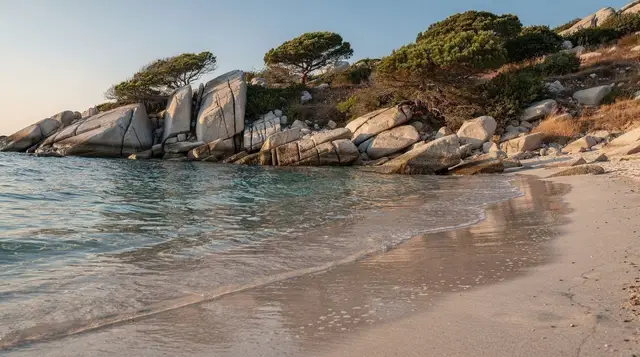
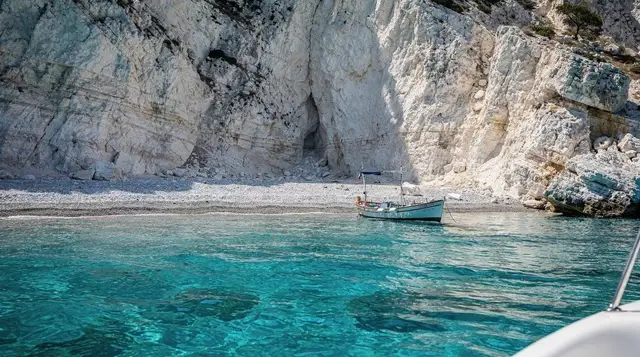
These are our own photographs of Sardinia, not the operator's pictures of this tour — open the tour page to see those.