Chia's beaches, from Su Giudeu's dunes to Cala Cipolla's rocks
Which is the best beach in Chia?
Su Giudeu, for the combination of soft dunes, a wide bay and the small tidal islet just offshore. Sa Colonia is the better pick for families thanks to its shallow, current-free lagoon; Cala Cipolla suits visitors who prefer rocks and quieter coves to open sand.
Chia isn’t one beach, it’s a string of them along roughly 8km of southern coastline, each with a distinct character despite sitting minutes apart. Between the towering dune system, a Phoenician watchtower on the headland, and water that shifts from pale turquoise to deep blue depending on depth, Chia is consistently ranked among Sardinia’s best beach areas — and unlike the tighter, single-cove beaches further along this coast, it has enough space spread across several distinct beaches to genuinely absorb a busy August crowd.
| Where | South coast, 45-50 minutes from Cagliari |
| Cost | Free beach access at all points; sunbed hire €20-30/day for two where available |
| Time needed | A full day, or several days to see all the beaches properly |
| Getting there | Car via the SS195 from Cagliari; limited summer bus service |
| Best time | June and September for space; the dune walk at Su Giudeu is best in the morning |
Why Chia’s dunes are unusually well preserved
Much of southern Sardinia’s coastline lost its natural dune systems decades ago to unrestricted parking, informal footpaths and, in some places, direct development right up to the shoreline. Chia’s dunes survived largely intact because the wider Domus de Maria area saw comparatively little tourism development until later than the coast around Cagliari and Pula, giving local authorities the chance to protect the dune system with boardwalks and marked parking areas before the same erosion pattern took hold. The result is a genuinely large-scale dune landscape, tall enough in places to block the road from view, that’s now a defining feature of the area rather than an afterthought squeezed between car parks and sunbeds.
Su Giudeu: dunes, an islet, and the widest bay
Su Giudeu is Chia’s signature beach: a broad, gently curving bay backed by one of Sardinia’s most impressive dune systems, tall enough in places to genuinely obscure the road behind. At low points in the tide, a narrow sandbar connects the beach to a small rocky islet just offshore, walkable for a few hours around low water and a favourite spot for photographs. The dunes themselves are protected — walking on the vegetation itself, rather than the marked boardwalk paths through it, is both damaging and against local rules.
Sa Colonia: the shallow lagoon beach
A short distance from Su Giudeu, Sa Colonia sits beside a coastal lagoon separated from the open sea by a narrow sand spit, which gives it noticeably calmer, shallower water than the more exposed bay at Su Giudeu. It’s the beach most locals point families toward specifically because of that calm, current-free entry, and it tends to be marginally less crowded than Su Giudeu even in peak season simply because it’s less photographed. The Torre di Chia, a 16th-century Spanish watchtower on the headland above, is an easy add-on stop with sweeping views back down the coast.
Cala Cipolla: rocks, pines, and fewer crowds
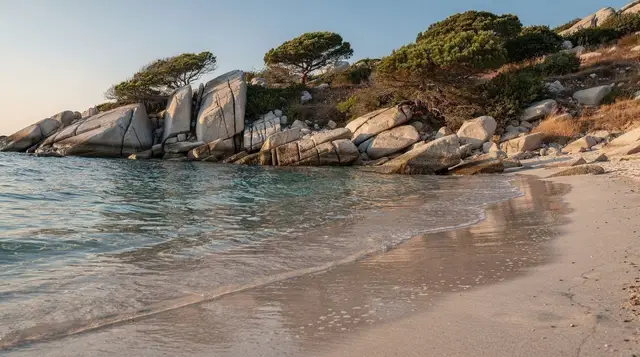
Cala Cipolla, tucked into a small cove backed by Mediterranean pines rather than open dunes, has a different feel entirely — more rock than sand at points, with clear, deep water close to shore that suits snorkelling better than lounging. It’s smaller than Su Giudeu or Sa Colonia and correspondingly quieter, a reasonable fallback when the bigger beaches are visibly full. There’s less parking here too, so the trade-off runs both ways.
Diving and boat trips further along the coast
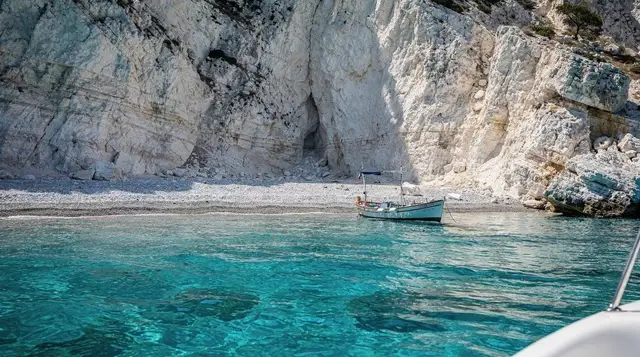
Beyond the beaches themselves, Chia’s coastline south toward Teulada opens up into rockier terrain better explored by boat than on foot, with clear water and a handful of dive sites suited to both beginners and certified divers. A half-day coasteering experience — a mix of swimming, scrambling and cliff-jumping along the rocks — is one of the more active ways to see this stretch of coast beyond simply lying on one of Chia’s three beaches:
Half-day coasteering experience from CagliariGetting there and parking
Chia sits roughly 45-50 minutes from Cagliari via the SS195, a coast road that’s slower than its distance suggests, consistent with the realistic 60km/h average across most of Sardinia away from the SS131 motorway. Each beach has its own car park, priced modestly in season, and while Chia’s beaches are collectively large enough to rarely feel as capacity-constrained as Tuerredda further south, the Su Giudeu car park still fills by late morning in August. A limited summer bus service connects Chia to Cagliari and nearby Pula, but a car remains the practical option for reaching all three beaches in one visit — see renting a car in Sardinia.
Exploring inland: jeep tours
Chia’s hinterland — low scrubby hills dotted with smaller, harder-to-reach coves — is a popular target for guided 4x4 excursions that combine beach-hopping with viewpoints most visitors driving themselves would miss, a faster-paced alternative to a straightforward beach day for anyone spending more than one day in the area. A private jeep tour reaches several of these hidden beaches in a single outing:
Private jeep tour of Sardinia’s hidden beaches from ChiaOn the water: boat trips and snorkelling
Chia’s coastline continues south toward Cala Zafferano and the Teulada boundary, an area better explored by boat than by the limited coast road. A boat ride from Chia reaches Cala Zafferano directly, with a snorkelling stop along the way:
Boat ride from Chia to Cala Zafferano with snorkellingFor visitors combining Chia with a beach further along this stretch, a full-day tour links Chia and Tuerredda in one guided outing departing Cagliari — useful for a first visit that doesn’t yet know which beach it prefers:
Chia and Tuerredda full-day guided beach tour from CagliariSee Cagliari boat tours for the wider range of operators running this southern stretch of coast.
The Torre di Chia and the coast’s watchtower history
The 16th-century Spanish watchtower above Sa Colonia is one of a chain built along Sardinia’s coastline during centuries of Barbary pirate raids, when coastal communities needed early warning of approaching ships to have any chance of moving people and livestock to safety inland. Similar towers dot much of the south and west coasts, and Chia’s is one of the better preserved and most accessible, reachable via a short, unshaded climb from the Sa Colonia car park. The view from the top takes in Sa Colonia, Su Giudeu and the offshore islet in a single sweep, making it one of the better vantage points for understanding how the three beaches relate to each other geographically before heading down to any one of them.
Snorkelling and the water off Cala Cipolla
Cala Cipolla’s rockier shoreline makes it the best of Chia’s beaches for snorkelling, with clearer water close to shore than the more open, sandier bays at Su Giudeu and Sa Colonia. Small schools of fish shelter around the submerged rocks either side of the cove, and the pine-backed setting keeps the water noticeably calmer on windy days than the more exposed Su Giudeu bay further along the coast. Best snorkelling spots in Sardinia covers how Cala Cipolla compares with the rockier coves further south around Teulada.
Food and where to eat in Chia
Chia has a reasonable spread of restaurants and beach bars for a place its size, ranging from casual seafront kiosks serving panini and simple seafood to a handful of proper restaurants set back from the beaches themselves, generally better value than eating directly on the sand. Domus de Maria, the small town a short drive inland, has a more traditional selection at lower prices, worth the detour for a lunch that isn’t priced for passing beach traffic. Sardinian food and wine covers the island’s cuisine more broadly for visitors combining Chia with a longer south-coast stay.
Comparing Chia with Tuerredda
Chia and Tuerredda sit close together on the map and are often combined in a single day trip, but they suit different priorities: Chia’s several beaches spread the crowd and give more room to manoeuvre, while Tuerredda’s single, tighter bay is more photogenic but fills up faster. First-time visitors with only a few hours to spare are usually better served by Chia’s flexibility; those chasing one specific postcard shot may prefer Tuerredda despite the trade-off.
Where to stay in Chia
Chia has a range of accommodation from beachfront resorts to smaller family-run guesthouses set back in the hills above Su Giudeu, and staying locally rather than in Cagliari makes a genuine difference for anyone wanting early access to the beaches before the day-trip crowds from the city arrive. Where to stay in Sardinia covers the accommodation landscape island-wide, while a base in Chia specifically suits travellers prioritising a beach-focused stretch of the trip over city access, given the 45-50 minute drive back to Cagliari’s restaurants, museums and airport.
Wind, waves and when the sea gets rough
Chia’s exposed south-facing coastline means it catches both the mistral from the northwest and, less often, the scirocco from the south, either of which can turn a calm morning into a choppier afternoon with little warning. Su Giudeu’s broader, more open bay feels the wind’s effect most; Cala Cipolla, tucked into its pine-backed cove, is the most sheltered of the three and often the better choice specifically on a breezy day. Checking a wind forecast before setting out, rather than relying on the general season, gives a more reliable read on which of Chia’s beaches will actually be calm on a given day.
A realistic day plan across all three beaches
Start at Su Giudeu early, while the dune walk and islet crossing are at their best and before the car park fills. Move to Sa Colonia by late morning for calmer swimming, particularly useful with children, and consider the short climb to the Torre di Chia while you’re there for the view over both beaches. Finish the afternoon at Cala Cipolla if the wind has picked up, since its sheltered cove tends to stay calmer later in the day than the more exposed bays. This loop covers all three beaches without excessive driving, since they sit within a few minutes of each other along the same short stretch of coast.
When to go
June and September give the best balance of warm water and manageable crowds across all three beaches; July and August are busiest, particularly at Su Giudeu, though Chia’s spread of beaches means it copes with peak season noticeably better than smaller, single-cove beaches elsewhere in the south. See best time to visit Sardinia and best beaches in south Sardinia for the wider regional picture.
The Phoenician-Punic ruins nearby
Chia’s beaches sit within walking distance of a far older reason people have valued this stretch of coast: the remains of Bithia, a Phoenician trading settlement later absorbed into Carthaginian and then Roman territory, scattered across the headland above Su Giudeu and partly submerged just offshore. What survives on land is modest compared with the better-preserved ruins at Tharros or Nora — foundations, a temple platform, and scattered pottery fragments rather than standing walls — but the site’s position, watching over the same bay that draws sunbathers today, makes clear why this particular stretch of coast has been settled and re-settled for close to three thousand years.
There’s no ticket booth or formal visitor centre, so it rewards travellers who already know roughly what they’re looking at rather than casual passers-by. Ancient Sardinia archaeology covers the island’s older prehistoric sites for anyone building archaeology into a wider south-coast itinerary.
Frequently asked questions about Chia’s beaches
Which Chia beach is best for families?
Sa Colonia, thanks to its shallow, lagoon-sheltered water with minimal current — a more forgiving entry point for young or nervous swimmers than the more open bay at Su Giudeu.
Is Su Giudeu’s islet always accessible on foot?
Only around low tide, when a sandbar connects it to the beach; at other times the crossing requires a short swim.
Are Chia’s beaches free?
Yes, all of Chia’s beaches are free to access; only sunbed and umbrella hire, where available, comes at a cost.
How many days should I spend in Chia?
A single full day covers the highlights, but two or three days allow time to properly compare all the beaches and add an inland jeep or quad excursion.
Is Chia quieter than Costa Smeralda beaches?
Generally yes, and noticeably cheaper — Chia doesn’t carry the same premium pricing on food, drinks and sunbed hire that the Costa Smeralda’s beaches do.
Can I visit Chia without a car?
It’s difficult — a limited summer bus connects Chia to Cagliari and Pula, but reaching all three beaches and the surrounding area comfortably really needs a car.
Which Chia beach has the best snorkelling?
Cala Cipolla, thanks to its rockier shoreline and calmer, more sheltered water compared with the sandier, more open bays at Su Giudeu and Sa Colonia.
Is it worth staying in Chia rather than day-tripping from Cagliari?
For a beach-focused stretch of a trip, yes — staying locally means earlier access to the beaches and avoids the round-trip drive, though Cagliari remains the better base for anyone splitting time between city sightseeing and the coast.
Beach & coastal tours on GetYourGuide
Verified deep-linked GetYourGuide tours. Book through these links and we earn a small commission at no cost to you.
These are our own photographs of Sardinia, not the operator's pictures of this tour — open the tour page to see those.