Museums worth visiting in Sardinia
What is the single best museum in Sardinia?
The National Archaeological Museum in Cagliari, for its collection of nuragic bronzetti (small bronze figurines) — the best single overview of the island's Nuragic civilisation anywhere, and a useful stop before visiting the nuraghi themselves in the field.
Sardinia’s museums are easy to skip on an itinerary built around beaches and boat trips, but a handful genuinely change how the rest of the trip reads — particularly anything covering the nuraghi, since the bronze figurines, tools and everyday objects in Cagliari’s archaeological museum make the stone towers themselves far more legible once you’re standing in front of one. This guide covers the museums actually worth building time for, grouped by where you’ll likely be on the island.
| Museum | Where | Best for |
|---|---|---|
| National Archaeological Museum | Cagliari | Nuragic bronzetti, island-wide overview |
| Casa Zapata / Su Nuraxi visitor centre | Barumini | Nuraghe finds beneath a noble palazzo |
| Antiquarium Arborense | Oristano | Tharros finds, Sinis coast archaeology |
| Museo Nivola | Orani | Sculptor Costantino Nivola |
| MAN — Museo d’Arte di Nuoro | Nuoro | Modern and contemporary Sardinian art |
| ISRE costume museum | Nuoro | Traditional Sardinian dress from every region |
| Museo Sanna | Sassari | Archaeology of the north |
Cagliari: the National Archaeological Museum
The Museo Archeologico Nazionale, inside the Cittadella dei Musei complex above the Castello quarter, holds the single best collection of nuragic bronzetti — small bronze figurines depicting warriors, boats, animals and everyday scenes — found across Cagliari’s surrounding sites and beyond.
It’s the right first stop before visiting Su Nuraxi at Barumini or any of the island’s other nuraghi, since the objects here give context to the otherwise fairly abstract experience of walking round a Bronze Age stone tower. The same Cittadella complex also houses a wax anatomical museum (the Museo delle Cere Anatomiche, an 18th-century teaching collection, not for the squeamish) and a rotating contemporary art gallery, making it worth a half-day rather than a quick pass-through.
an underground walking tour of Cagliari pairs well with the archaeological museum on the same day, since both cover the layers of history beneath the modern city from different angles.
Barumini: Casa Zapata and the Su Nuraxi visitor centre
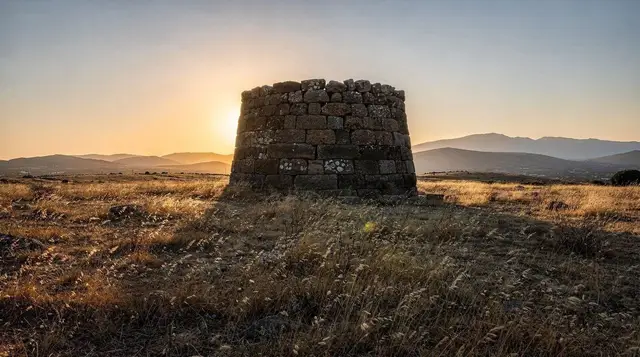
At Barumini, the UNESCO-listed nuraghe of Su Nuraxi has its own on-site interpretive displays, but the more unusual stop is Casa Zapata, a 16th-century noble palazzo in the village built directly over part of a nuragic settlement — visitors walk through the aristocratic rooms and then descend into the excavated Bronze Age village preserved beneath the same building’s foundations, a genuinely unusual layering of two very different periods of Sardinian history in one visit.
Oristano: the Antiquarium Arborense
Oristano’s Antiquarium Arborense holds finds from Tharros, the Phoenician-Roman site on the Sinis Peninsula, and gives useful context before or after visiting the ruins themselves — coins, ceramics, and everyday objects that make the site’s foundations and street layout easier to picture once you’re walking it. The museum also covers Oristano’s medieval Giudicato period, when Eleonora d’Arborea governed much of the island and issued the Carta de Logu, a legal code that remained partly in force in Sardinia until 1827.
Nuoro: art, costume and the interior’s cultural centre
Nuoro, at the edge of the Barbagia interior, has two museums worth pairing on the same visit: the MAN (Museo d’Arte di Nuoro), a modern and contemporary art collection focused heavily on Sardinian and Italian 20th-century artists, and the ISRE ethnographic museum, which holds one of the island’s most complete collections of traditional costume from villages across every region — useful context if your trip includes any of Sardinia’s festivals, where these same costume traditions are still worn rather than just displayed.
A short drive away in Orani, the Museo Nivola is dedicated to Costantino Nivola, a Sardinian-born sculptor who worked in New York alongside figures like Le Corbusier — a smaller, more specialist stop but well regarded for its setting and the quality of the collection relative to its size.
a top sights experience covering Cagliari’s key landmarks is a good complement to a museum-focused day if you’re based in the south rather than travelling out to Nuoro.
Sassari and the north
Museo Sanna in Sassari covers the archaeology of northern Sardinia with a collection spanning the nuragic period through to the Roman era, a useful counterpart to Cagliari’s museum if your itinerary is weighted toward Alghero, Stintino and the northwest rather than the south. It’s a quieter, less-visited museum than Cagliari’s, which for some travellers is its own advantage.
More museums worth knowing about
Beyond the main list, a handful of smaller or more specialist museums reward a visit if they line up with your route. Cagliari’s Pinacoteca Nazionale, in the same Cittadella dei Musei complex as the archaeological museum, holds a collection of retablos — large, gilded polyptych altarpieces from Sardinia’s medieval and Renaissance churches — a useful stop if you’re already spending a half-day at the Cittadella. The Torre di San Pancrazio and Torre dell’Elefante, Cagliari’s two surviving medieval defence towers, both offer small exhibition spaces alongside the climb to their viewing platforms, combining a museum-style stop with one of the city’s best rooftop views over Castello and the harbour.
In Bosa, the Museo delle Conce, housed in a former tannery on the Temo riverbank, covers the town’s historic leather-tanning industry, a specific and now largely vanished local trade worth an hour if you’re already in town. And in Carloforte, a small museum dedicated to the island’s distinct Ligurian-Tabarchin heritage explains the community’s origins among Genoese coral fishermen resettled from Tunisia in the 18th century — background that makes a visit to the town itself considerably more interesting.
Practical visiting information
Most Sardinian museums, particularly smaller regional ones, close for a midday break of an hour or two and reduce their hours outside the main tourist season — always check specific opening times before planning a visit around one, especially between November and March. Entry fees are generally modest, typically €5-10 for the larger museums like Cagliari’s archaeological museum, with reduced rates for EU citizens under 25 and various concessions depending on age and nationality.
Photography without flash is usually permitted, though some special exhibitions restrict it — check on entry rather than assuming. English-language information varies significantly: Cagliari’s larger museums generally have decent English signage and materials, while smaller village museums may rely more on Italian-only text, in which case a guided visit or a pre-visit read of a guide like this one adds real value.
Building a museum day into a wider itinerary
A single museum rarely justifies restructuring an entire day on its own, but pairing two related stops does. In Cagliari, the archaeological museum and the Cittadella’s other collections (Pinacoteca, wax anatomical museum) fill a genuinely full half-day within the same complex, easily combined with lunch and an afternoon walk through Castello’s streets. In the interior, Nuoro’s MAN and ISRE costume museum sit close enough together to cover both in an afternoon, and a short additional drive to Orani’s Museo Nivola rounds out a full day focused on the island’s more contemplative, less beach-oriented side — a good option for a day when weather or simple variety calls for something different from the coast.
How to fit museums into a beach-focused itinerary
Most visitors to Sardinia build itineraries almost entirely around beaches and boat trips, and that’s a reasonable approach — but a single wet or overcast day, or a rest day between beach stops, is a good moment to slot in a museum rather than lose the day entirely. Cagliari’s archaeological museum works particularly well on an arrival or departure day if you’re flying through Cagliari-Elmas airport, since it’s a short drive or walk from the old town and doesn’t need a full dedicated day.
What to skip if you’re short on time
Not every museum on this page needs equal priority, and it’s worth being honest about which ones to drop first if your itinerary is tight. The wax anatomical museum inside Cagliari’s Cittadella, while a genuine curiosity, is easy to skip if archaeology and art are your main interest rather than 18th-century medical history — it’s a niche add-on rather than a core stop.
Museo Nivola in Orani, while well regarded, is enough of a detour from most standard routes that it’s only worth prioritising if you’re already planning to spend real time in the Barbagia interior rather than passing through briefly. By contrast, Cagliari’s National Archaeological Museum and, if your route includes it, Casa Zapata at Barumini are worth protecting in an itinerary even when time is limited, since both directly change how the rest of a nuragic-focused trip reads.
Why context from a museum changes how the sites read
It’s worth being specific about why pairing a museum with an archaeological site actually improves the visit, rather than treating it as a box to tick. Standing at Su Nuraxi without any prior context, most visitors see an impressive but largely abstract arrangement of stone walls and a central tower; having seen the bronzetti in Cagliari’s archaeological museum beforehand — tiny bronze figures of warriors, chieftains, boats and domestic scenes — gives the same stones a human dimension, since those objects were found in and around exactly these kinds of settlements and depict the people who likely lived in them.
The same logic applies at Tharros with the Antiquarium Arborense’s collection of coins, pottery and everyday objects recovered from the site, or at Nora, where a similar collection helps make sense of the mix of Phoenician, Punic and Roman layers visible in the ruins. None of Sardinia’s archaeological sites come with especially extensive on-site interpretation, so a museum visit genuinely does the work that signage elsewhere might otherwise handle.
Museums as rainy-day and off-season planning
For anyone visiting Sardinia outside the core swimming season — Sardinia in winter or the shoulder months either side of it — museums take on a bigger role in an itinerary than they would in peak summer, when most visitors are focused entirely on beaches and boat trips.
A winter or early-spring trip built around the interior’s culture, taking in Nuoro’s museums, Barumini and Cagliari’s archaeological collection in the same loop, works well precisely because none of it depends on beach weather, unlike much of the rest of a typical Sardinia trip. See best time to visit Sardinia for how a museum-and-culture-focused visit compares with the standard summer beach trip in terms of crowds, prices and what’s actually open.
Combining a museum visit with lunch nearby
Most of the museums covered here sit within an easy walk of decent places to eat, worth factoring into planning a museum-focused day. Cagliari’s Cittadella dei Musei is a short walk down into the Castello and Marina quarters, both dense with trattorias suited to a lunch break between the archaeological museum and an afternoon of sightseeing.
In Barumini, a handful of local restaurants near Casa Zapata serve straightforward Sardinian dishes well suited to a quick stop between visiting the museum and the Su Nuraxi site itself. In Nuoro, the town centre near both the MAN and the ISRE costume museum has a reasonable choice of cafés and trattorias, making it easy to turn a museum morning into a full, unhurried day without needing to drive elsewhere for food.
Frequently asked questions about Sardinia’s museums
What’s the best museum for understanding the nuraghi?
Cagliari’s National Archaeological Museum, for its bronzetti collection, followed by Casa Zapata at Barumini if your itinerary includes Su Nuraxi.
Are Sardinia’s museums air-conditioned in summer?
The larger ones, including Cagliari’s archaeological museum, are; smaller village museums vary, so it’s worth checking if visiting during a July or August heatwave.
Do I need to book museum tickets in advance?
Generally no for individual visits outside of major festival periods, though it’s worth checking specific opening days, since several smaller museums close one day a week, often Monday.
Is the Antiquarium Arborense worth visiting if I’m not going to Tharros?
Less so — its main value is as context for the Tharros site nearby; on its own it’s a smaller, more specialist stop.
How much time should I set aside for Cagliari’s archaeological museum?
A focused visit takes 90 minutes to two hours; add more if you’re also covering the Cittadella dei Musei’s other collections in the same complex.
Are there good museums for kids in Sardinia?
Casa Zapata’s layered palazzo-over-nuraghe setup tends to hold children’s interest well, as does the more visual, object-based display at Cagliari’s archaeological museum compared with text-heavy regional museums.
How much do Sardinian museums typically cost to enter?
Most fall in the €5-10 range for adults, with reductions for EU citizens under 25 and various other concessions; smaller village museums are often cheaper still.
Is English information available at Sardinian museums?
Larger museums like Cagliari’s archaeological museum generally provide good English signage; smaller regional and village museums vary and may be Italian-only.
Are Sardinia’s museums open on Mondays?
Not always — several, particularly smaller regional museums, close one day a week, often Monday; check specific opening hours in advance before planning a visit around a single stop.
Should I book museum visits online in advance?
For the museums covered on this page, generally not necessary outside major festival periods, though checking a museum’s own website the day before is a sensible habit for confirming hours haven’t changed.
Culture & history tours on GetYourGuide
Verified deep-linked GetYourGuide tours. Book through these links and we earn a small commission at no cost to you.
These are our own photographs of Sardinia, not the operator's pictures of this tour — open the tour page to see those.