| Where | Northwest tip of Sardinia, 50 minutes from Alghero-Fertilia (AHO) |
| Known for | La Pelosa beach and the ferry crossing to Asinara island |
| Time needed | Half a day for the beach, a full day if you add Asinara |
| Cost | Free beach access with a booked slot; boat tours to Asinara from €35-90 |
| Best time | June or September; July-August means a 7am arrival or a pre-booked slot |
A fishing village that outgrew its harbour
Stintino didn’t exist before 1885. It was built by around 45 families of Ligurian-descended fishermen who were forcibly relocated from Isola Piana, the small island now facing the town, when the Italian state turned the whole area into the Asinara penal colony. That history is easy to miss today, because Stintino now reads as a straightforward beach town: two small harbours (Portu Mannu and Portu Minori), a short pedestrian waterfront lined with seafood restaurants, and — a few kilometres north — the beach that put it on every Sardinia shortlist, La Pelosa.
The town itself is modest and doesn’t pretend otherwise. There isn’t a historic centre to wander for hours, no cathedral, no museum worth planning around. What Stintino offers is a genuinely excellent base for two or three days: swim at La Pelosa in the morning before the crowds build, eat well in town at midday, and use the harbour as a launch point for Asinara island in the afternoon or the next day.
La Pelosa: what makes it different
La Pelosa’s water is shallow for a long way out — in places you can wade 100 metres and still stand — over pale sand that turns the sea a colour that looks digitally enhanced in every photo, and isn’t. The 16th-century Aragonese watchtower, Torre della Pelosa, sits just offshore on a rocky islet and anchors almost every shot of the beach; a second tower, Torre Finanza, sits at the beach’s southern end. Isola Piana, the flat island where Stintino’s founding families once lived, is close enough to swim to on a calm day, though most visitors don’t bother.
Since 2017, access has been capped and paid: a fee (typically around €5-15 depending on the exact stretch and season) plus a mandatory reservation for the peak window between 15 May and 30 September, with numbers capped at roughly 1,500 people on the beach at once. Book online in advance — see our beach access quota guide for how the reservation system actually works — because turning up in August without a slot means being turned away or waiting for someone to leave. Outside peak season the beach is free and unrestricted, though facilities (sunbed rental, the snack kiosk) scale back sharply from October.
Sand removal is enforced here specifically, with fines from €500 to €3,000 for anyone caught leaving with so much as a bag of it — a rule that applies across Sardinia’s protected beaches but gets checked particularly often at La Pelosa given the volume of visitors. For a wider view of comparable beaches in this part of the island, our best beaches in northwest Sardinia guide covers the alternatives if La Pelosa is full or you want somewhere quieter.
Asinara: the island you can see from the beach
Asinara is the long, hilly island visible from Stintino’s harbour, and it’s one of the more unusual places to visit in Sardinia precisely because of what it used to be. From 1885 until 1997 it was closed to the public — first as a quarantine station and penal colony, later as a maximum-security prison holding Mafia figures during Italy’s anni di piombo. That total closure for over a century is exactly why the island’s wildlife and coastline are so intact today: it’s now a national park, home to the pale, near-tame Asinara donkey (albino in some individuals, a genetic quirk unique to the island) alongside wild boar, mouflon, and a coastline of coves that see a fraction of the boat traffic found elsewhere on Sardinia’s north coast.
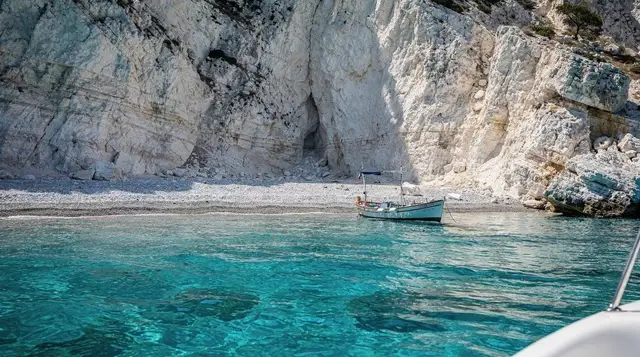
You reach Asinara by boat from Stintino, Porto Torres, or occasionally Alghero — there’s no bridge or car ferry for private vehicles, and much of the island’s interior is off-limits without a guide or rental bike. A full-day catamaran tour to Asinara Island is the standard way to see the coastline properly, combining a circumnavigation with a lunch stop and time to swim in one of the island’s sheltered bays. For a shorter version, a half-day catamaran tour to La Pelosa with aperitif stays closer to Stintino and works well as an easy afternoon rather than a full day out.
If you’d rather see the island on land, minivan tours run from the port and cover the old prison buildings, the lighthouse road, and the donkey sightings that most visitors actually come for — a minivan tour of Asinara combines the ferry crossing with a guided drive around the accessible parts of the island. Our Asinara National Park guide and our dedicated Asinara destination page cover the island itself in more depth, including how to visit independently rather than on a tour.
On the water without going as far as Asinara
Not every boat trip out of Stintino heads to Asinara. A sunset sailing tour past Asinara and La Pelosa is a shorter evening option that catches the coastline in the best light of the day without committing to a full-day itinerary, and a half-day sailing boat tour to La Pelosa is a gentler way to see the beach from the water for travellers who’d rather sail than swim from the sand.
For general guidance on choosing between these formats, see our private vs group boat tours comparison and our renting a boat without a licence guide if you’d rather skipper yourself.
Capo Falcone and the view most visitors skip
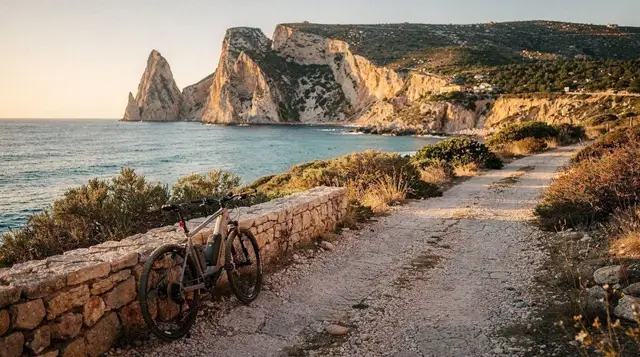
Capo Falcone, the headland just south of La Pelosa, has a 16th-century watchtower and a genuinely good sunset view over both the beach and Asinara that most day-trippers never see because they leave once the beach itself closes up. A sunset hike to Capo Falcone with tasting is a short, easy walk (around an hour) that pairs the headland’s view with a small local food tasting, and it’s a good way to end a day at La Pelosa without simply driving back to your accommodation.
Eating in Stintino
The harbourfront in Stintino has a genuine concentration of decent seafood restaurants — this is still a working fishing village at heart, and the catch is real, not imported for the tourist trade. Expect lobster (Sardinian spiny lobster, aragosta, is a local specialty and priced accordingly, often €70-90 per kilo when sold by weight), bottarga shaved over pasta, and simply grilled fish.
For something more structured, a private dining experience such as Italian cuisine in a villa near Stintino offers a home-cooked alternative to the harbourfront restaurants, useful if you’re staying nearby and want a quieter evening. Our what to eat in Sardinia guide covers the dishes worth seeking out islandwide.
Getting to Stintino
Alghero-Fertilia airport (AHO) is the closest, roughly 50 minutes by car. From Olbia (OLB) it’s closer to 2 hours, and from Cagliari-Elmas (CAG) budget a full 3.5-4 hours given the lack of motorway north of Sassari. A hire car is genuinely necessary here — public buses run from Sassari and Porto Torres but not frequently enough to build a spontaneous day around, and the coastal road to La Pelosa isn’t served at all outside a couple of daily runs in peak season. See our renting a car in Sardinia guide and our driving in Sardinia guide for what to expect on the roads up here.
Parking at La Pelosa itself is limited and fills early in summer; most visitors park in Stintino town and either walk the coastal path (about 25 minutes) or take the small shuttle bus that runs in peak season.
When to visit
| Season | Conditions | Crowds |
|---|---|---|
| June | Warm sea, long days, beach open | Busy but manageable, book La Pelosa ahead |
| July-August | Hottest, best swimming | Very heavy — arrive before 8am or reserve online |
| September | Still warm, sea at its warmest | Noticeably quieter, the best trade-off |
| October-April | Beach unrestricted, many services closed | Minimal — good for the Capo Falcone walk, not for swimming |
Frequently asked questions about Stintino
Do I need to book La Pelosa beach in advance?
Yes, between 15 May and 30 September. Reservations are made online for a specific access slot and the beach caps daily numbers at around 1,500. Outside that window access is free and unrestricted.
How do I get from Stintino to Asinara?
By boat only — there’s no bridge or vehicle ferry for private cars. Tour boats and the public ferry both depart from Stintino’s harbour, with Porto Torres offering an alternative departure point.
Is Stintino worth staying in, or just visiting for the day?
If La Pelosa and Asinara are priorities, staying 1-2 nights lets you catch the beach early before day-trippers arrive and fit in a full day on Asinara without rushing. As a pure day trip from Alghero it’s entirely doable, just tighter.
Can I visit La Pelosa without a car?
It’s difficult. Limited buses run from Sassari and Porto Torres in summer, but frequency is low and doesn’t suit an early-arrival strategy. A hire car or an organised tour from Alghero is the practical option for most visitors.
Is Stintino expensive?
Restaurants on the harbourfront run mid-range by Sardinian coastal standards, rising in July and August. Beach reservation fees are modest (typically €5-15). Boat tours to Asinara are the main cost, generally €35-90 per person depending on format and duration.
What’s the best month to see La Pelosa without a crowd?
September, by a clear margin. The sea is still warm from the summer, the daily quota is easier to book, and the town itself starts to quiet down while facilities are still fully open.
Are there other beaches near Stintino worth visiting?
Yes — the coastline south towards Porto Torres and around Capo Falcone has quieter, less photographed stretches. Our northwest Sardinia beaches guide lists the alternatives if La Pelosa’s quota is full on your date.