Cycling in Sardinia, from flat Sinis roads to Supramonte climbs
Is Sardinia good for cycling?
Yes, with real variety: flat, quiet roads across the Sinis peninsula and around Oristano, a car-free island at Asinara, and demanding climbing routes through Ogliastra and the Gennargentu for road cyclists who want gradient. The main hazard isn't traffic volume but narrow verges and drivers unused to cyclists on the smaller interior roads.
Sardinia rewards cyclists who pick their terrain deliberately. There’s no single “cycling region” the way the Dolomites or Mallorca function — instead there are pockets that suit very different riders: flat coastal roads around Oristano and the Sinis peninsula for anyone who wants scenery without gradient, a genuinely car-free island at Asinara, and long, testing climbs through Ogliastra and the Gennargentu interior for road cyclists chasing altitude.
| Flat riding | Sinis peninsula, around Oristano, Cagliari’s Molentargius lagoon path |
| Car-free riding | Asinara island — no private vehicles, cycling and small electric shuttles only |
| Climbing routes | Ogliastra, the Gennargentu, and the interior roads around Ulassai |
| E-bike hire | €25-45 per day in most coastal towns; guided e-bike tours €40-70 |
| Best season | March-May and September-October; July-August is hot on exposed roads |
The flat option: Sinis peninsula and Oristano
The Sinis peninsula, west of Oristano, is about as close as Sardinia gets to easy cycling — low, largely flat terrain, quiet roads between the peninsula’s lagoons and beaches, and enough distance between the sights (Tharros, the quartz sands of Is Arutas, the fishing village of Cabras) that a bike genuinely beats walking without the commitment of a car. Guided mountain bike tours here cover unpaved tracks along the lagoon edges as well as the paved coast road, useful if you’d rather have route-finding and a support vehicle handled for you:
Mountain bike tour of the Sinis peninsula from OristanoCabras itself, at the peninsula’s edge, makes a sensible base for a day or two of low-effort riding, and the Sinis peninsula destination page has more on the beaches worth timing a ride around.
Car-free cycling on Asinara
Asinara, the former prison island off Stintino, bans private vehicles entirely — the only traffic is a handful of small electric shuttles and, everywhere else, bikes. That makes it one of the very few places in Sardinia where you can ride for a full day without once checking a mirror for a car, across a national park landscape of scrubland, abandoned prison buildings and the white donkeys the island is named for. Bikes are rented at the ferry landing points, and a full loop of the island’s main tracks is a realistic full day for a moderately fit rider:
Mountain bike rental for exploring Asinara islandThe Asinara national park guide covers ferry times, opening rules and what else is worth seeing beyond the ride itself.
Climbing terrain: Ogliastra and the interior
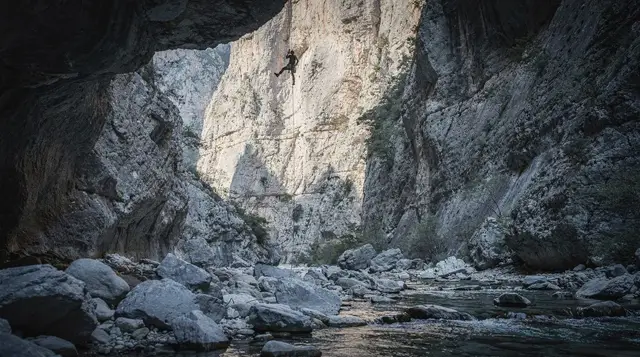
For road cyclists who want real gradient, the roads climbing inland from Ogliastra and around Ulassai offer sustained, testing ascents through genuinely dramatic limestone and granite scenery, with far less traffic than anything on the coast in peak season.
These roads are narrow, occasionally in patchy repair, and shared with local drivers who aren’t always expecting cyclists on blind bends — this is where road experience matters more than anywhere else on the island. Cycling in Sardinia enthusiasts who’ve ridden the Giro d’Italia’s occasional Sardinian stages will recognise these climbs; casual riders should treat them as a serious day out rather than an extension of a beach holiday.
E-bikes for an easier city and coast day
Electric bikes have changed what’s realistic for a shorter visit, and most tourist towns now rent them by the day or half-day. Cagliari runs guided e-bike and standard bike tours through the old town and out along the Molentargius lagoon, where flamingos gather within easy pedalling distance of the centre:
Two-hour sightseeing bike tour of CagliariAlghero, on the opposite coast, has a similarly well-developed e-bike scene running along the Coral Coast north of town, usually finishing with an aperitivo stop — genuinely one of the more relaxed ways to see the coastline without a car:
Coral Coast e-bike tour with aperitivo from AlgheroFlamingos and the Molentargius lagoon path
One of the more unexpected cycling routes on the island runs along the edge of the Molentargius-Saline regional park, wedged between Cagliari and the beach suburb of Quartu Sant’Elena, where a flat, well-surfaced path skirts saltpans that host one of the largest resident flamingo colonies in Europe.
It’s an easy, mostly car-free ride suitable for any fitness level, and it works as either a standalone morning outing from central Cagliari or a lead-in to the wider Poetto beach cycling path that continues along the coast. Flamingos at Molentargius covers the birdwatching side of the same park in more detail if that’s the bigger draw for you than the ride itself.
Road cycling culture and organised events
Sardinia has hosted stages of the Giro d’Italia in recent editions, usually opening the race with routes through the Cagliari area or along the coast roads that showcase exactly the mix of flat coastal riding and sudden interior climbs described above, and the island has developed a modest but genuine gran fondo and sportive calendar as a result, mostly concentrated in spring and early autumn to avoid summer heat.
These events aren’t aimed at tourists specifically, but they’re open to registration for visiting riders who plan ahead, and they’re worth checking if your trip dates happen to align — riding closed or marshalled roads through the interior is a noticeably different experience to navigating the same routes independently in traffic. Local cycling clubs in Cagliari, Alghero and Olbia are generally welcoming to visiting riders who reach out in advance, particularly outside peak tourist season when club rides run at a more consistent weekly schedule.
Bringing your own bike versus renting
For a shorter trip or anyone without strong road-cycling ambitions, renting locally is simpler and avoids the cost and hassle of flying with a bike box. If you’re planning a dedicated cycling trip with your own fitted bike, most airlines serving Cagliari Elmas, Olbia Costa Smeralda or Alghero Fertilia accept bike boxes as sports equipment for an additional fee, and ferries from mainland Italy generally accommodate bikes with less hassle and lower cost than flying, worth considering if you’re also bringing a car over.
Bike shops capable of a full service or repair exist in the main towns but are thinner on the ground in rural areas, so carry basic spares (tubes, a multitool, a pump) if you’re planning longer routes away from the coast.
What renting a bike costs and where
Standard bike hire runs roughly €15-25 per day in most towns; e-bikes cost more, typically €25-45 per day, reflecting battery and maintenance costs. Guided tours bundle a bike, sometimes a helmet, and local knowledge for €40-70 depending on length and whether food or drink is included. Multi-day touring bike hire, useful if you’re planning a longer self-guided route rather than day trips from one base, is less standardised and worth arranging by phone or email with a local shop ahead of your trip rather than assuming walk-in availability, especially in July and August.
Gravel and off-road riding
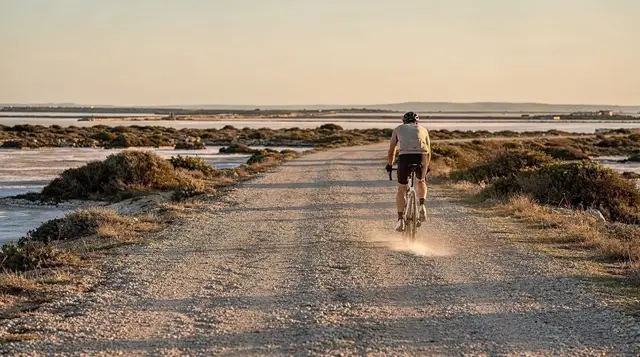
Beyond the paved coast roads and the flat Sinis tracks, Sardinia’s interior has quietly become a destination for gravel and off-road cyclists, particularly through the forestry tracks and old mining roads of the Sulcis-Iglesiente around Masua and Nebida, and the network of unpaved tracks crossing the Gennargentu foothills near Fonni and Aritzo.
These routes see far less traffic than anything on the coast, wind through cork oak forest and abandoned mining infrastructure, and reward riders willing to navigate without dedicated cycling signage — a GPS route file or offline map is worth downloading before setting out, since mobile signal drops out completely in parts of the interior. Mountain bike rental at Asinara, covered above, sits at the more accessible end of this off-road spectrum; the Gennargentu tracks are a step up in both remoteness and technical difficulty, better suited to riders already comfortable on loose surfaces and steep, unmarked gradients.
A sample two-base cycling week
For visitors wanting to structure a full week around cycling rather than treating it as a single day trip, a two-base approach works well given how spread out the island’s best riding is: several days around Oristano or Alghero covering the flat Sinis routes and Coral Coast e-bike trails, followed by a switch to Cagliari or the Sulcis-Iglesiente for the Molentargius lagoon path and interior gravel tracks.
This avoids the long drives that a single-base week would need to reach both the flat coastal riding and the more demanding interior terrain, and it mirrors how the seven-day west coast Sardinia itinerary and the seven-day south Sardinia itinerary are already structured, both of which work as a cycling-focused framework with minor adjustments.
When to ride
March to May and September to October give the most comfortable riding temperatures, particularly for the climbing routes in Ogliastra where full summer sun on an exposed ascent is genuinely unpleasant. July and August work fine for flat coastal riding done early or late in the day, but Sardinia in July and August is worth reading for the wider picture of how the peak season affects everything from road traffic to bike hire availability. Sardinia in May and Sardinia in September both cover the shoulder-season conditions that suit cycling best.
Planning routes without local knowledge
Komoot and similar route-planning apps cover Sardinia reasonably well for road cycling, though gravel and forestry tracks in the interior are hit-and-miss for accuracy — a route that shows as rideable on a map can turn out gated, overgrown or washed out on the ground, particularly after winter rain.
Downloading an offline map before setting out is worth doing regardless of app choice, since mobile signal drops out across large stretches of the interior and along some of the more remote coast roads. Local bike shops in the main towns are generally a better source for a specific day’s route than a generic app, especially for anyone without much Italian, since most staff dealing with tourists are used to sketching out a sensible loop on request.
Frequently asked questions about cycling in Sardinia
Do I need to bring my own bike?
Not unless you’re a serious road cyclist with specific equipment needs. Rental quality has improved significantly in tourist areas, and e-bikes in particular are widely available and well maintained.
Is Sardinia safe for road cycling?
Coastal towns and flat routes like the Sinis peninsula are low-stress. Narrower interior and mountain roads carry less traffic overall but demand more caution — verges are narrow and local drivers aren’t always expecting cyclists on blind bends.
Can you cycle around Asinara in a day?
A full loop of the main tracks is realistic for a moderately fit rider in a day, including stops; shorter guided sections are available if you’d rather not commit to the whole island.
Are there organised multi-day cycling tours in Sardinia?
Some specialist operators run supported multi-day road or gravel tours, mostly booked directly with cycling-focused companies rather than through general tour platforms; worth researching separately if that’s specifically what you want.
What’s the best month for climbing in Ogliastra?
April-May and late September-October, when temperatures are manageable on exposed ascents and daylight hours are still long enough for a full ride.
Can you rent an e-bike for just a few hours?
Yes — most coastal towns offer half-day as well as full-day rental, and guided e-bike tours like the ones in Cagliari and Alghero typically run two to three hours.
Does Sardinia host any major cycling races?
Yes — the Giro d’Italia has opened recent editions with stages in Sardinia, typically starting around Cagliari, and the island runs a modest calendar of gran fondo and sportive events in spring and early autumn that visiting riders can generally register for in advance.
Is it worth bringing my own bike from home?
Only if you’re a committed road or gravel cyclist planning multiple long rides; for casual or family cycling, local rental — including well-maintained e-bikes — is simpler and avoids the cost and logistics of flying with a bike box.
Are there bike lanes in Sardinia’s towns?
Dedicated cycling infrastructure is limited outside a handful of paths like the Molentargius lagoon route and some Alghero coastal sections; most town cycling shares the road with traffic, so a defensive, visible riding style matters more than relying on marked lanes.
Is it safe to leave a bike locked outside overnight?
In smaller towns and rural areas, generally yes with a decent lock, but in the larger cities — particularly Cagliari and Olbia — treat it the same as anywhere else in Italy and bring the bike inside or use secure, supervised parking overnight where available, especially for a rented e-bike with a valuable battery pack.
Can I do a one-way ride and return by public transport?
Limited options exist — regional trains on Sardinia’s main lines generally accept bikes with some restrictions, and a few local bus routes have partial bike-carrying capacity, but this isn’t reliable enough to plan a trip around; check ARST and Trenitalia Sardegna schedules directly if a one-way route with public transport return is central to your plan.
Adventure activities on GetYourGuide
Verified deep-linked GetYourGuide tours. Book through these links and we earn a small commission at no cost to you.
These are our own photographs of Sardinia, not the operator's pictures of this tour — open the tour page to see those.