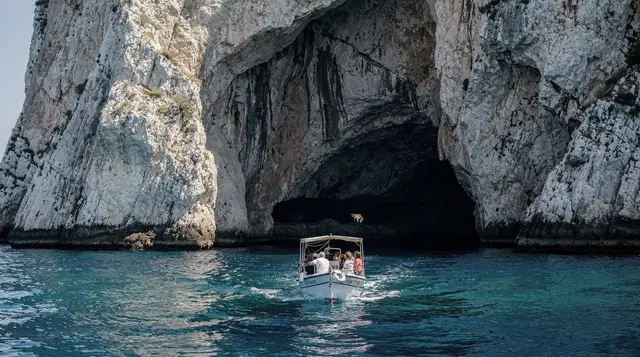
Carloforte and Sant'Antioco boat tours
What's the best boat tour from Carloforte?
A guided tour of the historic tonnara (tuna trap) combined with a coastal sail is the most distinctive option, since San Pietro's tuna-fishing heritage isn't replicated anywhere else in Sardinia. For swimming and snorkelling, the sailing tour between Sant'Antioco and Calasetta covers calmer, sheltered water on the mainland side of the strait.
The south-west corner of Sardinia, around the islands of Carloforte and Sant’Antioco, sees a fraction of the boat traffic that Alghero or the Costa Smeralda do, and that’s the appeal. This is Tabarkin territory — a Ligurian-speaking fishing community with its own dialect, its own cuisine built around tuna and couscous, and a working relationship with the sea that predates the island’s tourism by centuries. Boat tours here lean into that history rather than just chasing the next swim stop.
This guide covers what’s actually on offer from Carloforte and Sant’Antioco: the tonnara heritage tours, sailing routes across the Calasetta strait, snorkelling trips, and how to combine a day here with a longer stay in Cagliari or the Sulcis-Iglesiente coast.
| Where | San Pietro island (Carloforte) and Sant’Antioco island, south-west Sardinia |
| Getting there | Ferry from Portovesme or Calasetta (San Pietro); causeway road to Sant’Antioco |
| Boat tour price | €35-75pp for shared trips, more for tonnara or private options |
| Best for | Tuna-fishing heritage, quiet coves, sailing between the two islands |
| Season | May to October; tonnara season and traditions peak in spring |
Carloforte’s tuna heritage, told from a boat
Carloforte’s tonnara — the historic tuna trap system that once made this one of the Mediterranean’s most important tuna-fishing ports — is the thing that sets a boat tour here apart from anywhere else on the island. The mattanza, the traditional trap-and-harvest method, is no longer practised commercially at the old scale, but the trap structures, the harbour buildings and the stories around them are still very much part of Carloforte’s identity, and a handful of local guides run boat tours built specifically around this history.
The Carloforte tonnara guided tour takes in the historic trap sites and harbour by boat with a local guide explaining how the tuna trap actually worked and what it meant for the island’s economy for generations before tourism arrived. It’s a slower, more narrative tour than a typical swim-and-snorkel trip, and it’s the one thing on this stretch of coast you genuinely can’t do anywhere else in Sardinia.
Sailing between Sant’Antioco and Calasetta
The channel between Sant’Antioco and Calasetta, with Carloforte’s San Pietro island sitting just offshore, gives a sheltered stretch of water well suited to sailing — calmer than the open west coast further north, with coves along Sant’Antioco’s western shore that see far fewer boats than the Alghero or Costa Smeralda routes. The sailing tour from Sant’Antioco to Calasetta and Carloforte links all three points in one route, typically with a swim stop worked in along the way.
For a longer day on the water, the full-day boat trip with snorkelling from Sant’Antioco covers more coastline and gives more time in the water, better suited to visitors prioritising swimming over the historical narrative of the tonnara tours.
Calasetta itself, the small town on Sant’Antioco’s northern tip that shares much of Carloforte’s Ligurian heritage, is worth a stop even outside the boat tour itself — it’s the departure point for the regular ferry to San Pietro and has its own quieter beaches and a compact old town that sees noticeably fewer visitors than Carloforte across the water. Sailing tours that link all three points give a genuine sense of how closely connected this small cluster of communities is, despite being spread across two separate islands and a strip of mainland coast.
Day tours from Cagliari
If you’re based in Cagliari rather than staying locally, the drive to Portovesme for the San Pietro ferry takes about an hour and a half, which makes this corner of the island a genuine but longer day trip rather than a quick outing. The San Pietro island and Carloforte tour from Cagliari handles the transport and ferry crossing as part of the package, which removes the logistics of timing the ferry yourself. See our day trips from Cagliari guide for how this compares to the other options from the capital.
| Route | Starting point | Focus | Time on water |
|---|---|---|---|
| Tonnara guided tour | Carloforte | Tuna-fishing heritage | 2-3 hours |
| Sant’Antioco-Calasetta sail | Sant’Antioco | Sailing, one swim stop | 3-4 hours |
| Full-day snorkelling trip | Sant’Antioco | Swimming, snorkelling | 6-7 hours |
| Cagliari day tour | Cagliari | Ferry + island visit combined | Full day |
What the coastline actually looks like from the water
San Pietro and Sant’Antioco don’t have the limestone drama of Capo Caccia or the granite of La Maddalena — the coastline here is lower, rockier in places and sandier in others, with a distinctly weathered, working-harbour feel rather than a polished resort aesthetic. That’s part of the appeal for anyone who’s already seen the more photographed stretches of coast further north and wants something quieter. Coves along Sant’Antioco’s western shore, reached mainly by the sailing and snorkelling tours, see genuinely little boat traffic even in August, and the water clarity — while not quite matching Capo Caccia or La Maddalena — is still good enough for worthwhile snorkelling at most stops.
Wildlife spotting is a reasonable bonus on longer trips: dolphins are seen periodically in the channel between the islands and the mainland, though sightings aren’t guaranteed on any given day, and the birdlife around Sant’Antioco’s quieter inlets includes herons and the occasional flamingo drawn from the same population that frequents the Molentargius wetlands near Cagliari.
The water temperature and clarity follow the same broad seasonal pattern as the rest of Sardinia’s coast — warmest and calmest from June through September, with the clearest visibility typically in the earlier part of that window before summer algae growth and increased boat traffic have their usual mild effect on clarity. Snorkelling gear is worth bringing or renting on the longer trips specifically, since several of the rockier coves along Sant’Antioco’s western shore have small fish populations and interesting underwater terrain that a purely scenic sail would otherwise skip past.
Combining a boat tour with time on land
Both islands reward a full day rather than treating the boat trip as the whole visit. Carloforte’s town itself — pastel-coloured buildings around a genuinely attractive harbour, narrow lanes built at a human scale rather than for cars — is worth an hour or two of wandering either before or after a boat tour, and its handful of small museums cover the tuna-trap and Tabarkin history in more depth than a boat guide can fit into a two-hour narration. Sant’Antioco has its own archaeological sites, including a Phoenician-Punic necropolis and tophet near the modern town, giving the island a layer of ancient history that predates the Ligurian settlers by well over two thousand years.
Getting there and getting around
San Pietro island, where Carloforte sits, is reached only by ferry — from Portovesme on the mainland (25 minutes) or from Calasetta on Sant’Antioco (35-40 minutes), both running regularly in season. Sant’Antioco itself connects to mainland Sardinia by a causeway road, so no ferry is needed to reach the island — only to continue on to San Pietro. If you’re driving from Cagliari, budget around 90 minutes to Portovesme via the SS130 and SS126, longer than the direct distance suggests since this stretch has no motorway. Our driving in Sardinia guide covers why road speeds run lower than expected across the island generally.
Costs and what to expect from each type of tour
Prices here run somewhat lower than the busier Alghero or Costa Smeralda boat-tour markets, reflecting less demand rather than lower quality. Shared tonnara and heritage tours typically cost €35-55 per person for two to three hours, while the longer sailing and full-day snorkelling trips run €50-85 depending on what’s included — some bundle a light lunch or aperitivo, others charge separately. Cagliari-based day tours that include the ferry crossing cost more, generally €90-140pp, reflecting the transport and longer overall duration rather than a premium boat experience.
| Tour type | Typical price | Duration | Includes |
|---|---|---|---|
| Tonnara heritage tour | €35-55pp | 2-3 hours | Guide, boat, narration |
| Sant’Antioco-Calasetta sail | €40-60pp | 3-4 hours | Boat, one swim stop |
| Full-day snorkelling trip | €55-85pp | 6-7 hours | Boat, multiple stops, sometimes lunch |
| Cagliari combined day tour | €90-140pp | Full day | Transport, ferry, island tour |
Most operators here are small, family-run businesses rather than large fleets, which means fewer daily departures than you’d find in Alghero — worth booking a day or two ahead even outside peak season, since a cancelled morning slot might not have an afternoon equivalent the same day. This also means personal, often multi-generational knowledge of the coastline gets passed on directly through the guides themselves, a genuine contrast to the larger, more standardised tour operations further north.
The Tabarkin food worth timing your visit around
Carloforte’s Ligurian heritage shows up most clearly at the table — tuna prepared several distinct ways, cascà (the local couscous, a legacy of the community’s North African trading links before settling here), and a lighter hand with seafood than the heavier meat-forward cooking found inland. A boat tour timed to finish by early afternoon leaves room for a proper lunch in Carloforte’s harbourfront restaurants before the ferry back, which is worth building into the day rather than treating the boat trip as the whole itinerary. See our what to eat in Sardinia guide for where Tabarkin cooking fits into the island’s wider food traditions.
Weather and the best time to book
The south-west corner of Sardinia sees the same maestrale wind pattern that affects much of the island’s west-facing coast, typically strongest in spring and autumn and calmer through the core summer months. Mornings are generally the most reliable window for calm water here, and operators will often move a booking earlier in the day if the afternoon forecast looks marginal rather than cancelling outright.
May, June and September offer a good balance of settled weather and manageable temperatures for anyone who finds the July-August heat and crowds elsewhere on the island less appealing — see our Sardinia in September guide and best time to visit Sardinia guide for how this corner of the island fits the wider seasonal picture.
Because this area sees a fraction of the visitor numbers of the Costa Smeralda or Alghero, last-minute weather changes are easier to work around — smaller operators are often willing to shift a booking to the following day if you’re staying locally for more than one night, a flexibility that’s harder to find with larger tour operators running fixed daily schedules further north.
Frequently asked questions about Carloforte and Sant’Antioco boat tours
Do I need to book the ferry to San Pietro separately from the boat tour?
For self-organised visits, yes — ferries run from Portovesme or Calasetta and are booked separately from any boat tour you take once on the island. Tours departing from Cagliari that include San Pietro typically bundle the ferry crossing into the package.
What language is Tabarkin, and will I hear it in Carloforte?
Tabarkin is a Ligurian dialect brought by settlers from Liguria via Tunisia in the 18th century, still spoken by some older residents and used on some street signage alongside Italian — a genuine linguistic curiosity distinct from Sardu, the language spoken elsewhere on the island.
Is Sant’Antioco worth visiting without doing a boat tour?
Yes — the island has its own archaeological sites and coastal walks, but a boat tour adds the sailing perspective on coves that are harder to reach on foot, particularly along the western shore.
How does this compare to boat tours elsewhere in south Sardinia?
Quieter and less polished than Villasimius or Chia’s tour scene, with fewer operators and a stronger heritage angle rather than a beach-club atmosphere — see our best beaches in south Sardinia guide for how the wider south coast compares.
What’s the best time of year to visit for the tonnara tour?
Spring and early summer connect most closely to the traditional tuna season, though the guided tours run through the main visitor season from May to October regardless of the fishing calendar.
Can I combine this with a wider south-west Sardinia road trip?
Yes — the Sulcis-Iglesiente coast north of here, around Iglesias, Masua and Nebida, has its own dramatic mining-heritage coastline worth pairing with a Carloforte day; see our south Sardinia 7-day itinerary for how the route fits together.
Will I see dolphins on a Carloforte or Sant’Antioco boat tour?
Sometimes — sightings happen periodically in the channel between the islands and the mainland, though they’re not guaranteed on any given trip. Longer sailing routes give a better chance than short heritage-focused tours simply by covering more water.
Is Carloforte crowded in summer?
Less than the Costa Smeralda or Alghero, but it does get busier in August with Italian domestic tourists who know the area well; booking boat tours a few days ahead in peak season is still worth doing rather than assuming spontaneous availability.
What should I see on land if I only have half a day?
Carloforte’s harbourfront and old town lanes for the Tabarkin atmosphere, or Sant’Antioco’s Phoenician-Punic necropolis if ancient history interests you more than the more recent Ligurian heritage — both are manageable in an hour or two.
Is this area suitable for a family with children?
Yes — the calmer channel waters and shorter sailing routes suit families well, and the tonnara tour’s storytelling format tends to hold children’s attention better than a purely scenic boat trip would.
Boat tours & cruises on GetYourGuide
Verified deep-linked GetYourGuide tours. Book through these links and we earn a small commission at no cost to you.
These are our own photographs of Sardinia, not the operator's pictures of this tour — open the tour page to see those.