| Where | South-west Sardinia, connected to the mainland by a causeway road |
| Known for | A Phoenician-Punic necropolis and tophet, quiet western-shore coves |
| Getting there | By car directly — no ferry needed from the mainland |
| Cost | Boat and kayak tours €35-85pp depending on route and duration |
| Best time | May-October for boat trips; spring for archaeology without summer heat |
An island you can simply drive onto
Sant’Antioco is unusual among Sardinia’s main islands in that it doesn’t require a boat at all: a causeway road connects it directly to the mainland, so it functions more like a peninsula than a true island for practical purposes. That accessibility makes it an easy stop on a wider south-west Sardinia road trip rather than a separate logistical exercise, and it’s part of why the island sees a genuinely different visitor profile from Carloforte or La Maddalena — more day-trippers combining it with the mainland Sulcis-Iglesiente coast, fewer people treating it as an overnight island escape.
Layers of ancient history
Beneath its more recent Ligurian-influenced coastal towns, Sant’Antioco carries a layer of history that predates Carloforte’s 1738 settlement by well over two thousand years. The island holds a Phoenician-Punic necropolis and tophet near the modern town, remains of one of the oldest and most significant Phoenician settlements anywhere on the Sardinian coast, founded as a trading post centuries before Roman occupation reshaped the island. It’s a genuine contrast to the region’s more recent Tabarkin story next door on San Pietro — worth an hour or two if ancient archaeology interests you more than the more recent maritime heritage found across the channel.
Sea kayaking and boat trips
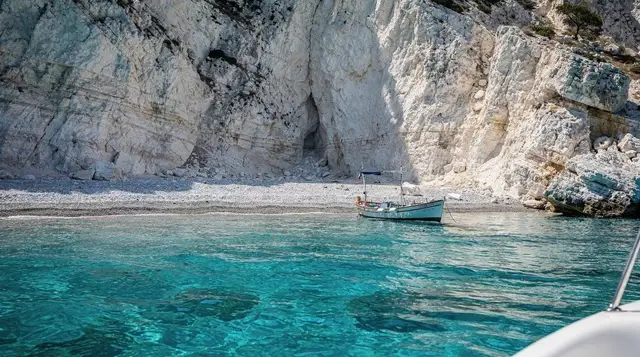
Sant’Antioco’s western shore, reached mainly by boat and kayak, sees genuinely little traffic even in August, with coves that don’t have the limestone drama of Capo Caccia or the granite of La Maddalena but reward visitors wanting something quieter than the more photographed stretches further north.
The Sant’Antioco island sea kayak tour gets closer to the shoreline than any motorised boat can, paddling into inlets a bigger vessel would skip. For a longer day covering more coastline with snorkelling stops, the full-day boat trip with snorkelling from Sant’Antioco is the most complete standard option.
A more flexible alternative is the private dinghy tour with snorkelling gear, which lets a small group set its own pace along the coast rather than following a fixed shared itinerary.
Sailing on to Calasetta and Carloforte
At the island’s northern tip, Calasetta shares much of Carloforte’s Ligurian heritage on a quieter scale, and is the departure point for the regular ferry to San Pietro island. The sailing tour linking Sant’Antioco, Calasetta and Carloforte covers all three points in a single route, typically with a swim stop worked in — a genuine sense of how closely connected this small cluster of communities is, despite being spread across two islands and a strip of causeway-linked coast.
Wildlife along the quieter inlets
Sant’Antioco’s sheltered inlets, particularly around the causeway and lagoon areas, attract herons and, periodically, flamingos drawn from the same population that frequents the Molentargius wetlands near Cagliari. It’s a reasonable bonus for anyone taking one of the longer boat routes rather than a dedicated birdwatching destination in its own right — see flamingos at Molentargius for where the island’s main flamingo population is more reliably seen.
Sea silk: a craft that survives almost nowhere else
Sant’Antioco town holds one of the more genuinely rare craft traditions left in the Mediterranean: byssus, or sea silk, a fine golden thread spun from the filaments certain pen shells use to anchor themselves to the seabed. Harvesting and weaving it by hand is a skill that has all but disappeared elsewhere, and Sant’Antioco is one of the very few places where it’s still practised and demonstrated, tied closely to the island’s long relationship with the sea that predates even the Phoenician settlement. It’s a niche interest rather than a headline attraction, but worth seeking out for visitors who want to see a craft that’s genuinely on the edge of disappearing rather than a polished tourist demonstration.
The island’s beaches
Away from the archaeology and the town itself, Sant’Antioco has a handful of proper beaches worth building into a visit. Maladroxia, on the island’s eastern shore, is a sheltered sandy bay with calmer water than the more exposed western coves reached by boat, and a reasonable base for families who want straightforward swimming without a boat tour.
Cala Sapone and Coaquaddus, on the western side, are smaller and rockier, generally quieter and better suited to snorkelling than to a full beach day with young children. None of these carry the quota restrictions found at Sardinia’s more famous northern coves, making Sant’Antioco a genuinely low-friction beach option for anyone road-tripping the south-west without wanting to plan around booking windows.
Where to stay
Sant’Antioco has a wider spread of accommodation than either Calasetta or Carloforte, ranging from simple guesthouses in the main town to small hotels closer to Maladroxia beach, reflecting its role as a practical base for exploring the wider south-west rather than purely a boat-tour departure point. Prices generally run a little lower than Carloforte’s harbourfront options, and the causeway access means arriving without ferry timing to plan around, a genuine advantage for visitors who’d rather not build a trip’s itinerary around sailing schedules.
Getting there and around
Sant’Antioco connects to mainland Sardinia by a causeway road, so no ferry is needed to reach the island itself — only to continue on to San Pietro from Calasetta. If driving from Cagliari, budget around 80-90 minutes via the SS130 and SS126, longer than the direct distance suggests since this stretch has no motorway; see our driving in Sardinia guide for realistic timing across the island generally. The island’s own roads are straightforward and well suited to a hire car, with Calasetta at the northern end and the main town, also called Sant’Antioco, toward the causeway side.
Weather and the best time to visit
Sant’Antioco sees the same maestrale wind pattern that shapes much of Sardinia’s west-facing coast, typically strongest in spring and autumn and calmer through the core summer months. Mornings are generally the most reliable window for a smooth boat or kayak trip, and smaller local operators here are often willing to shift a booking to a calmer slot if you’re staying more than a single night — a flexibility that’s harder to find with larger operators running fixed schedules further north on the Costa Smeralda.
May, June and September offer a good balance of settled weather and manageable temperatures for anyone visiting the Phoenician-Punic sites, which have little shade and can be genuinely uncomfortable to explore at the height of the July-August heat.
Combining Sant’Antioco with the wider south-west
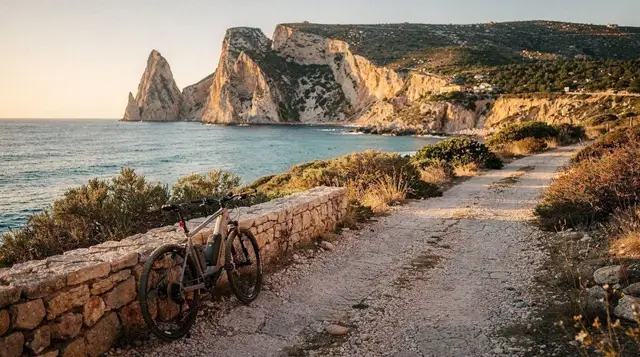
Sant’Antioco pairs naturally with Carloforte across the channel and with the mainland Sulcis-Iglesiente coast around Iglesias, Masua and Nebida, whose dramatic mining-heritage cliffs are a genuinely different landscape from the island’s own lower, rockier shoreline. Our south Sardinia 7-day itinerary covers how to sequence a route through this corner of the island, and our Carloforte and Sant’Antioco boat tours guide breaks down pricing and routes across both islands in full.
Frequently asked questions about visiting Sant’Antioco
Is Sant’Antioco worth visiting without doing a boat tour?
Yes — the island has its own archaeological sites and coastal walks, but a boat tour adds the sailing perspective on coves that are harder to reach on foot, particularly along the western shore.
Do I need to book the San Pietro ferry separately?
Yes, for self-organised visits — the ferry from Calasetta to San Pietro is booked separately from any Sant’Antioco boat tour, unless you’re on a package tour that bundles both.
How does Sant’Antioco compare to boat tours elsewhere in south Sardinia?
Quieter and less polished than Villasimius or Chia’s tour scene, with fewer operators and more of a heritage-and-nature angle than a beach-club atmosphere.
What’s the best time of year to visit the Phoenician necropolis?
Spring or early summer, when temperatures are more comfortable for walking an exposed archaeological site than the height of July-August.
Will I see dolphins on a Sant’Antioco boat tour?
Sometimes — sightings happen periodically in the channel between the islands and the mainland, though they’re not guaranteed. Longer routes give a better chance simply by covering more water.
Is Sant’Antioco suitable for a family?
Yes — the calmer channel waters and shorter sailing or kayak routes suit families well, and the causeway access means no ferry logistics to plan around for reaching the island itself.
Which beach on Sant’Antioco is best for young children?
Maladroxia, on the eastern shore, has calmer, more sheltered water than the rockier western coves at Cala Sapone and Coaquaddus, making it the more straightforward choice for families with younger swimmers.
Is the byssus (sea silk) craft demonstration worth seeking out?
If genuinely rare, near-vanishing crafts interest you, yes — it’s one of the very few places in the Mediterranean where this specific weaving tradition survives, though it’s a niche rather than headline attraction.
How does Sant’Antioco’s archaeology compare to Nora or Tharros?
Sant’Antioco’s Phoenician-Punic necropolis and tophet predate the Roman-era layers more prominent at Nora, giving a genuinely earlier window into the island’s ancient settlement history, though on a smaller scale than either Nora or Tharros as a full archaeological park.