Windsurfing at Porto Pollo
Why is Porto Pollo famous for windsurfing?
Porto Pollo sits on a narrow peninsula in Gallura where a thermal wind effect combines with the region's prevailing mistral to produce wind on most summer days. A shallow lagoon on one side suits beginners and freestyle practice, while a choppier open bay on the other suits wave sailing and more advanced windsurfers.
Long before kitesurfing arrived, Porto Pollo was already a windsurfing name known well beyond Sardinia, and the sport still has a strong presence on this narrow Gallura peninsula alongside the kiters who now share the same wind and the same beach. The physical layout that makes it work for kiting works just as well for windsurfing: two distinct bodies of water a short walk apart, one forgiving and one demanding, both catching wind on the great majority of summer days.
For anyone weighing up windsurfing against the now more fashionable kitesurfing scene at the same beach, it’s worth knowing that the two communities coexist comfortably rather than competing for space — windsurfers tend to favour slightly different wind angles and sail up earlier in a building breeze than kiters typically launch, which in practice spreads both groups across the water at different points in the day rather than crowding the same patch of lagoon simultaneously.
| Where | Porto Pollo, Gallura, on the strait facing La Maddalena |
| Two sides | Sheltered lagoon (flat water, beginners) and open bay (chop and swell, advanced) |
| Wind season | April to October, most reliable June to September |
| Lesson and rental cost | €40-70 per hour tuition; board and rig rental from roughly €30-50 per session |
The geography that makes it work
Porto Pollo sits on a thin isthmus reaching out toward the La Maddalena archipelago, and that positioning is the whole story: the strait between the mainland and the islands acts as a wind funnel, accelerating the region’s prevailing mistral and adding a reliable afternoon thermal effect as the land heats up through the day. The result is wind on most days from spring through autumn, strong enough and consistent enough that Porto Pollo has hosted windsurfing competitions and training camps for decades, well before the same spot became equally well known for kiting — see kitesurfing in Sardinia for how the two sports now share the same stretch of coast.
A spot with genuine year-on-year loyalty
Ask around the beach at Porto Pollo in high season and it’s common to meet windsurfers who’ve been returning to the same spot, sometimes the same rental operator, for a decade or more, a pattern that says as much about the quality of the wind and water here as any marketing could. That loyalty has also kept the spot’s character relatively unchanged over the years compared to more heavily developed European windsurf destinations — the same simple beach infrastructure, the same core group of instructors, and the same reliably windy lagoon that made the spot’s reputation in the first place.
The lagoon: where beginners learn
The sheltered side of the peninsula is a shallow, largely flat lagoon that’s ideal for anyone learning to windsurf, since the water is calm enough to focus on balance and sail control without also fighting chop, and shallow enough in most places to stand up when you inevitably fall. Windsurfing schools operate directly from this beach through the season, running everything from single taster lessons to multi-day beginner packages that take a complete novice from basic balance to their first independent tacks. It’s genuinely one of the better places in Europe to learn the sport for exactly this reason: reliable wind paired with genuinely beginner-safe water is a combination that’s harder to find than it sounds.
The bay: where it gets serious
Cross to the open side of the isthmus and the character of the sport changes completely. Here the wind gusts harder and less predictably, swell rolls in from open water, and the sailors on the water are noticeably more advanced — this is where wave sailors and freestyle specialists come to work on jumps, loops and wave riding rather than basic technique. It’s worth watching from the beach for a while before deciding whether you’re ready to rig here; the step up from the lagoon is real, not marginal.
Reading the lagoon before you rig
Even confident windsurfers benefit from spending a few minutes watching the lagoon before their first session of a trip, since wind angle and gust pattern here can shift noticeably through a session as the thermal effect builds on top of the base wind. Watching where other sailors are launching from and how far they’re able to plane out before turning back gives a quicker, more accurate read of the day’s conditions than checking a forecast alone, and it’s a habit worth keeping even after several days at the same spot.
Lessons, rental and costs
Expect to pay roughly €40-70 per hour for private tuition, with multi-day beginner packages working out somewhat cheaper per hour than single sessions. Board and rig rental for experienced windsurfers who don’t need lessons runs around €30-50 for a half-day session, cheaper still with a multi-day rental. Equipment quality varies between operators, so it’s worth asking specifically about sail sizes available if you’re an intermediate or advanced sailor with particular preferences, since beginner-oriented rental fleets sometimes skew toward larger, more stable boards than a confident sailor would choose.
If the wind drops
Even Porto Pollo has calm mornings, particularly outside the core summer window, and it’s worth having a backup plan rather than simply waiting on the beach. A boat trip that pairs snorkelling with stand-up paddleboarding gives you time on the water regardless of wind conditions, and works well as a rest-day activity even when the wind is blowing:
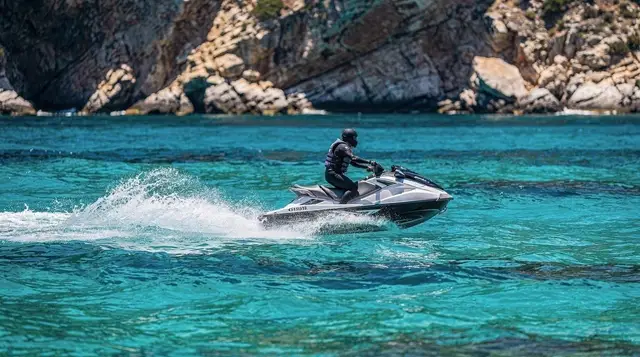
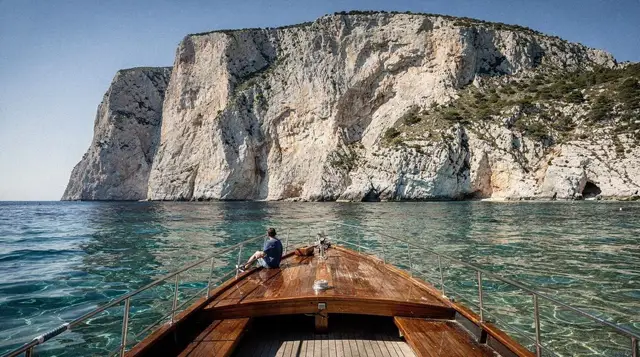
Boat tour with snorkelling and stand-up paddleboarding from AlgheroA jet ski tour is another wind-independent option worth considering if you’re spending several days in the area and want variety beyond sailing:
Jet ski tour along the Alghero coastlineFor those based nearer Cagliari rather than Gallura, stand-up paddle and kayak rental at Villasimius offers a similar no-wind-needed alternative in the south:
Stand-up paddle and kayak rental at VillasimiusA brief history of the spot
Porto Pollo’s windsurfing reputation dates back decades, built during windsurfing’s peak popularity in the 1980s and 1990s when the sport was still a novelty across much of the Mediterranean. The spot’s combination of reliable thermal wind and a genuinely rare two-sided beginner-to-advanced layout made it a natural fixture on the European windsurfing calendar long before kitesurfing existed as a sport at all, and several of today’s kite schools on the same beach began life purely as windsurf centres before adding kite equipment as that sport grew from the early 2000s onward.
That history is part of why the instruction quality here remains genuinely strong for windsurfing specifically, staffed by people who often learned and taught the sport at this exact beach for twenty years or more.
Choosing the right equipment size
Board and sail sizing matters more in windsurfing than in kitesurfing, and getting it wrong is the single most common reason a rental session disappoints. Beginners generally want a large, stable board — wide and long enough to stand on comfortably without immediately tipping — paired with a small sail that’s easy to control while learning balance and basic steering.
Intermediate and advanced sailors should ask specifically about sail sizes available for the day’s wind strength, since a rental fleet skewed toward beginner equipment may not have the smaller, more responsive sails a strong sailor would want on a genuinely windy afternoon. Most rental operators are happy to swap gear through a session as conditions change, so don’t hesitate to come back in for a different sail if the wind picks up or drops.
Other things to do in Gallura between sessions
Windsurfing is inherently dependent on wind, and even at Porto Pollo there are calmer stretches worth planning around. The wider Gallura region rewards exploration on rest days: Palau itself has a small but pleasant old town, Arzachena and San Pantaleo offer inland alternatives with a Sunday craft market worth timing a visit around, and a day trip out to the La Maddalena archipelago by ferry from Palau makes an easy, low-effort day away from the beach.
For visitors staying a full week, mixing windsurfing days with one or two of these excursions tends to make for a better-balanced trip than committing every single day to chasing wind.
Getting there and where to stay
Porto Pollo is a short drive from Palau and from Olbia, whose airport is the main gateway for this part of the island — see the Olbia Costa Smeralda airport guide for arrival options. A hire car is close to essential; the coast road connecting Palau to Porto Pollo has limited public transport, and carrying windsurf gear on a bus isn’t realistic. Driving in Sardinia covers what to expect more generally, and Santa Teresa Gallura, a little further along the coast, makes a good alternative base with more restaurants and a livelier evening scene.
Progressing from beginner to independent sailing
The typical progression at Porto Pollo starts with basic balance and short controlled runs on the lagoon, moves through learning to tack and gybe reliably, and eventually to planing — the point at which the board lifts and accelerates onto the surface of the water, which most windsurfers describe as the moment the sport genuinely clicks.
The lagoon’s consistent, moderate wind is ideal for this whole progression, since planing conditions arrive reliably most afternoons without the gustiness that makes learning harder on more exposed water. Riders ready to move to the bay side for wave sailing or stronger-wind sessions should have solid independent rigging skills and confident upwind sailing first, since conditions there are less forgiving of a stranded, unable-to-return beginner.
When to go
The wind season runs April to October, with June to September the most consistent stretch for both wind reliability and water temperature. Many experienced windsurfers deliberately choose late spring or September over the peak summer months: the wind is nearly as reliable, the water is warm enough without a thick wetsuit, and the beach and nearby towns are noticeably quieter and cheaper than during the July-August rush covered in Sardinia in July and August.
Comparing Porto Pollo to other Mediterranean windsurfing spots
Windsurfers with experience elsewhere in the Mediterranean often compare Porto Pollo favourably to well-known spots in Greece’s Cyclades or southern France’s Étang de Berre, citing the same combination of a reliable thermal wind pattern and, crucially, a genuinely sheltered lagoon for learning that many bigger-name spots lack.
What Porto Pollo doesn’t have is the scale of infrastructure found at some larger European windsurfing centres — think a handful of schools and rental operations rather than dozens — which in practice means less choice but also less of the crowded, commercialised feel that affects some more built-up spots. For sailors who value water quality and a genuinely reliable wind pattern over a big resort scene, that trade-off tends to work in Porto Pollo’s favour.
A note on gear transport if you’re bringing your own
Windsurfing equipment, particularly boards and masts, is genuinely awkward to fly with, and most visiting windsurfers who own their own gear either drive to Sardinia via the mainland Italy ferry routes or simply rent locally rather than deal with oversized sports baggage fees and the real risk of damage in transit. If you do bring your own board, a roof rack or board bag rated for the mast length is essential for the drive from Palau or Olbia airport to Porto Pollo, and it’s worth confirming your hire car company allows roof-rack fittings before booking, since some smaller rental agencies restrict this.
Frequently asked questions about windsurfing at Porto Pollo
Is Porto Pollo good for beginners?
Yes, specifically the lagoon side — shallow, calm water and reliable wind make it one of the better places in Europe to learn windsurfing from scratch, provided you take lessons rather than teaching yourself.
How does it compare to the kitesurfing at the same spot?
Both sports share the same wind and the same two-sided layout, but Porto Pollo built its reputation on windsurfing first, and local schools remain strong on windsurf-specific instruction and equipment.
What’s the wind like day to day?
Reliable through the core season, commonly strengthening through the afternoon as the thermal effect builds on top of the base mistral; mornings can be noticeably lighter than afternoons.
Do I need to bring my own equipment?
No, rental boards, rigs and sails are readily available from beach operators; most visitors, including experienced windsurfers, rent locally rather than bring gear on a flight.
Where should I stay?
Porto Pollo itself has simple, limited accommodation; most windsurfers base themselves in Palau or Santa Teresa Gallura, both a short drive away with more choice of restaurants and places to stay.
Is the bay side dangerous for intermediate sailors?
Not dangerous with appropriate caution and equipment, but noticeably more demanding than the lagoon, with stronger gusts and real swell; build confidence on the lagoon side first.
When is the best time to avoid crowds?
June and September offer nearly the same wind reliability as peak summer with a visibly quieter beach and lower accommodation prices.
Do I need my own board and sail?
No, rental boards, rigs and a range of sail sizes are readily available from beach operators through the season, and most visitors, including experienced sailors, rent locally rather than travel with their own equipment.
Is Porto Pollo suitable for children learning to windsurf?
Yes on the lagoon side, where several schools run junior lessons in shallow, calm water; the bay side is not appropriate for young or inexperienced sailors.
How does the wind compare to other Mediterranean windsurfing spots?
Porto Pollo is considered among the more reliable Mediterranean spots thanks to its dual mistral-and-thermal wind pattern, comparable in consistency to well-known spots in Greece or southern France, though smaller in scale and infrastructure.
Water sports on GetYourGuide
Verified deep-linked GetYourGuide tours. Book through these links and we earn a small commission at no cost to you.
These are our own photographs of Sardinia, not the operator's pictures of this tour — open the tour page to see those.