Porto Pollo is a narrow spit of land between two bays, 10km south-west of Palau, and it’s the closest thing Sardinia has to a dedicated water-sports resort. The name means “chicken port” — nothing to do with poultry, a corruption of an older Sardinian word — but the double-bay geography is the real story: one side is a shallow lagoon with flat water, sheltered and forgiving, the standard teaching ground for kitesurfing and windsurfing schools; the other side faces open water with more chop and stronger gusts, where experienced riders go once they’ve outgrown the lagoon.
Internationally, Porto Pollo turns up regularly on lists of Europe’s best kitesurfing spots, alongside better-known names like Tarifa in Spain — a comparison that surprises first-time visitors given how low-key the place looks on arrival. The infrastructure is genuinely serious, though: multiple internationally affiliated schools, rescue boats on the water during teaching hours, and instructors who teach in several languages for the mixed European crowd that returns here every season.
Away from the water-sports crowd, Porto Pollo is quiet almost to the point of sleepy — a scattering of beach bars, a handful of small hotels and campsites, and views across to the La Maddalena archipelago that are just as good as from Palau, minus the boat-tour crowds and gift shops. There’s no real village centre to speak of, no old town, no piazza life — the spit itself is essentially two beaches, a road, and the schools and bars that serve them, which is either a relief or a disappointment depending on what you’re looking for.
That lack of a conventional centre is precisely why Porto Pollo has become what it is: a spot defined entirely by its geography and its wind, rather than by architecture or history, and one that attracts a specific, repeat crowd of water-sports enthusiasts rather than general sightseers passing through. It’s worth knowing this going in — arriving expecting a typical Sardinian seaside town with restaurants, shops and evening strolls will disappoint; arriving to kite, windsurf, dive or simply enjoy a quiet stretch of coast delivers exactly what it promises.
Kitesurfing and windsurfing
This is Porto Pollo’s identity, and it’s earned: the combination of thermal winds building through the afternoon and the reliable Mistral funnelling down the Bonifacio strait gives some of the most consistent conditions in the Mediterranean, roughly 200 windy days a year by local operators’ counts. Multiple schools operate directly on the beach offering lessons from absolute beginner to advanced, equipment rental, and storage — a genuinely rare setup where you don’t need to own or transport your own gear.
Beginners should start in the lagoon side, where the water rarely gets above chest height for a hundred metres out, which makes early mistakes low-stakes. See our dedicated guide to windsurfing at Porto Pollo for school recommendations and typical lesson pricing, and the broader kitesurfing in Sardinia guide if you’re comparing spots along the coast. Stand-up paddleboarding is also possible on the calmer mornings before the wind builds — see stand-up paddle in Sardinia.
Wind patterns here follow a fairly predictable daily rhythm in the warmer months: mornings are usually calm or lightly breezy, the thermal wind builds through late morning and peaks in the early-to-mid afternoon, then eases toward evening. Riders who know the spot plan lessons and free sessions around this window rather than showing up at random — a school will always know the current forecast better than a general weather app, since local topography around the bay affects gust strength in ways that aren’t obvious from outside. The more exposed side of the bay, facing open water toward the strait, is where advanced riders go for bigger jumps and higher speeds once they’ve outgrown the lagoon; it’s not somewhere to learn.
Equipment rental alone, without a lesson, is also available for anyone who already knows how to kite or windsurf and just needs gear for a session — worth asking about directly at the beach schools if you’re not booking a full course.
Snorkelling and diving to La Maddalena
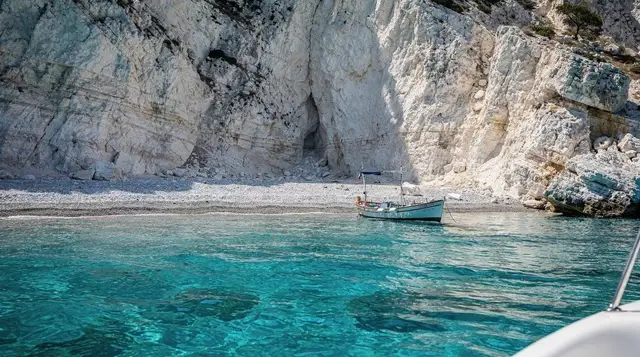
Porto Pollo’s other draw is less obvious from the beach: it sits directly opposite the southern edge of the La Maddalena archipelago, which makes it a shorter, quieter departure point for snorkelling and diving trips than the more crowded harbours at Palau. a half-day snorkelling tour of the La Maddalena islands departs directly from the bay and reaches clear-water coves in under 30 minutes, well ahead of the bigger tour boats from Palau.
For certified divers, a scuba diving trip to La Maddalena and the Lavezzi islands covers granite walls and clear visibility on both the Sardinian and Corsican sides of the strait — a good option if you’re certified but haven’t dived this specific stretch before. See diving in Sardinia for certification requirements and diving La Maddalena for site specifics.
Both trips depart directly from the Porto Pollo shoreline rather than requiring a transfer to Palau’s harbour, which shaves a genuine 20 to 30 minutes off the total day compared with booking the equivalent excursion from further up the coast. That’s a meaningful advantage if you’re combining a morning kitesurfing lesson with an afternoon on the water — the logistics of staying in one place rather than shuttling between harbours actually work in Porto Pollo’s favour, even though it has fewer operators overall than Palau.
Water clarity here is consistently good even by Sardinian standards, largely because the bay sees less boat traffic than the busier harbours further up the coast — fewer engines churning the seabed means less sediment in suspension, and visibility on a calm day regularly reaches 15 to 20 metres close to shore, comparable to sites much further out toward the archipelago proper.
| What | Where | Best for | When |
|---|---|---|---|
| Kitesurfing lessons | Lagoon-side bay | Beginners | April–October |
| Windsurfing (advanced) | Open-water side | Experienced riders | May, June, Sept, Oct |
| Snorkelling boat trip | Porto Pollo bay | All levels | May–September |
| Scuba diving | La Maddalena/Lavezzi | Certified divers | May–October |
Getting to Porto Pollo
It’s a 35 to 40-minute drive from Olbia airport via the SS125, roughly midway between Arzachena and Palau, and there’s no useful public transport option — renting a car is the only practical way in. Parking is informal along the access road and fills up on the windiest, busiest afternoons in July and August; arrive by mid-morning if you’re driving over just for the beach.
Its position between Arzachena and Palau makes it a workable stop within a wider Gallura loop rather than a destination requiring a special detour — pair a morning kitesurfing lesson with an afternoon exploring San Pantaleo or a Vermentino tasting near Arzachena, both under 20 minutes away by car. For a full driving-time picture across the region, see driving in Sardinia, which covers realistic speeds on Gallura’s local roads.
Where to stay and eat
Accommodation is limited and mostly geared towards the water-sports crowd: campsites, small pensions and a couple of mid-range hotels, nothing resembling Costa Smeralda luxury. That’s arguably the point — Porto Pollo attracts a younger, more outdoorsy crowd than Baja Sardinia or Porto Cervo twenty minutes up the coast, and prices reflect it. Beach bars serve simple, reasonably priced food; for a proper dinner, most visitors drive into Palau or Arzachena.
Camping is genuinely popular here in a way it isn’t elsewhere in Gallura — several sites sit within walking distance of the beach and cater specifically to the water-sports crowd, with equipment storage and easy beach access built into the setup. It’s worth booking well ahead for July and August regardless of which type of accommodation you choose, since Porto Pollo’s total bed count is small relative to its popularity with the kite and windsurf community, many of whom return to the same school or campsite year after year.
Frequently asked questions about visiting Porto Pollo
Do I need my own equipment to kitesurf or windsurf at Porto Pollo?
No — multiple schools on the beach rent full equipment and offer lessons at every level, so arriving with nothing but swimwear is entirely normal.
Is Porto Pollo suitable for complete beginners?
Yes, the lagoon side of the bay has shallow, sheltered water specifically suited to first-timers, with schools that teach from scratch.
How windy does it get, and is that a problem for non-water-sports visitors?
Wind is frequent and can be strong in the afternoon, which is exactly what water-sports visitors want but makes for a blustery, sometimes sand-blown beach day if you’re just there to sunbathe — mornings are calmer.
Can I do a boat trip to La Maddalena from Porto Pollo instead of Palau?
Yes, and it’s often quicker and quieter, since Porto Pollo sits closer to the archipelago’s southern edge than Palau’s harbour.
Is there enough to do in Porto Pollo for more than a day?
For water-sports enthusiasts, easily — multiple days of lessons or free-riding, plus snorkelling and diving trips. For others, a day is usually enough before moving on to Palau or Santa Teresa Gallura.
What time of day has the most reliable wind for kitesurfing?
Early-to-mid afternoon, once the thermal wind has built through late morning; mornings are typically calmer and better suited to snorkelling boat trips or a quiet swim instead.
Is camping a good option in Porto Pollo?
Yes, several campsites sit close to the beach and are set up specifically for water-sports visitors, with gear storage included; book well ahead for July and August, since the total number of beds in the area is limited.