Staying safe in Sardinia
Is Sardinia a safe place to visit?
Yes — violent crime against tourists is rare and Sardinia is generally considered one of Italy's safer regions. The real risks for visitors are practical rather than criminal — mountain roads, sea conditions on independent boat trips, sun exposure, and the fines attached to sand removal and unpermitted beach access.
The honest risk profile
Sardinia has a low violent crime rate, even by Italian standards, and most visitors never encounter anything more serious than an overpriced tourist-trap menu. The genuine risks that show up repeatedly in local news and traveller reports are practical: driving on narrow mountain roads with no barrier, misjudging sea conditions on an independently rented boat, underestimating sun exposure on a long hike or boat day, and running into the fines that come with beach access quotas and the sand-removal ban. This guide is built around those real risks rather than a generic list of city-crime warnings that don’t apply here.
| Risk area | Real level of concern | What to do about it |
|---|---|---|
| Violent crime | Low | Normal city-travel awareness is enough |
| Petty theft | Low-moderate in Cagliari and Alghero centres | Don’t leave valuables visible in parked cars |
| Driving | Moderate — mountain and coastal roads | Slow down, expect no hard shoulder, watch for cyclists |
| Sea and boats | Moderate on independent trips | Check wind forecasts, prefer licensed operators |
| Sun and heat | Moderate-high in summer | High-SPF sunscreen, hydration, shade breaks |
| Beach fines | Real but avoidable | No sand removal; book quota beaches ahead |
Driving is the risk most visitors underestimate
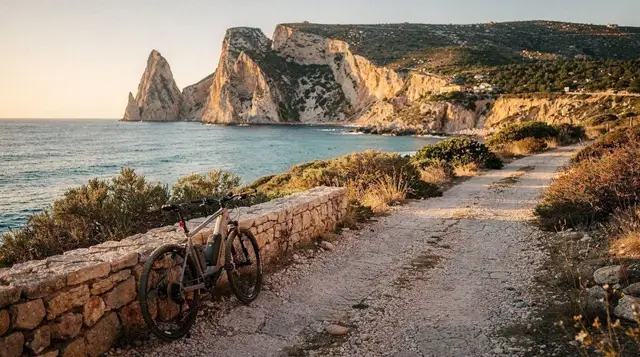
Sardinia’s roads outside the SS131 are mostly single-carriageway, often without a hard shoulder, and mountain routes through the Supramonte and Gennargentu involve tight hairpins with genuine drop-offs. The average real driving speed on the island is closer to 60km/h than the speed limits suggest, precisely because the roads demand it. Cyclists and scooters share these roads with no separate lane in most rural areas, and wildlife — wild boar particularly — cross rural roads at dawn and dusk.
If you’d rather remove the driving risk for a specific day, a guided option like the half-day private sightseeing tour from Cagliari or a full-day private experience from Cagliari puts a local driver in charge instead. See driving in Sardinia for road-condition specifics.
The sea is calmer to look at than it sometimes is to be in
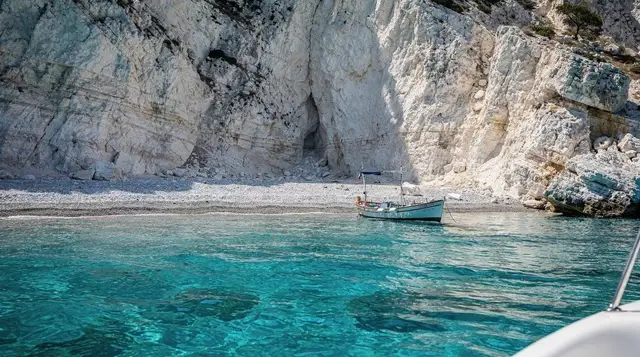
Cliff-backed coasts like Capo Caccia and the Gulf of Orosei look sheltered but can have strong currents and sudden wind shifts, particularly when a mistral or scirocco moves in with little warning at ground level. The single biggest sea-safety improvement most visitors can make is choosing a licensed tour operator over renting an unlicensed boat independently — operators check daily forecasts professionally and will cancel or reroute rather than risk a crossing, something covered in more depth in renting a boat without a licence in Sardinia.
A trip like the cruise along the cliffs to the Lavezzi Islands from Bonifacio runs with a professional skipper making that call, rather than leaving it to a first-time renter.
Hiking risk is about heat and terrain, not wildlife
Sardinia has no dangerous large predators and few venomous creatures worth real concern — the risk on trails is almost entirely heat, dehydration and underestimated terrain. Routes like the descent to Cala Goloritzé drop 250-300m over short, exposed, rocky trails with essentially no shade, and mountain rescue call-outs in summer are dominated by heat exhaustion and simple falls on loose rock rather than anything more dramatic. Carry at least 2 litres of water per person on any coastal or mountain hike, start early to avoid midday heat, and check forecasts — see hiking in Sardinia for trail-specific detail.
Beach quotas and the sand ban are enforced, not theoretical
Several of Sardinia’s best-known beaches — La Pelosa, Cala Goloritzé, Cala Mariolu, Cala Brandinchi, Lu Impostu and Tuerredda — cap daily visitor numbers and require paid or free advance booking; arriving without one at a checked entry point means being turned away, not fined. The sand and shell removal ban is different: it’s actively enforced with fines from €500 to €3,000, including spot checks at Cagliari-Elmas, Olbia and Alghero-Fertilia airports. Neither risk is about safety in the physical sense, but both are real enough to plan around — see Sardinia beach access quotas for which specific beaches require what.
Wind and weather-related safety
Sardinia’s strong winds — the mistral from the north-west and the scirocco from the south-east — are more than a mere inconvenience for boat tours; they’re a genuine safety factor that licensed operators take seriously and independent renters sometimes don’t. A wind that looks manageable from shore can build quickly on open water, particularly around exposed headlands like Capo Caccia, and conditions that were calm at departure can shift within a few hours. This is the core reason operator-led boat tours consistently outperform independent rentals on safety — a professional skipper checks the forecast, adjusts the route or cancels outright, decisions a first-time renter is less equipped to make confidently.
Petty theft: low, but not zero
Bag snatching and car break-ins do happen, concentrated in busy tourist areas of Cagliari and Alghero old towns and in unattended car parks near popular trailheads and beaches. The standard precautions apply and are enough: don’t leave bags, phones or valuables visible in a parked car, keep an eye on belongings on crowded beaches, and use hotel safes for passports when you’re out for the day. This is a normal-city level of caution, not a heightened one.
Medical care and emergency numbers
The EU-wide emergency number 112 works across Sardinia and connects to police, ambulance or fire services. Public hospitals in Cagliari, Sassari, Olbia and Nuoro handle emergencies to a good standard; rural areas rely more on smaller local clinics and longer transport times for serious incidents, which is part of why sensible trail and sea precautions matter more here than in a city break. EU visitors should carry their EHIC or GHIC card; everyone else should carry proof of travel insurance, since Italian public healthcare bills non-EU visitors directly.
Common scams and how to avoid the small annoyances
Sardinia isn’t known for organised tourist scams the way some parts of mainland Italy are, but a handful of small annoyances turn up repeatedly in traveller reports. Unofficial “parking attendants” near popular beaches and trailheads sometimes wave cars into spots and expect a cash tip, without any actual authority — paying or not is your call, but it’s not a legal requirement.
Restaurants in the most touristed stretches of Alghero and the Costa Smeralda occasionally add a coperto (cover charge) that isn’t clearly flagged on the menu; it’s legal and standard practice, but worth knowing to expect rather than treating as an overcharge. Genuinely dishonest scams — fake tour bookings, counterfeit tickets — are rare enough that the standard precaution of booking directly through recognised platforms covers almost all of the risk. Full detail on this specific topic is in fines and scams to know in Sardinia.
Water safety flags and how seriously to take them
Sardinia’s staffed beaches (stabilimenti) fly a standard flag system — green for safe swimming conditions, yellow for caution advised, red for swimming prohibited — and it’s worth actually checking rather than ignoring, since conditions can shift within a single day as wind picks up. Unstaffed, wilder beaches and coves, common across the Gulf of Orosei and much of the west coast, don’t have this system at all, which puts more responsibility on visitors to judge conditions themselves — a genuinely calm-looking cove can still have a strong rip current close to rocky points, and asking locally or a boat operator about a specific spot’s reputation is worth the two minutes it takes.
Driving specifics that reduce real risk
Beyond general caution, a few Sardinia-specific driving habits meaningfully cut risk. Fuel stations in rural areas can be sparse and close early or on Sundays, so don’t let the tank run low before a long interior or east-coast drive. Livestock — sheep, occasionally cattle — cross or linger on rural roads without warning, particularly in the interior around Nuoro and Orgosolo, and require the same reduced-speed caution as wild boar. Mountain roads through the Supramonte and Gennargentu have minimal or no lighting after dark and limited mobile signal for breakdown assistance, both reasons to avoid unfamiliar night driving on these specific routes if it can be scheduled for daylight instead.
Jellyfish and other minor marine hazards
Jellyfish appear seasonally along Sardinia’s coast, more common in warmer water later in summer and after periods of strong wind that push them closer to shore, and stings are unpleasant rather than dangerous for the vast majority of species found here. Staffed beaches (stabilimenti) usually post a warning flag or notice board update if jellyfish have been spotted recently; rinsing a sting with seawater (not fresh water, which can worsen it) and avoiding scratching is the standard first response, with a pharmacy able to supply an appropriate cream if needed. Sea urchins on rocky entry points are a more common minor injury than jellyfish stings in practice — reef shoes, already worth packing for the terrain itself, solve this too.
Getting non-emergency help
For anything that isn’t a genuine emergency — a lost passport, a minor dispute, general guidance — the local Carabinieri or Polizia di Stato station in the nearest town is the right first stop rather than the 112 emergency line, which is reserved for genuine emergencies. Tourist information points in Cagliari, Alghero and Olbia can also point you toward the right office and often speak enough English to smooth over the initial explanation, which matters more than it sounds like it should when dealing with an unfamiliar bureaucratic process in a second language.
Frequently asked questions about safety in Sardinia
Is Sardinia safe for solo female travellers?
Generally yes — Sardinia has a low rate of violent crime and solo travellers, including women, commonly report feeling comfortable in towns and on organised tours. Normal precautions around unlit areas at night and unlicensed transport apply as they would anywhere.
What is the emergency number in Sardinia?
112, the EU-wide emergency number, connects to police, ambulance and fire services and works across the whole island, including rural areas with basic phone signal.
Is it safe to drive in Sardinia at night?
Yes, but with more caution than in daylight — rural roads are unlit, wild boar cross at dawn and dusk, and mountain routes lack barriers, so reduced speed matters more after dark.
Are there dangerous animals in Sardinia?
No large predators and very few venomous species of real concern — wild boar are the most commonly encountered wildlife risk, mainly to drivers rather than hikers.
Is swimming safe on all Sardinian beaches?
Most beaches are calm and family-friendly, but cliff-backed coves in the Gulf of Orosei and around Capo Caccia can have stronger currents; check local flag warnings where posted and avoid swimming alone at less-supervised coves.
What happens if I’m caught taking sand from a beach?
Fines range from €500 to €3,000 depending on the amount and location, enforced with spot checks including at the island’s three airports on departure.
Do I need travel insurance for Sardinia?
Yes, recommended for everyone — EU visitors should still carry an EHIC or GHIC card for basic public healthcare access, but private insurance covers gaps like mountain rescue, which isn’t always free.
Is it safe to hike alone to places like Cala Goloritzé?
It’s done regularly and isn’t inherently unsafe, but the heat, exposed terrain and permit-checked access mean it’s safer with a plan — tell someone your route and return time, carry enough water, and avoid starting in the hottest part of the day.
Are there common tourist scams to watch out for in Sardinia?
Nothing widespread or organised — the main things to know are unofficial parking “attendants” near beaches who aren’t official, and restaurant cover charges (coperto) that are legal and standard but not always clearly flagged. See fines and scams to know in Sardinia for the full list.
Do I need to worry about wildlife while hiking or driving?
Not seriously — Sardinia has no dangerous large predators. The realistic risks are wild boar and livestock crossing rural roads, mainly relevant to drivers rather than hikers.
Is Cagliari a safe city to walk around at night?
Yes, generally — the main tourist areas including Castello and the Marina district are well-lit and busy into the evening, with the same normal-city caution around quieter side streets late at night applying as it would anywhere.
What should I do if I get into trouble at sea on a boat tour?
Licensed operators carry safety equipment and trained crew as standard, and Italy’s coast guard (call 1530, the dedicated maritime emergency number, or 112) covers Sardinian waters. This is another reason to prefer licensed tour operators over unlicensed independent boat rentals.
Are jellyfish stings dangerous in Sardinia?
Rarely — most species encountered here cause a painful but non-serious sting. Rinse with seawater rather than fresh water, avoid scratching, and ask a pharmacy for an appropriate cream if irritation persists.
Who should I contact for a non-emergency problem like a lost passport?
The local Carabinieri or Polizia di Stato station in the nearest town, not the 112 emergency line — tourist information points in the main towns can point you to the right office if you’re unsure where to start.
Trip-planning essentials on GetYourGuide
Verified deep-linked GetYourGuide tours. Book through these links and we earn a small commission at no cost to you.
These are our own photographs of Sardinia, not the operator's pictures of this tour — open the tour page to see those.