Best snorkelling spots in Sardinia
Where's the best snorkelling in Sardinia without needing a boat?
Capo Caccia's rocky coves near Alghero and Capo Carbonara near Villasimius both have shore-accessible snorkelling in clear, sheltered water. For the very best visibility and marine life, a boat trip to spots like the Bonifacio Strait's Lavezzi Islands or the deeper coves around Bosa is worth the extra cost.
You don’t need to dive to see Sardinia’s marine life properly — snorkelling reaches most of what makes the water here worth the trip, and several of the best spots are accessible from the shore rather than requiring a boat. This guide covers where to snorkel by region, which spots need a boat and which don’t, and how the marine protection status of each area affects what you’ll actually see.
| Shore-accessible | Capo Caccia coves (Alghero), Capo Carbonara (Villasimius) |
| Boat-only | Bonifacio Strait / Lavezzi Islands, deeper Bosa coves |
| Best visibility | 15-25m in the north and west, June-October |
| Equipment | Mask, snorkel, fins — many tours include rental |
| Marine reserves | Capo Carbonara and parts of the Bonifacio Strait have protected status |
Capo Caccia: the easiest excellent snorkelling on the island
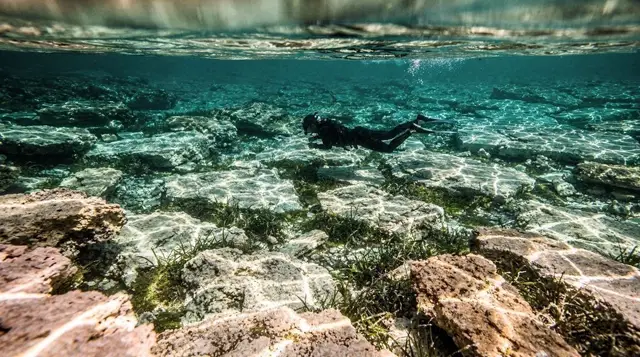
The rocky coves beneath Capo Caccia, near Alghero, combine clear water with genuinely varied underwater terrain — small caves, seagrass beds, rocky drop-offs — much of it reachable without a boat if you’re willing to walk down from the cliff-top car parks.
For those who’d rather see more ground and skip the walk back up, the wild beaches snorkelling tour at Capo Caccia covers several coves by boat in one outing, and the snorkelling tour along the Capo Caccia cliffs focuses on the more dramatic cliff-base terrain that’s awkward to reach on foot. Full detail on this coast, including which coves have easy shore access, is in our diving at Alghero and Capo Caccia guide.
Villasimius and Capo Carbonara: the best marine life
The Capo Carbonara marine protected area near Villasimius has some of the richest fish populations anywhere on the island, a direct result of restricted fishing inside the reserve boundary — expect large schools of bream, and with luck, groupers in the deeper rocky sections.
The marine park tour with snorkelling and drinks from Villasimius is the standard way in, combining a couple of snorkelling stops with time to relax on the boat between them. See our Villasimius beaches guide and our diving at Villasimius and Capo Carbonara guide for the fuller regional picture.
Bosa: quieter coves on the west coast
North of Alghero, Bosa’s coastline sees far fewer snorkellers than Capo Caccia despite similarly clear water and interesting rocky terrain along the coves south of town. The snorkelling tour along Bosa’s coastline and coves is a good option specifically because it’s quieter — fewer boats, fewer other swimmers, and a genuinely different stretch of coastline from the more visited spots further south. See our Bosa town guide for the rest of what the town offers beyond the water.
The Bonifacio Strait and Lavezzi Islands: worth the boat trip
Technically reached from Santa Teresa Gallura via the ferry crossing to Bonifacio in Corsica, the Lavezzi Islands sit inside a protected nature reserve with some of the clearest water in the entire strait — a genuinely different tier of visibility from most Sardinian coves, and worth the logistics for anyone serious about snorkelling.
The catamaran snorkelling trip to the Lavezzi Islands from Bonifacio and the guided boat tour with snorkelling from Bonifacio both cover this reserve. See our day trip to Bonifacio and Corsica guide for how to combine this with a Santa Teresa Gallura base.
| Spot | Access | Marine life | Best for |
|---|---|---|---|
| Capo Caccia coves | Shore or boat | Varied, rocky terrain | Easiest excellent snorkelling |
| Capo Carbonara | Shore or boat | Richest fish life, protected reserve | Marine life sightings |
| Bosa coastline | Boat | Good, quieter | Avoiding crowds |
| Lavezzi Islands | Boat + ferry crossing | Exceptional visibility, protected reserve | Serious snorkellers |
Snorkelling with children
Several of the spots covered here suit families well, particularly the calmer, shallower coves inside Capo Carbonara’s marine park and the more sheltered inlets around Capo Caccia. A well-fitted child’s mask makes a bigger difference to a good first experience than almost anything else — ill-fitting masks that leak or fog are the most common reason children give up on snorkelling within minutes, so it’s worth trying gear on before setting out rather than assuming a rental fits.
Shallow water with visible sandy or rocky bottom, rather than deep drop-offs, gives children confidence and a easier time spotting fish without feeling out of their depth, literally. See our Sardinia with kids guide for how snorkelling fits into a wider family itinerary.
Photography underwater
Sardinia’s clear water makes it a rewarding place for underwater photography, even with a basic waterproof camera or phone case rather than specialist gear. The best light for photography is typically mid-morning to early afternoon, when the sun is high enough to penetrate the water without excessive surface glare — the same window that also tends to have the calmest conditions before any afternoon wind picks up.
Shallow, sandy-bottomed coves reflect light back upward and often photograph better than deeper rocky sites, even though the deeper sites may have more dramatic marine life. If photography is a priority, ask boat operators specifically about timing a stop for the best light rather than assuming any mid-tour stop will do. A basic waterproof camera housing is usually adequate for the shallow snorkelling depths covered in this guide — specialist underwater camera rigs are more relevant to scuba diving at greater depth than to snorkelling near the surface.
Reaching snorkelling spots without a boat tour
Independent travellers with a hire car can reach several of the shore-accessible spots covered here without booking any tour at all — Capo Caccia’s cliff-top car parks lead down to a handful of coves on marked paths, and some of Capo Carbonara’s shallower water is reachable from beach parking near Villasimius.
This route requires more self-sufficiency: bring your own gear, check the walk down and back before committing (some paths are steep and better suited to sturdy shoes than flip-flops), and be aware that the more remote or boat-only spots on this list, like the Lavezzi Islands, simply aren’t reachable this way regardless of effort. Our renting a car in Sardinia guide covers what to expect from self-driving to reach these more independent snorkelling days.
What you’ll actually see
Expect large schools of salema and bream almost everywhere, damselfish and wrasse in the shallower rocky sections, and — inside the protected areas of Capo Carbonara and the Lavezzi reserve specifically — a real chance of grouper, barracuda and octopus. Posidonia seagrass meadows, which look unremarkable from above but shelter a surprising amount of juvenile fish, cover large stretches of the shallower coastal water; snorkellers are asked not to anchor boats or walk on these meadows, since they’re a protected and slow-growing habitat.
Other worthwhile spots around the island
Beyond the four regions covered in detail above, a handful of other stretches of coast reward snorkellers willing to explore beyond the headline names. The coves around Tavolara, the dramatic limestone island off the north-east coast near Olbia, offer clear, sheltered water and a genuinely different backdrop from anywhere else on this list — see our Tavolara boat tours guide for how to reach it.
Asinara, the former prison island off the north-west coast now a national park, has strict access rules but rewards the effort with some of the least-disturbed marine habitat in Sardinia, covered in our Asinara boat tours guide and Asinara national park guide.
Closer to the Costa Smeralda, the granite coves around Porto Cervo and Baja Sardinia offer good, if busier, snorkelling within easy reach of the region’s higher-end resorts — see our Costa Smeralda boat tours guide for the specific operators covering this stretch.
How snorkelling compares across Sardinia’s coastlines
Each of the island’s main coastal regions offers a genuinely different snorkelling character, and it’s worth matching the choice to what you actually want from the water rather than defaulting to whichever spot is most photographed. The west coast around Capo Caccia combines rocky drama with strong accessibility; the south-east around Capo Carbonara trades some scenery for the richest marine life; the quieter west-coast stretch near Bosa rewards those prioritising solitude; and the Bonifacio Strait crossing delivers the clearest water at the cost of the most logistics.
None of these is a wrong choice, but knowing the trade-offs before committing a day to one region over another makes for a more satisfying outcome than picking based on a single photo online. If your itinerary allows it, pairing two contrasting regions — Capo Caccia’s rocky drama with Capo Carbonara’s marine life, for example — across separate days of a longer stay gives a fuller sense of what Sardinia’s water actually offers than any single spot can on its own.
Equipment and practical notes
Most guided snorkelling tours include mask, snorkel and fins in the price, worth confirming when booking if you don’t want to pack your own. Water shoes are genuinely useful at several of the rockier shore-access spots around Capo Caccia, where the entry point isn’t sandy. Reef-safe sunscreen is increasingly requested by operators around the protected reserves, since standard sunscreen chemicals have a measurable impact on the seagrass and coral-adjacent ecosystems these areas exist to protect.
A wetsuit top or rash guard is worth having even in the warmest months, both for sun protection during long sessions face-down in the water and for a little extra warmth on windier days when the surface can feel noticeably cooler than the air temperature suggests. Fins are useful but not essential for the shore-accessible coves; they matter more for the boat-based trips covering greater distances, where covering ground efficiently between stops makes a real difference to how much you actually get to see in a limited time on the water.
Snorkelling and diving together on the same trip
Several of the regions covered in this guide — Capo Caccia, Villasimius and the Lavezzi Islands specifically — offer both snorkelling and scuba diving from the same bases, which suits mixed groups where some members dive and others prefer to stay closer to the surface. Many dive boats welcome snorkelling companions on the same trip while divers are underwater, giving non-divers a way to enjoy the same stretch of coast without committing to certification.
Ask specifically when booking a dive trip whether snorkelling companions are accommodated, since this varies by operator and isn’t universal. Our diving in Sardinia guide covers the full diving picture if part of your group wants to go deeper than snorkelling allows.
Frequently asked questions about snorkelling in Sardinia
Do I need a boat to snorkel well in Sardinia?
Not necessarily — Capo Caccia and parts of Capo Carbonara have good shore access. The very best visibility, at spots like the Lavezzi Islands, does require a boat.
What’s the best time of year for snorkelling visibility?
June through September for the warmest water and best light penetration, though May and October often have comparably clear water with far fewer other snorkellers around.
Is snorkelling safe for children in Sardinia?
Yes at the calmer, shallower spots — Capo Carbonara’s marine park and some of the sheltered Capo Caccia coves suit children well with a properly fitted mask and supervision. See our Sardinia with kids guide for wider family planning.
Do I need a permit to snorkel in the marine protected areas?
No permit is required for snorkelling itself in most reserves, though some areas restrict where boats can anchor; guided tours handle this automatically.
How does snorkelling compare to diving here for seeing marine life?
Diving reaches deeper terrain and slightly more varied sightings at depth, but snorkelling in the shallower reserve areas — particularly Capo Carbonara — still shows a genuinely rich amount of marine life without any certification needed. See our diving in Sardinia guide for the fuller comparison.
Is the water cold for snorkelling even in summer?
No — surface temperatures reach 24-27°C in July and August, comfortable without a wetsuit for most people, though a thin rash guard helps for longer sessions.
Which spot has the least crowded snorkelling?
Bosa’s coastline sees noticeably fewer visitors than Capo Caccia or Villasimius despite similar water quality, making it the pick for anyone prioritising quiet over convenience.
Can I snorkel around Tavolara or Asinara?
Yes, both offer excellent snorkelling — Tavolara’s coves are reachable on boat tours from Olbia and the Costa Smeralda area, while Asinara, a former prison island now a national park, has stricter access rules but rewards visitors with some of Sardinia’s least-disturbed marine habitat.
Do I need to book a guided snorkelling tour, or can I go independently?
Both work depending on the spot — shore-accessible coves at Capo Caccia and Capo Carbonara can be snorkelled independently with your own gear, while boat-only spots like the Lavezzi Islands require booking a tour or charter.
What fish am I likely to see while snorkelling?
Salema and bream schools are common almost everywhere; the protected reserves at Capo Carbonara and the Lavezzi Islands add a real chance of grouper, barracuda and octopus sightings that less-protected coves rarely offer.
Is snorkelling gear easy to rent locally?
Yes — most coastal towns near the spots covered here have rental shops, and the vast majority of guided boat tours include mask, snorkel and fins in the booking price.
Diving & snorkelling tours on GetYourGuide
Verified deep-linked GetYourGuide tours. Book through these links and we earn a small commission at no cost to you.
These are our own photographs of Sardinia, not the operator's pictures of this tour — open the tour page to see those.