North versus south Sardinia
Is north or south Sardinia better for a first trip?
The south around Cagliari is easier for first-timers — one main airport, a real city as a base, and beaches within an hour's drive. The north (Alghero, Costa Smeralda, Gallura) suits travellers who want granite coves, a higher-end feel, and are happy basing a trip around Alghero or Olbia instead.
If you have to pick just one for a short trip
For a trip of five days or fewer, splitting between north and south usually costs more in driving time than it gains in variety — the honest advice is to pick one coast and go deep rather than spread thin. A first-time visitor with no strong pull toward granite coves or a higher-end feel does best starting in the south, since Cagliari gives a fallback of real city content on a rainy or low-energy day, something the north’s smaller towns don’t offer to the same degree. A returning visitor, or anyone specifically drawn to boat-accessed coves and a livelier evening scene, gets more out of a north-based week. Either choice works — the mistake is trying to force both into a trip too short to support the driving it requires.
Two coasts, two genuinely different trips
“North versus south Sardinia” isn’t a marginal choice like picking between two similar beach towns — the two halves of the island have different landscapes, price points and travel logistics, and picking the wrong one for your priorities is a common source of disappointment. The south, anchored by Cagliari, is flatter, easier to drive, and centred on a real working city with beaches close by. The north splits between Alghero’s Catalan old town and the granite coves of the Costa Smeralda and Gallura, generally pricier and more resort-oriented. Neither is objectively better — they suit different trips.
| South (Cagliari and around) | North (Alghero, Gallura, Costa Smeralda) | |
|---|---|---|
| Main airport | Cagliari-Elmas (CAG) | Olbia (OLB) or Alghero-Fertilia (AHO) |
| Base city | Cagliari — real working capital | Alghero (relaxed) or Olbia (functional) |
| Beach style | Wide dune-backed bays | Granite coves, clearer but pricier |
| Price level | Moderate | Higher, especially Costa Smeralda |
| Driving | Flatter, easier | More winding along the coast |
| Best for | First-timers, city-plus-beach trips | Boat trips, higher-end coves, Alghero’s old town |
The south: easiest base for a first trip
Cagliari works as a real city break with beaches attached — the Bastione di Saint Remy, the Castello quarter and the archaeological museum give you genuine city content, while Poetto beach is reachable by local bus from the centre, unusual for Sardinia. Beyond the city, Chia and Villasimius are 45-75 minutes by car with some of the island’s best dune-backed beaches, and day trips to nuraghi sites and Barumini fit easily into a south-based week. The south generally runs 10-20% cheaper than the north for equivalent accommodation, and Cagliari-Elmas airport has more year-round flight options than Alghero.
The north: Alghero’s charm plus the Costa Smeralda’s coves
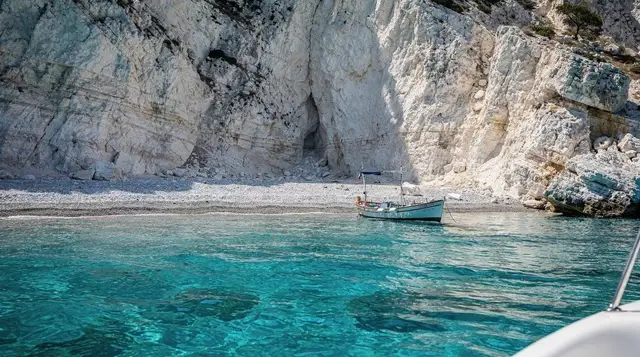
Alghero itself is one of the most pleasant bases on the island — a walkable Catalan-influenced old town, a working fishing harbour, and easy access to Capo Caccia and Neptune’s Grotto. From Alghero, boat trips reach coves inaccessible by road, and a 6-hour catamaran tour of Porto Conte park covers ground a rental car simply can’t.
Further east, the Costa Smeralda and Gallura trade some of that relaxed feel for granite-cove scenery and a noticeably higher price tag on accommodation, dining and even parking — genuinely beautiful, but the coast where costs add up fastest on the island. For a full regional breakdown of that specific trade-off, see is the Costa Smeralda worth it.
Driving times and how much ground you can cover
A south-based trip keeps drives to nuraghi sites, beaches and Barumini under an hour and a half in most directions, since the terrain around Cagliari is flatter and the road network more direct.
A north-based trip covers less distance comfortably per day — the coast road from Alghero toward Castelsardo winds along cliffs, and reaching the east coast’s Gulf of Orosei from either the Costa Smeralda or Alghero is a genuine half-day drive, which is why boat access from Arbatax, such as the Gulf of Orosei day tour by boat from Arbatax, matters more than it might for a south-based itinerary. If your trip needs to cover both halves of the island, see how many days do you need in Sardinia for realistic timing.
Prices: where the gap actually shows up
The price difference between north and south isn’t uniform across every category — restaurant meals and boat tours cost similarly island-wide, since operators price against the same fuel and staffing costs regardless of coast. Where the north genuinely costs more is accommodation, particularly around Porto Cervo and the Costa Smeralda in July-August, and beach-club (stabilimento) sunbed rental, which runs noticeably higher on that specific stretch than almost anywhere in the south.
A sailing catamaran day trip with lunch from Alghero costs roughly the same as an equivalent boat day from Cagliari or Arbatax — the coast doesn’t change the tour price, just the accommodation around it.
Which airport actually matters for your trip
Cagliari-Elmas serves the south well and has the widest range of year-round international connections. Olbia Costa Smeralda is the natural gateway for the north-east and Gallura, though its flight schedule thins outside the summer months. Alghero-Fertilia serves the north-west directly but has the most seasonal flight schedule of the three — worth checking specifically for your travel dates before assuming it’s an option. See getting to Sardinia by air for the full route breakdown by airport.
Weather and seasonal differences between the two coasts
The south generally runs slightly warmer and holds its summer heat a touch later into autumn than the north, since it faces more directly into sustained sun through the day — useful to know if your trip falls in shoulder-season months like September or October, when a few extra warm days can matter for beach plans.
The north-west, particularly around Alghero and Capo Caccia, is more exposed to the mistral, the sharp north-westerly wind that can disrupt boat trips for a day or two at a time; the south and east coasts feel this less directly, though they’re not immune to it either. Neither coast has a dramatically different climate overall — both share the same broadly Mediterranean pattern — but the differences that do exist tend to favour the south very slightly for anyone chasing the longest possible beach season.
Landscape and terrain differences
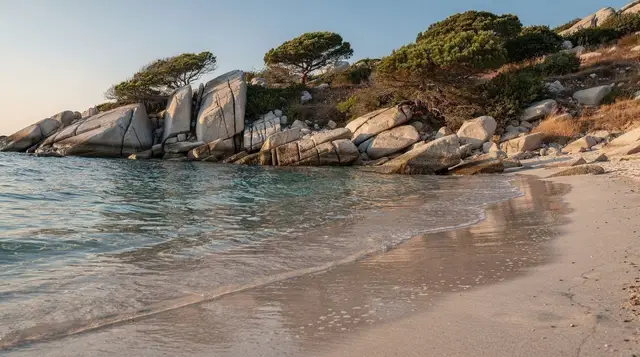
The south’s terrain around Cagliari and toward the west is comparatively flat and open, with wide plains giving way to dune-backed beaches — easy driving, easy orientation, and a landscape that doesn’t demand technical navigation. The north is more varied within a smaller area: Alghero’s coastal plain gives way quickly to the limestone cliffs of Capo Caccia, while further east the granite boulders and pink-tinged rock formations of the Costa Smeralda and Gallura create a genuinely different visual character from anywhere else on the island. Photographers and anyone drawn to dramatic coastal scenery over gentler beach landscapes tend to prefer the north for this reason specifically, even setting aside the cove access that boat tours provide.
Food culture: similar island, different local flavour
Both coasts share the same island-wide staples — culurgiones, pane carasau, Cannonau and Vermentino — but local specialities shift noticeably between north and south. The south’s food culture leans toward Cagliari’s seafood tradition and bottarga from nearby Cabras, with Carignano del Sulcis as the standout south-western wine.
The north brings Alghero’s distinctive Catalan-influenced cuisine, including lobster dishes tied to the town’s fishing heritage, alongside Gallura’s Vermentino di Gallura DOCG, the island’s only DOCG-rated wine. Neither coast has better food outright — the difference is in which specific dishes and producers you’ll run into most often, covered further in Sardinian food and wine.
Nightlife and evening atmosphere
The Costa Smeralda and Gallura carry Sardinia’s most active nightlife scene by a clear margin, particularly around Porto Cervo and Porto Rotondo in peak summer, where beach clubs and late bars draw an international crowd willing to pay premium prices for it. Cagliari has a genuine, more locally-driven nightlife scene of its own, especially around the Marina district and Poetto’s beachfront bars in summer, generally at lower prices and with less of a see-and-be-seen atmosphere.
Alghero sits somewhere between the two, livelier than a typical south-coast town in the evening without the Costa Smeralda’s scale or cost. If nightlife matters meaningfully to your trip, see nightlife in Sardinia for the fuller regional picture.
Day trips and how the two coasts connect
A south-based trip pairs naturally with day trips to Villasimius, Pula and Nora and Barumini, all under 90 minutes from Cagliari — see day trips from Cagliari for the full list.
A north-based trip built around Olbia or Alghero connects more naturally to the Costa Smeralda’s coves, La Maddalena archipelago and the boat-only stretches of coast further discussed in day trips from Olbia and day trips from Alghero. Trying to cover both sets of day trips from a single base defeats the point of either — pick a coast and let the day trips radiate from it.
A week’s budget: south versus north, in real numbers
For a couple travelling in July, a week based in the south around Cagliari typically runs to roughly €900-1,300 for mid-range accommodation, plus €250-350 in car hire and fuel and around €400-500 in food and activities — call it €1,600-2,200 all in, excluding flights. The same week based around the Costa Smeralda pushes accommodation alone to €1,500-2,500 for the same standard of room, largely because July-August rates in Porto Cervo and Porto Rotondo run well above anything comparable in the south; total costs for that week land closer to €2,400-3,400.
Basing a north trip in Olbia or Alghero rather than directly on the Costa Smeralda narrows that gap significantly, since accommodation there prices closer to south-coast levels even though day trips into Gallura’s coves cost the same wherever you’re staying. September shifts both figures down by roughly 20-30%, and the gap between the two coasts narrows slightly too, since Costa Smeralda pricing softens more sharply after August than south-coast pricing does. Restaurant meals barely move the overall total either way — a straightforward trattoria dinner for two runs €35-55 on both coasts — so the headline gap between north and south is almost entirely an accommodation and beach-club story, not a food or activity one.
Frequently asked questions about north versus south Sardinia
Which is cheaper, north or south Sardinia?
The south is generally cheaper, mainly on accommodation and beach-club costs — the north, particularly the Costa Smeralda, carries the island’s highest prices in both categories.
Which coast has better beaches, north or south?
Different styles rather than better or worse — the south has wide, easily accessible dune-backed bays; the north’s Costa Smeralda has granite coves with clearer water but a higher price and often boat-only access to the best spots.
Can I visit both north and south Sardinia in one week?
It’s tight but possible with a one-way rental car and a realistic itinerary that doesn’t try to double back — see how many days do you need in Sardinia for a full breakdown of what a week can realistically cover.
Which airport should I fly into for the south?
Cagliari-Elmas (CAG), which has the widest year-round international flight schedule of Sardinia’s three airports and sits closest to the south coast’s main attractions.
Is Alghero in the north or a separate region?
Alghero is part of the north-west, distinct in character from the Costa Smeralda and Gallura further east — it has its own Catalan-influenced identity and a more relaxed, less resort-driven feel.
Which coast is better for families?
Both work well — the south’s flatter terrain and shorter drives suit families who want less time in the car, while the north’s boat trips and calmer coves in Gallura also appeal to families who enjoy time on the water.
Is the Costa Smeralda worth visiting if I’m not on a luxury budget?
It’s possible to visit on a moderate budget by basing yourself in Olbia or Golfo Aranci rather than Porto Cervo itself — see is the Costa Smeralda worth it for the specific cost-saving approach.
Which coast is closer to the Gulf of Orosei?
Neither is genuinely close — the Gulf of Orosei is best reached from the east coast itself, via Cala Gonone or Arbatax, or by boat tour from either the north or south rather than by car from either coast directly.
Does the north or south have better nightlife?
The north, specifically the Costa Smeralda around Porto Cervo, has the island’s most active and highest-spending nightlife scene; Cagliari in the south offers a more locally-driven, lower-cost alternative that’s still genuinely lively in summer.
Which coast is better for a food and wine focused trip?
Both are strong but different — the south centres on Cagliari’s seafood tradition and Carignano del Sulcis wine, while the north brings Alghero’s Catalan-influenced dishes and Vermentino di Gallura, the island’s only DOCG wine.
Is one coast better connected to day trips than the other?
Both work well for day trips, just to different places — the south radiates naturally toward Villasimius, Nora and Barumini, while the north connects better to the Costa Smeralda’s coves and La Maddalena archipelago.
Popular Sardinia experiences on GetYourGuide
Verified deep-linked GetYourGuide tours. Book through these links and we earn a small commission at no cost to you.
These are our own photographs of Sardinia, not the operator's pictures of this tour — open the tour page to see those.