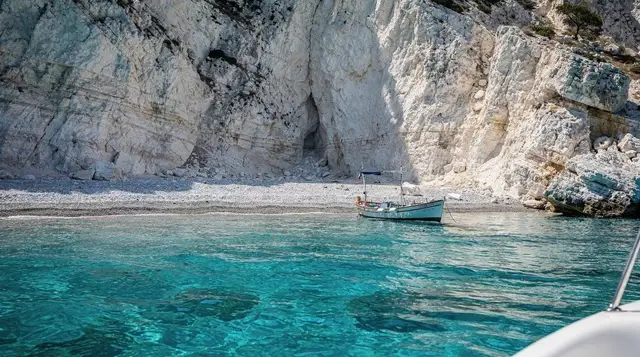
Porto Conte is the wide, sheltered bay that sits between Alghero and the Capo Caccia headland, protected almost entirely from the open sea by the surrounding cliffs — which makes it one of the calmest stretches of water on this coast, and popular with families for exactly that reason. The whole area, roughly 5,000 hectares of coastline, macchia scrubland and limestone cliff, is designated a regional natural park, which has kept development to a minimum: no high-rise hotels, no built-up seafront, just beaches backed by pine and juniper scrub and a scattering of trails good for walking or cycling.
That protected status is a genuinely useful data point when comparing Porto Conte to other bays along this stretch of coast. Where beach towns further south have grown hotel strips and beach clubs right up to the waterline, Porto Conte has been legally prevented from doing the same since the park’s founding — the practical result is emptier beaches, darker night skies away from the town’s light pollution, and a noticeably different, quieter atmosphere even at the height of summer.
The two main beaches, Le Bombarde and Mugoni, are both sand and shallow-entry, and both noticeably quieter than Alghero’s own Lido a few kilometres back toward town — worth knowing if you’re staying in Alghero and want a calmer beach day without leaving the area entirely.
The park’s boundaries stretch well beyond the two main beaches, taking in the whole Capo Caccia headland, the archaeological site of the Nuraghe di Palmavera, and a network of hiking and cycling trails through macchia scrubland that’s home to griffon vultures, wild boar and, in the shallows just offshore, a resident population of loggerhead turtles. It’s genuinely one of the more ecologically intact stretches of coastline on the island, largely because the natural park designation has kept large-scale tourism development out since it was established in 1999.
The beaches
Le Bombarde is the smaller and more sheltered of the two, tucked into a cove with fine white sand and clear, shallow water that suits families with young children particularly well. Mugoni is longer and more open, backed by the park’s pine woods, and has more space to spread out even at the height of summer. Neither carries an access quota, unlike some of the beaches further afield in Sardinia (see Sardinia’s beach access quotas for which ones do), so there’s no need to book — just arrive reasonably early in July and August, when the car parks behind both beaches fill by late morning.
For families specifically, both beaches are a solid pick — see Sardinia’s beaches with kids for a broader comparison across the island.
Both beaches have basic facilities — sun loungers and umbrellas for hire, a beach bar or two, toilets — without the built-up promenade of a resort town, which keeps the atmosphere closer to a genuine natural setting than a commercial one. Shade is limited to what the pine woods behind Mugoni provide; Le Bombarde’s cove has essentially none, so plan around the midday sun accordingly or bring your own umbrella if the rental options are already taken by late morning.
Cycling, quad tours and the natural park
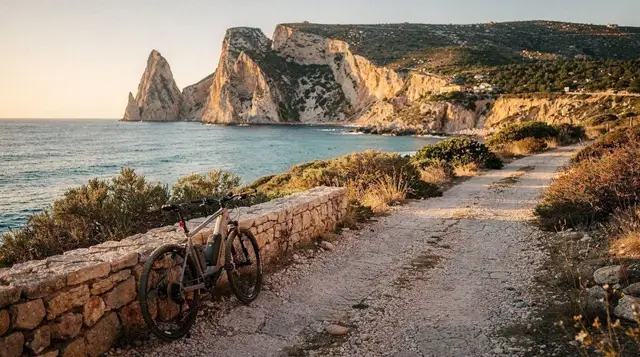
Porto Conte’s flatter terrain and shaded trails make it one of the better parts of north-west Sardinia for cycling, and several operators run guided e-bike routes through the park. an e-bike tour through Porto Conte natural park covers the coastal trails at an easy pace, suitable for most fitness levels since the electric assist handles the few inclines. For a similar route with a food stop, a Coral Coast e-bike tour with an aperitif stop extends the ride toward Alghero’s coastline and ends with a drink overlooking the sea.
For something faster, a four-hour guided quad bike tour covers more ground through the park’s inland trails and coastal viewpoints, and reaches parts of the natural park that aren’t practical on foot or bike in a single visit — a good option if the flat coastal paths of an e-bike route feel too tame.
Walkers are equally well served, even without a guided tour: marked trails cross the park from the beaches toward Capo Caccia and inland through the macchia, ranging from easy 45-minute loops to half-day routes that connect several of the park’s viewpoints. None require technical hiking experience, though the summer heat makes an early start worthwhile regardless of route length — there’s limited shade once you’re away from the pine woods behind Mugoni, and no reliable water points along most trails.
Boat trips around the bay
Porto Conte’s calm water and position beside Capo Caccia make it a natural starting point for boat tours covering both the bay and the more dramatic cliffs beyond it. a six-hour catamaran tour of Porto Conte natural park is the standard way to see the whole bay plus a stretch of the Capo Caccia coastline in a single day, with swimming stops along the way — see our Alghero-Capo Caccia boat trips guide for a full comparison of routes and operators.
Because the bay is so well protected from open-sea swell, it’s also one of the more reliable places on this coast for a boat trip even when conditions elsewhere have turned marginal — worth keeping in mind if a planned excursion to Capo Caccia or further out gets cancelled for weather and you still want time on the water. Catamarans departing from Alghero often route through Porto Conte first regardless, using the bay’s shelter to build in swimming stops before pushing out toward the more exposed cliffs.
Nearby: Sassari and the wider northwest
Porto Conte’s inland edge backs onto the road toward Sassari, Sardinia’s second city, roughly 40 minutes further on — a workable extension if you’re already spending a day exploring the park and want to add a different kind of stop before heading back to Alghero. In the other direction, Stintino and La Pelosa beach are under an hour’s drive, making Porto Conte a reasonable midpoint stop on a longer day covering the whole northwest coast.
| What | Where | How long | Best for |
|---|---|---|---|
| Le Bombarde beach | Porto Conte bay, southern end | Half day | Families, calm water |
| Mugoni beach | Porto Conte bay, central | Half day | Space, longer stays |
| E-bike tour of the park | Departs Alghero/Fertilia | 3–4 hours | Cycling, moderate fitness |
| Catamaran tour, bay + Capo Caccia | Alghero port | 6 hours | Swimming, sightseeing |
Getting to Porto Conte
It’s a 15 to 20-minute drive from central Alghero and even closer from Alghero-Fertilia airport, making it an easy half-day or full-day addition if you’re based in Alghero — see the Alghero-Fertilia airport guide for arrival details. There’s no meaningful public transport within the park itself, so renting a car is the practical option, or booking a tour that includes transport from Alghero.
A limited seasonal bus service does run from Alghero to the beaches in peak summer, though timetables are sparse and unreliable enough that most visitors don’t rely on it as a sole means of transport — check current schedules locally rather than planning a day entirely around it. For anyone staying in Alghero without a car, a half-day tour that includes transport is the more dependable route into the park.
Frequently asked questions about visiting Porto Conte
Is Le Bombarde or Mugoni the better beach?
Le Bombarde is smaller, more sheltered and better for young children; Mugoni is longer with more space, better if you want room to spread out.
Do I need to book Porto Conte’s beaches in advance?
No, neither beach has an access quota — just arrive earlier in peak summer, since the car parks fill by late morning in July and August.
Is Porto Conte suitable for a day trip without a car?
It’s difficult without one, since there’s no public transport into the park; a rental car or a tour with included transport from Alghero is the practical route.
Can I combine Porto Conte with a visit to Capo Caccia in one day?
Yes, easily — the six-hour catamaran tour covers both, or you can drive between the two independently since they’re only about 10 minutes apart.
Is Porto Conte good for cycling with kids?
The e-bike tours are geared toward adults and teenagers, but the park’s flatter coastal paths are also suitable for confident young cyclists on a regular bike if you’re exploring independently.
Are there wildlife or nature sightings worth looking out for in the park?
Yes, Porto Conte natural park is home to griffon vultures, wild boar, and a resident population of loggerhead turtles offshore, along with typical Mediterranean macchia scrubland flora.
Is there shade at Le Bombarde or Mugoni beach?
Mugoni has some natural shade from the pine woods behind it; Le Bombarde’s cove has almost none, so bring your own sun protection or arrive early enough to secure a rented umbrella.