Day trips from Oristano
What are the best day trips from Oristano?
The Sinis Peninsula with Tharros and Is Arutas beach (20-25 minutes), Cabras and the Giants of Mont'e Prama museum (15 minutes), the Costa Verde's dunes around Piscinas (an hour), and Su Nuraxi di Barumini inland (45 minutes).
Oristano sits on Sardinia’s west coast, less visited than the island’s north and south but well placed for a genuinely varied set of day trips — ancient ruins on a peninsula, Europe’s tallest sand dunes, and the island’s best-known archaeological site, all within about an hour’s drive. It’s also one of the quieter bases on the island, which makes the day trips below noticeably less crowded than their equivalents near Cagliari or Alghero.
| Closest day trip | Sinis Peninsula — Tharros and Is Arutas beach (20-25 minutes) |
| Best archaeology day trip | Su Nuraxi di Barumini (45 minutes inland) |
| Best dunes day trip | Costa Verde around Piscinas (about an hour) |
| Best local-culture day trip | Cabras, bottarga and the Giants of Mont’e Prama (15 minutes) |
| Getting around | Hire car essential for all of the above |
Sinis Peninsula: Tharros’ ruins and a quartz beach
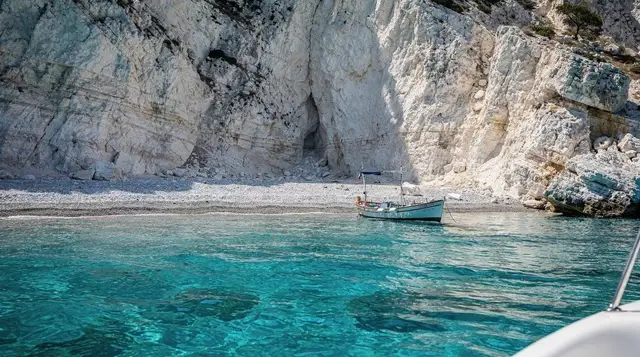
The Sinis Peninsula, 20-25 minutes from Oristano, packs an unusual amount into a small area: the Phoenician-Punic-Roman ruins of Tharros on its southern tip, and Is Arutas, a beach made almost entirely of small quartz pebbles rather than sand, a few kilometres further round the coast.
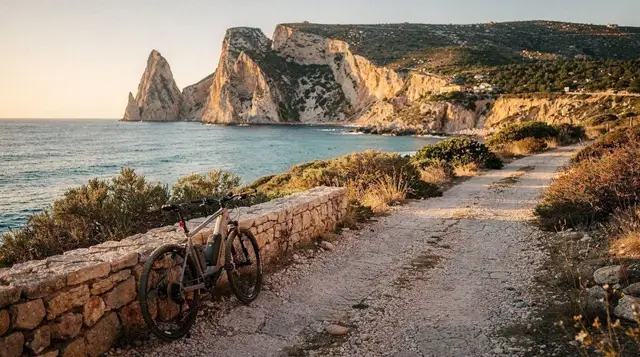
Tharros archaeological site covers the ruins in full, and Is Arutas quartz beach explains the local rule against taking the quartz “sand” home — the same fines that apply to ordinary sand elsewhere on the island apply here too. A mountain bike tour covers the peninsula’s flatter tracks between the two, taking in the wetlands and the old fishing village of San Giovanni di Sinis along the way.
Sinis Peninsula mountain bike tour from OristanoTharros in more detail: what’s actually on site
Tharros sits on a narrow strip of the Sinis Peninsula’s southern tip, founded by Phoenician settlers around the 8th century BC and later built over by Carthage and then Rome, which means the ruins visible today stack several centuries of construction on top of each other rather than representing a single period.
The site’s most photographed feature is a pair of Roman columns overlooking the sea, but the more substantial remains are the street grid, the baths, and the tophet — a Phoenician sacred burial area for infants that gives archaeologists some of the clearest evidence anywhere in Sardinia of pre-Roman ritual practice. A small on-site museum in nearby San Giovanni di Sinis displays finds from the excavations, worth the extra twenty minutes for anyone who wants context beyond the ruins themselves. Entry runs around €7-10, with combined tickets available covering both Tharros and the museum.
The Sinis Peninsula’s wetlands and flamingos
Beyond Tharros and Is Arutas, the Sinis Peninsula’s inland lagoons — Cabras lagoon in particular — are one of the best flamingo-watching spots on the west coast, with birds present for much of the year rather than just migrating through briefly. Early morning and late afternoon give the best light and the calmest water for photography, and the flat peninsula terrain makes this an easy add-on to a day already built around Tharros, requiring only a short detour rather than a separate trip.
Cabras and the Giants of Mont’e Prama
Between Oristano and the Sinis Peninsula, Cabras is a small town known for two very different things: bottarga, the cured mullet roe that’s one of Sardinia’s most distinctive foods, and the Giants of Mont’e Prama — monumental stone statues, some close to 2 metres tall, discovered in a nearby farmer’s field in 1974. The bottarga of Cabras and the giants of Mont’e Prama both cover their respective subjects in depth; combined, they make a good half-day before or after the Sinis Peninsula itself, given how close the three sit to each other.
Where to eat on the Sinis Peninsula day trip
Given bottarga’s local reputation, a lunch stop in Cabras or one of the small restaurants around San Giovanni di Sinis is worth building into the day rather than treating food as an afterthought. A plate of spaghetti alla bottarga — the grated roe shaved over pasta with olive oil and garlic — runs €10-14 in most local trattorias and gives a far better introduction to the ingredient than buying a vacuum-packed piece to take home untried. What to eat in Sardinia and sardinian food and wine both cover the wider context of what to look for on menus across the island.
Su Nuraxi di Barumini, inland but worth the detour
South-east of Oristano, Barumini is about 45 minutes’ drive through the Marmilla countryside and home to Su Nuraxi, Sardinia’s only UNESCO World Heritage nuraghe — a Bronze Age tower complex with a guided tour included in the entry ticket. Su Nuraxi Barumini guide covers opening hours and what the guided visit includes. It’s further from Oristano than the Sinis Peninsula, but it’s the single best archaeology day trip within reach and pairs naturally with a stop at the Marmilla-Giara plateau, home to the wild horses of the Giara, covered in the wild horses of the Giara.
What Su Nuraxi’s guided tour actually covers
Because entry to Su Nuraxi is guided-only, departures run roughly every 30-40 minutes rather than on a fixed schedule, and the tour itself takes 45-60 minutes covering the central tower, the four corner bastions and the surrounding village of stone huts that was inhabited well into the 3rd century BC. Tickets cost roughly €13-15, with a combined ticket available for the separate Casa Zapata museum in Barumini village, built directly over another smaller nuraghe discovered beneath the building’s foundations. Booking a day or two ahead in July and August avoids a long wait, since group sizes are capped and the site’s popularity means slots do fill.
The Costa Verde, dunes taller than most buildings
South of Oristano, roughly an hour’s drive, the Costa Verde around Piscinas has some of the tallest sand dunes in Europe — some reaching over 50 metres — backed by an old mining landscape rather than the resort development found on much of the rest of the coast. It’s a genuinely different landscape from anywhere else covered on this page, closer to a desert than a typical Sardinian beach, and an off-road tour is the practical way to see the full extent of the dune system rather than just the accessible section near the car park.
Costa Verde off-road trip from OristanoCosta verde as a destination covers the wider area, including the nearby beaches at Scivu and Portixeddu for anyone with time for more than the dunes alone.
The Costa Verde’s mining history, alongside the dunes
The Costa Verde’s dune system sits within an old mining district, and the abandoned settlement of Ingurtosu, a short drive inland from Piscinas, gives a striking counterpoint to the natural landscape — crumbling industrial buildings from a 19th and early 20th century lead and zinc mining operation, left largely as they were when the mines closed. It’s a quieter, less-visited stop than the dunes themselves, worth the detour for anyone interested in Sardinia’s industrial history rather than only its beaches. The road down to Piscinas itself is unpaved for the final stretch, which is worth knowing before setting off in a standard hire car rather than a 4x4 — most rental agreements allow it, but it’s slower going than the map suggests.
Planning which day trip suits which day of a stay
The Sinis Peninsula works well early in a stay, given its short distance and gentle pace — ruins, a swim, and a bottarga lunch make for a rewarding but unhurried first full day. Su Nuraxi di Barumini, being further and requiring a fixed guided-tour slot, benefits from being planned a day or two ahead rather than decided on the morning, so it’s worth booking once travel dates are confirmed rather than leaving to chance.
The Costa Verde, being the most remote and physically demanding given the unpaved final stretch and larger dune system to explore on foot, sits well later in a trip once the basics of driving Sardinian roads feel familiar. Keeping a flexible day in reserve for Oristano’s own historic centre gives a fallback for poor weather or simply a lower-energy day between two more active ones.
Getting around Oristano itself between day trips
Oristano’s own historic centre is compact enough to explore on foot in a couple of hours, worth building into a day that doesn’t require a long drive — the cathedral, the Torre di Mariano II gate tower, and the pedestrianised streets around Piazza Eleonora d’Arborea, named for the medieval judicessa who led Sardinian resistance against Aragonese rule and remains one of the island’s most significant historical figures. Using a day with poor weather or simply lower energy to explore the city itself, rather than always driving out, breaks up a week built mostly around day trips and gives a lower-key alternative when needed.
A guided overview of the whole area
For a first-time visitor who wants an introduction to Oristano and its surroundings without planning each stop independently, a general day tour covers the city and its immediate surroundings as a single guided experience.
Oristano day trip, SardiniaSeasonal notes for these day trips
The Sinis Peninsula and Cabras are pleasant year-round, with flamingo watching arguably better outside the peak summer months when the lagoons see fewer visitors and the birds are less disturbed. Is Arutas and the peninsula’s beaches are, like the rest of Sardinia’s coast, best for swimming from June through September, though the archaeological sites at Tharros are more comfortable to visit in the shoulder months given the complete lack of shade.
Su Nuraxi di Barumini runs year-round on a similar guided-tour schedule regardless of season, though July and August bring the longest queues. The Costa Verde is at its most striking in the softer light of spring and autumn, when the mining ruins and dunes photograph well without the summer heat haze, though swimming season still runs June to September like the rest of the island.
What each day trip costs, roughly
Tharros entry runs €7-10 per person, with a combined ticket for the on-site museum available for a few euros more. Su Nuraxi’s mandatory guided tour costs €13-15. The Sinis Peninsula mountain bike tour and Costa Verde off-road trip both typically run €40-70 per person for a half-day, depending on group size and route length. A general guided day tour covering Oristano and its surroundings costs roughly €60-100 per person. Fuel for a full day of driving between these sites, given Sardinia’s toll-free roads, adds €15-25 depending on distance covered.
Day trips from Oristano, compared
| Distance | Best for | Time needed | |
|---|---|---|---|
| Sinis Peninsula (Tharros, Is Arutas) | 20-25 minutes | Ancient ruins, quartz beach | Full day |
| Cabras | 15 minutes | Bottarga, Giants of Mont’e Prama | Half day |
| Su Nuraxi di Barumini | 45 minutes | Sardinia’s only UNESCO nuraghe | Full day |
| Costa Verde / Piscinas | About 1 hour | Europe’s tallest dunes | Full day |
Frequently asked questions about day trips from Oristano
Is a car necessary for day trips from Oristano?
Yes — public transport to the Sinis Peninsula, Barumini and the Costa Verde is limited, and a hire car is the practical way to cover any of them in a day.
Can I visit Tharros and Is Arutas on the same day?
Yes, easily — both sit on the Sinis Peninsula within a short drive of each other, and combining them into one day is the standard approach.
Is Su Nuraxi di Barumini worth the 45-minute drive from Oristano?
Yes — it’s the only UNESCO-listed nuraghe on the island and the best-preserved site of its kind reachable from Oristano in a day.
How remote is the Costa Verde around Piscinas?
Fairly remote by Sardinian standards — services are limited compared to the more developed south and north-east coasts, which is also part of what keeps it quiet.
Is Oristano a good base for exploring the west of the island?
Yes — the Sinis Peninsula, Cabras, Barumini and the Costa Verde all sit within roughly an hour, making Oristano a practical, less crowded base compared to Cagliari or Alghero.
Are there quota-controlled beaches near Oristano like La Pelosa?
No — the west coast’s beaches around the Sinis Peninsula and Costa Verde don’t run the same booking systems as La Pelosa or the Gulf of Orosei’s famous coves.
What food is Cabras known for?
Bottarga, cured grey mullet roe, produced from fish caught in the Sinis lagoons and considered among the best in Italy.
Is the road to Piscinas suitable for a standard hire car?
Mostly, though the final stretch is unpaved and slower going than a paved road; most rental agreements permit it, but it’s worth checking conditions and driving cautiously rather than rushing.
What does a typical guided day trip from Oristano cost?
Roughly €40-100 per person depending on the activity, with mountain biking and off-road tours at the lower end and full-day guided tours with lunch toward the higher end.
Is Oristano worth exploring on foot as its own day?
Yes — the compact historic centre, cathedral and Piazza Eleonora d’Arborea are all walkable in a couple of hours, a useful lower-key option between more active day trips.
Best day trips in Sardinia on GetYourGuide
Verified deep-linked GetYourGuide tours. Book through these links and we earn a small commission at no cost to you.
These are our own photographs of Sardinia, not the operator's pictures of this tour — open the tour page to see those.