| Where | North coast, 20 minutes west of Sassari |
| Known for | Sardinia’s busiest ferry port, plus Roman ruins from Turris Libisonis |
| Time needed | A couple of hours for the ruins, more if you’re heading on to Asinara |
| Cost | Basilica free to enter; Antiquarium a few euros; ferries priced by route and season |
| Best time | Off-peak sailings for a quieter port; any season for the Roman sites |
More than a ferry terminal, even if that’s why you’re here
Porto Torres is where most ferries from mainland Italy (Genoa, Civitavecchia) and increasingly from Spain and France dock in northwest Sardinia, which means a large share of visitors pass through without stopping — arriving off an overnight ferry and driving straight out, or heading in the opposite direction to catch a sailing. That’s a reasonable use of a transit town, but it undersells what’s actually here: this is the site of Turris Libisonis, a Roman colony founded under Julius Caesar, and the archaeological remains are genuinely worth an hour or two if your ferry schedule allows it.
The modern town itself is workmanlike rather than picturesque — this is an industrial port city, with a petrochemical complex visible from parts of the waterfront, and nobody is claiming otherwise. But the historic core around the basilica and the excavated Roman quarter gives Porto Torres a legitimate reason to stop beyond logistics.
The Basilica di San Gavino
The Basilica di San Gavino, built in the 11th and 12th centuries, is the largest Romanesque church in Sardinia and one of the most architecturally significant on the island, built using columns and materials salvaged from Roman-era buildings — look closely at the interior columns and you’ll notice they don’t quite match, a direct result of this recycling. The crypt beneath the church holds the remains of San Gavino and two other early Christian martyrs, and the building’s scale is genuinely surprising given how understated the town around it is. It’s free to enter and sits an easy walk from the port.
Turris Libisonis: the Roman town beneath the modern one
The Antiquarium Turritano houses finds from Turris Libisonis, including well-preserved mosaic floors depicting marine and hunting scenes, alongside an excavated section of the Roman bridge (Ponte Romano) that once carried the coastal road across the Rio Mannu and is, remarkably, still partially in use today. The site gives a genuine sense of how substantial this Roman port town once was — a reminder that Porto Torres’s role as Sardinia’s main gateway to the mainland isn’t a modern invention, it’s a role the town has played for roughly two thousand years.
The Roman baths and what else survives
Beyond the basilica and the Antiquarium, Porto Torres holds a scattering of further Roman remains that reward a slower look: the so-called Palazzo di Re Barbaro, actually the remains of a Roman bath complex rather than a palace despite the popular name, with sections of hypocaust (underfloor heating) still visible, and fragments of the old city walls along the modern street grid.
None of these individually justify a special trip, but together with the basilica and Antiquarium they add up to a genuinely dense concentration of Roman-era sites for a town most visitors write off as purely industrial. Sardinia’s archaeological record tends to get discussed in terms of its much older Nuragic sites — see our nuraghi of Sardinia guide for that side of the island’s history — but Porto Torres is a useful reminder that the Roman layer runs just as deep in places.
A quieter beach nearby
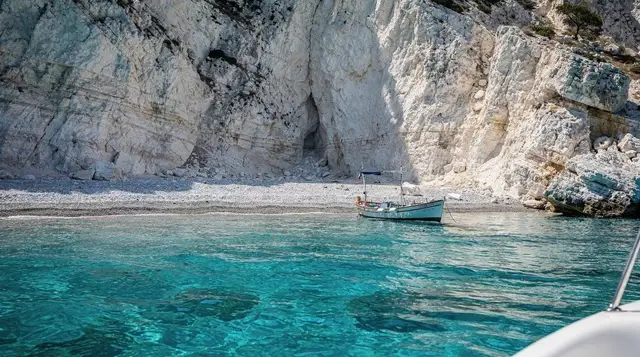
Balai, a small cove a short walk from the port along the coast, gives Porto Torres a genuine, if modest, swimming option that most transiting visitors never discover simply because they don’t think to look for a beach in a working port town. It won’t compete with the coves further along toward Stintino or Alghero, but as somewhere to cool off between a ferry arrival and a onward drive, it’s a reasonable and often near-empty option precisely because so few people know to use it.
On the water: kayaking the coastline
The coastline immediately around Porto Torres, away from the port itself, has decent kayaking terrain, and a guided kayaking excursion is a straightforward way to get out on the water without needing your own equipment, typically covering a few kilometres of coast with stops to swim. It’s a good option if you have a spare morning or afternoon between ferry connections and want something more active than the ruins alone.
The other route to Asinara
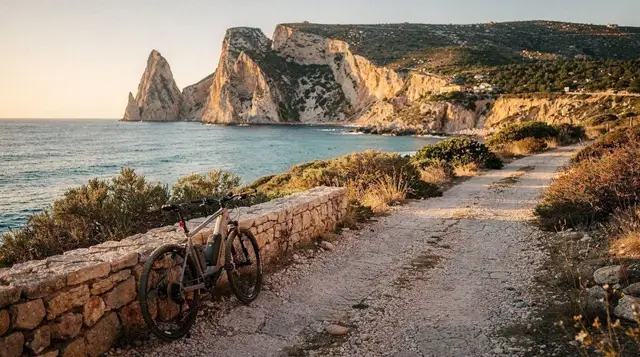
Stintino gets most of the attention as the gateway to Asinara island, but Porto Torres also runs boat connections, and it’s worth considering if you’re already passing through on your way to or from a ferry. A mountain bike rental to discover Asinara is a genuinely good way to see the island once you’re there, since much of Asinara’s interior is only accessible on two wheels or on foot, without the vehicle restrictions that apply to cars. See our Asinara destination guide and Asinara National Park guide for the fuller picture on visiting the island itself.
Getting to and around Porto Torres
Porto Torres sits about 20 minutes from Sassari and 45 minutes to an hour from Alghero-Fertilia airport (AHO) by car. If you’re arriving by ferry, most companies serve routes from Genoa and Civitavecchia on the Italian mainland, with journey times ranging from roughly 6-7 hours (fast ferry from Civitavecchia, where available) to closer to 10-12 hours overnight from Genoa. See our ferries to Sardinia guide for current routes and how to book, and our getting to Sardinia by air guide if you’re comparing against flying into Alghero or Cagliari instead.
The town centre and the Roman sites are walkable from the port itself, which makes Porto Torres one of the easier stops on this coast to fit into a tight schedule — you genuinely don’t need a car for the few hours most visitors spend here, even if you’ll need one for anywhere else on this list.
Frequently asked questions about Porto Torres
Is Porto Torres worth visiting beyond catching a ferry?
Yes, if you have a couple of spare hours — the Basilica di San Gavino and the Antiquarium Turritano’s Roman mosaics are both genuinely worthwhile and an easy walk from the port.
How do I get from Porto Torres to Asinara?
Boat connections run from Porto Torres alongside the more commonly used route from Stintino. Both are viable; Porto Torres can be more convenient if you’re already passing through en route to or from a ferry.
Do I need a car in Porto Torres itself?
No — the historic centre and Roman sites are walkable from the port. You will need a car (or an organised tour) for anywhere else on this stretch of coast, including Stintino and Castelsardo.
How long does the ferry from mainland Italy take?
It varies by route and operator: roughly 6-7 hours on faster Civitavecchia sailings where available, closer to 10-12 hours on overnight routes from Genoa. Check current schedules before booking, since crossing times and frequency shift seasonally.
Is Porto Torres a good base for exploring the northwest coast?
It’s a functional rather than scenic base — most visitors prefer to stay in Stintino, Alghero, or Castelsardo and treat Porto Torres purely as a transit point, which is a reasonable approach given the town’s industrial character.
Is there anywhere to swim in Porto Torres itself?
Yes — Balai, a small cove near the port, offers a modest and often quiet swimming option, useful for a short break between a ferry arrival and driving on, even if it doesn’t compare to the coves further along the coast.
What other Roman remains are in Porto Torres besides the basilica?
The Antiquarium Turritano’s mosaics, the Roman bridge over the Rio Mannu, and the remains of a bath complex known locally as the Palazzo di Re Barbaro all sit within easy walking distance of each other in the town centre.
Is Porto Torres safe and pleasant to walk around?
Yes, the historic centre around the basilica and Antiquarium is a normal, safe town centre to walk during the day. The industrial character is more visible from the waterfront and outskirts than from the streets most visitors actually walk between the port and the Roman sites.
Is there luggage storage near the port for a short stopover?
Some ferry operators and a handful of cafés near the terminal offer informal bag storage for a few euros, useful if you want to walk to the basilica and Antiquarium without hauling luggage. It’s worth confirming directly with your ferry company rather than assuming, since options change season to season.