| Where | North coast, roughly 30 minutes east of Porto Torres |
| Known for | The Doria castle, medieval old town, and basket weaving |
| Time needed | 2-4 hours for the old town, longer with a boat trip or vineyard visit |
| Cost | Free to walk the town; castle and cathedral entry a few euros each |
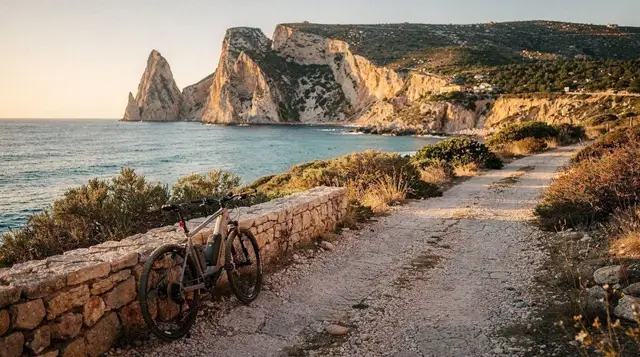
| Best time | Sunset, when the old town lights up and the coast road view is best |
A promontory town built for defence, not comfort
Castelsardo sits on a rocky promontory jutting into the sea, and the layout makes its original purpose obvious the moment you arrive: this was built to be defended, not to be convenient. The Doria family, a powerful Genoese dynasty, founded it in the 12th century as Castelgenovese, and the steep, narrow lanes climbing to the castle at the summit were designed to slow down anyone attacking from below. The town changed hands between the Doria, the Aragonese, and eventually the Kingdom of Sardinia, picking up its current name — literally “Sardinian castle” — only in the 18th century.
Today the old town is a genuine warren of stepped alleys, stone houses, and small workshops, largely closed to cars, which makes it one of the more pleasant places on this coast to simply wander without a fixed plan. The Doria Castle at the top now houses the Museo dell’Intreccio Mediterraneo, dedicated to the region’s basket-weaving tradition, and the terrace outside it gives one of the best coastal panoramas on the entire north shore — on a clear day you can see the Asinara coastline to the west and the Corsican mountains to the north.
The cathedral and the coastal view
The Cattedrale di Sant’Antonio Abate sits lower down, right at the tip of the promontory, its bell tower topped with a distinctive majolica-tiled dome that’s visible from the coast road well before you reach the town. Inside, it holds a notable collection of Sardinian religious art, including several pieces attributed to the so-called “Master of Castelsardo,” an anonymous 15th-century painter whose work appears across several churches in this part of the island. The small square in front of the cathedral is the best spot in town to simply sit and watch the light change over the water in the late afternoon.
Basket weaving: a living craft, not a museum piece
Castelsardo’s basket-weaving tradition (l’intreccio) goes back generations, using dwarf palm, olive branches, and asphodel to make everything from simple storage baskets to elaborate ceremonial pieces once used to carry bread to church for local festivals. Unlike a lot of “traditional craft” tourism elsewhere, this one is still genuinely practised — walk the main lanes and you’ll see women working baskets in doorways, not performing for cameras, and the shops selling finished pieces are largely run by the people who made them.
A basket-making workshop and museum guided tour pairs a visit to the Museo dell’Intreccio with a hands-on session, which is a considerably better way to understand the craft than simply photographing baskets in a shop window. For a general overview of what’s worth buying across the island, see our Sardinian crafts guide.
Walking the old town properly
A guided old town walking tour with aperitif is the most efficient way to see Castelsardo’s layered history in a couple of hours, typically covering the castle, cathedral, and the town’s defensive walls before finishing with a drink and a view. It’s a reasonable option if you’re passing through on a coastal drive and want context rather than just photos.
If you’d rather explore independently, the old town is small enough that getting lost isn’t really a risk — every uphill lane eventually reaches the castle, and every downhill one reaches either the cathedral or the harbour. Budget an hour minimum just for the climb and the castle terrace.
Beyond the old town: coast and countryside
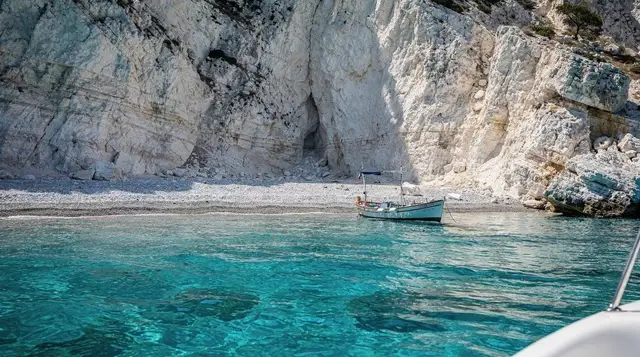
The coastline around Castelsardo has decent, less-crowded swimming spots compared to the more famous beaches further west, and a kayaking excursion along the coastline is a good way to see the cliffs beneath the town from the water, including sea caves that aren’t visible from any road.
For a slower, more indulgent afternoon, a picnic in an estate with sea view takes you inland slightly to a working farm property overlooking the coast, and a vineyard visit with wine tasting at sunset pairs well as an evening finish to a day based in Castelsardo, sampling the Vermentino-based whites typical of this part of the north coast. Our Vermentino di Gallura guide covers the grape in more depth if you want to plan a broader wine route.
Roccia dell’Elefante and the megalithic tombs
A short drive south of town, the Roccia dell’Elefante is a wind-eroded granite boulder shaped unmistakably like an elephant’s head, carved further by Neolithic inhabitants who hollowed a domus de janas (a rock-cut tomb) into its base. It’s a genuinely odd, minor curiosity rather than a must-see, but it takes only 15 minutes to visit and sits directly on the route between Castelsardo and Sedini. Our domus de janas guide explains the wider significance of these rock-cut tombs across the island if the elephant piques your interest.
Where Castelsardo fits on a north-coast route
Castelsardo sits almost exactly between Porto Torres and the Gallura coast, making it a natural stop on the drive between Alghero or Stintino and the Costa Smeralda or Santa Teresa Gallura. It doesn’t need a dedicated overnight stay for most itineraries — a few hours is enough to see the old town properly — but it’s a genuinely worthwhile break rather than a fuel stop, and the sunset view from the castle terrace is reason enough to time your visit for late afternoon. Our north Sardinia 7-day itinerary sequences Castelsardo alongside Alghero, Stintino, and the Gallura coast as a coherent week.
Getting there and getting around
There’s no train service to Castelsardo, and bus connections along the coast are infrequent enough that a hire car is the practical choice, as with most of the north coast. From Alghero-Fertilia airport (AHO) it’s around an hour’s drive; from Olbia (OLB) closer to 1.5 hours. Parking is available just outside the old town walls — cars aren’t permitted into the historic centre itself, which is part of why it remains so pleasant to walk.
Frequently asked questions about Castelsardo
Is Castelsardo worth visiting, or is it just a photo stop?
It’s worth genuine time, not just a drive-by photo — the old town, castle terrace, and basket-weaving workshops reward at least 2-3 hours of unhurried walking, and the coastal view from the top ranks among the best on the north coast.
How much time do I need in Castelsardo?
A half-day covers the old town, castle, and cathedral comfortably. Add a boat trip, vineyard visit, or workshop and it becomes an easy full day.
Can I visit Castelsardo without a car?
It’s difficult given limited bus frequency along this stretch of coast. Most visitors arrive by hire car or as a stop on an organised day tour from Alghero, Stintino, or the Gallura coast.
Is Castelsardo’s basket weaving something I can actually buy?
Yes — shops throughout the old town sell locally made baskets, and prices reflect genuine handwork rather than mass production. Buying directly from a workshop visited on a tour is a reliable way to know the piece is authentic.
What’s the Roccia dell’Elefante and is it worth a detour?
It’s a wind-eroded rock formation shaped like an elephant’s head with a Neolithic tomb cut into its base, a short drive south of Castelsardo. It’s a minor curiosity worth 15 minutes if you’re already driving that direction, not a dedicated trip on its own.
Is Castelsardo a good base for exploring the north coast?
It can work for travellers who want a quieter, more historic base than Alghero or the Costa Smeralda, though it has fewer restaurants and services than either. Most visitors treat it as a stop rather than a base.
When is the best time of day to visit?
Late afternoon into sunset, when the light on the castle terrace and cathedral square is best and the day-trip crowds from bigger resorts have generally thinned out.